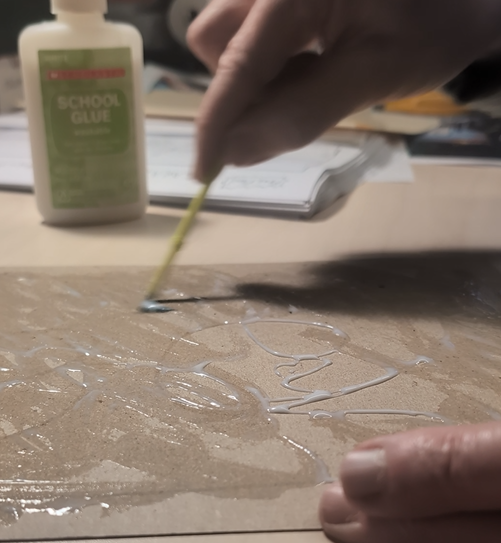
A layer of wet school glue on cardboard ready to put the pattern on
Gluing a paper pattern template onto flat cardboard
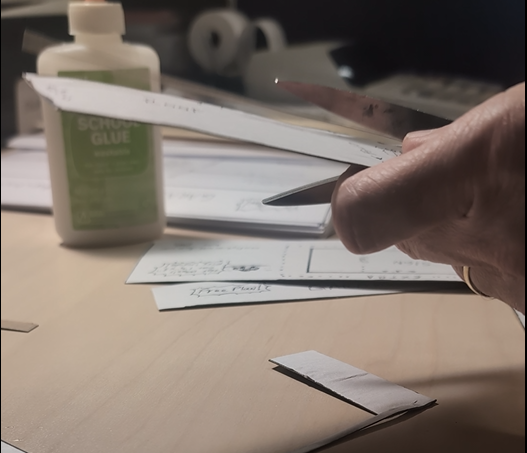
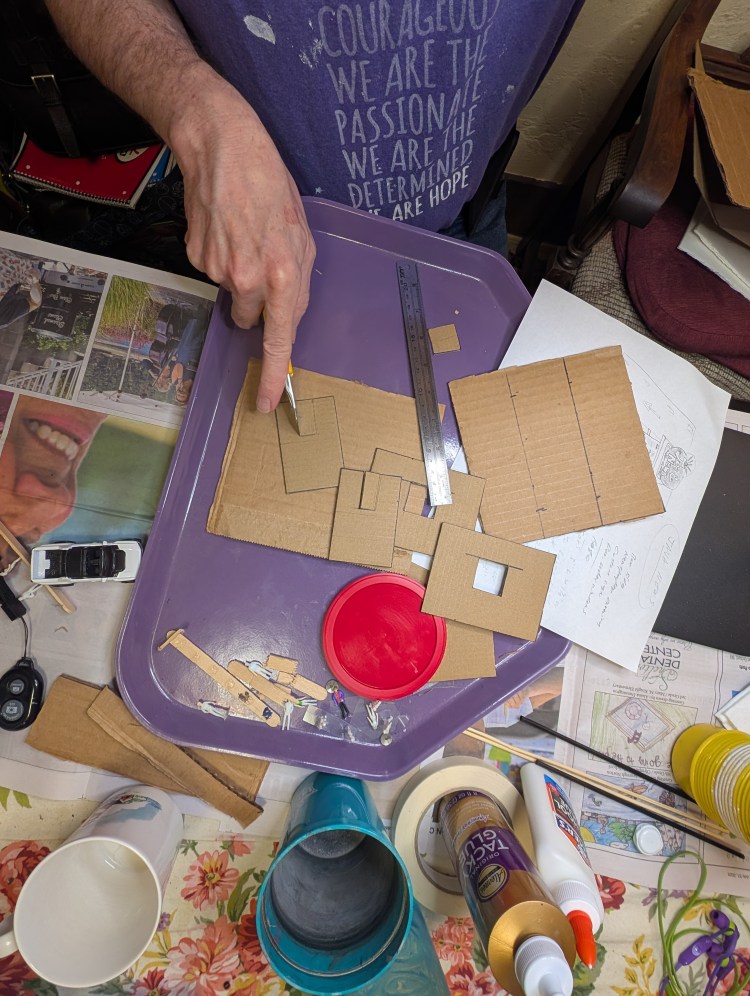
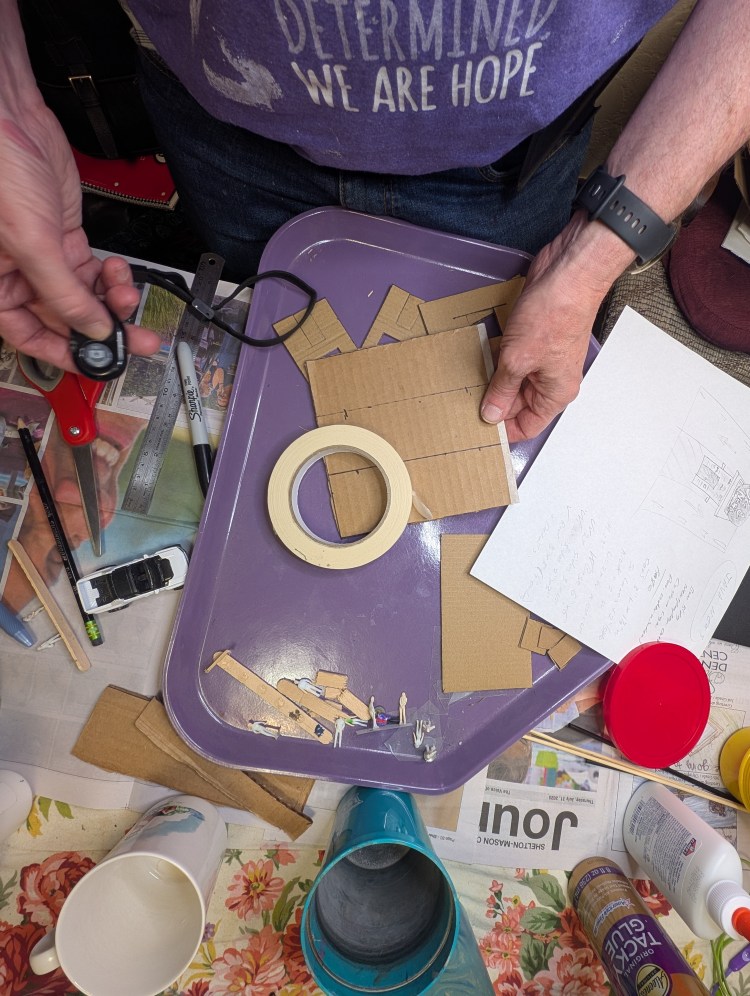
1. Cut pieces
Base, 3 walls (one piece), roof. Optional: sign.
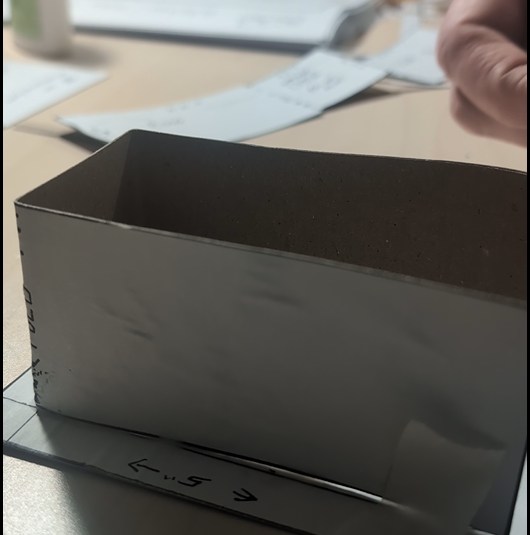
Fold the 3 wall piece and glue it to the base
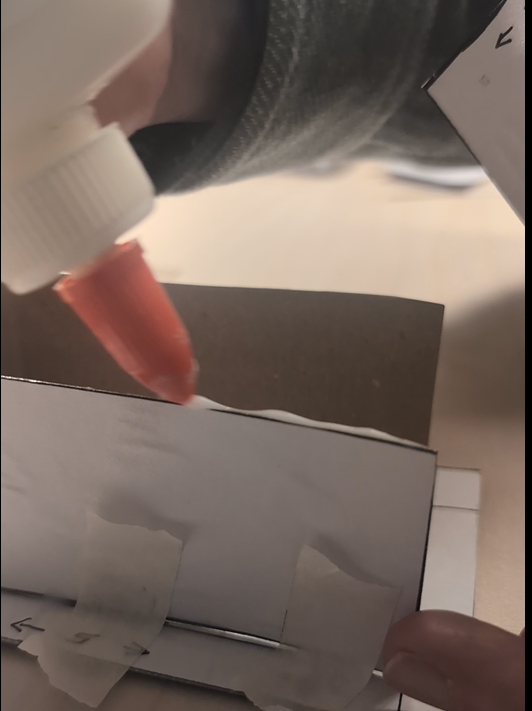
Glue top of walls for the roof piece
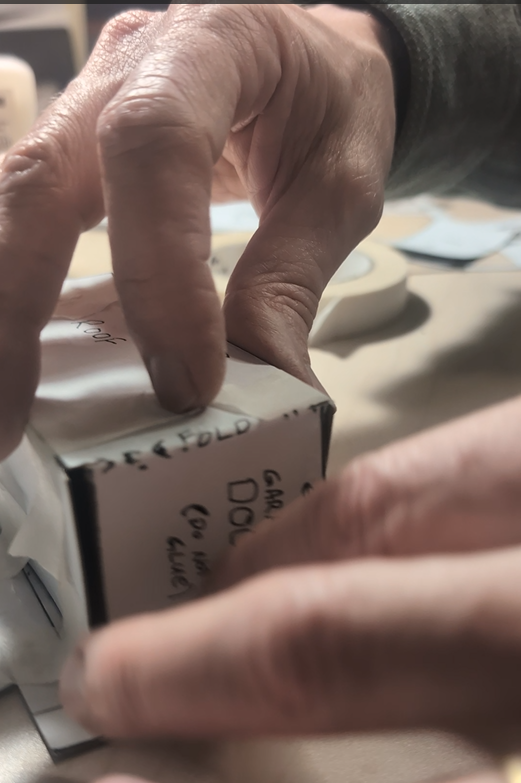
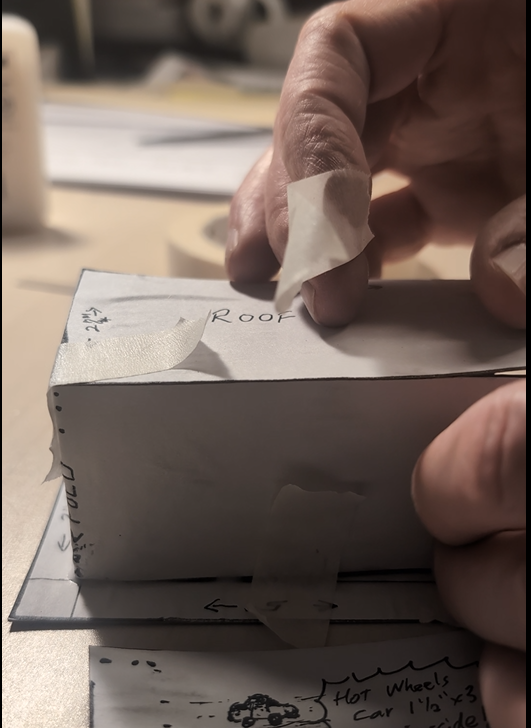
Fold the roof & door piece and glue to top of walls. Don’t glue the door down
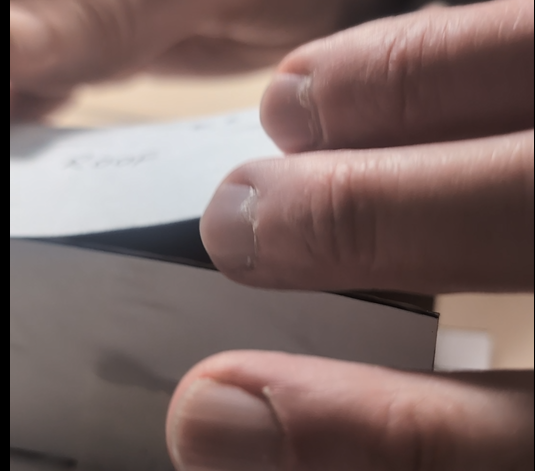
Align and hold the roof in place
Masking tape holds pieces in place. Remove tape when glue dries.
2. Glue and tape
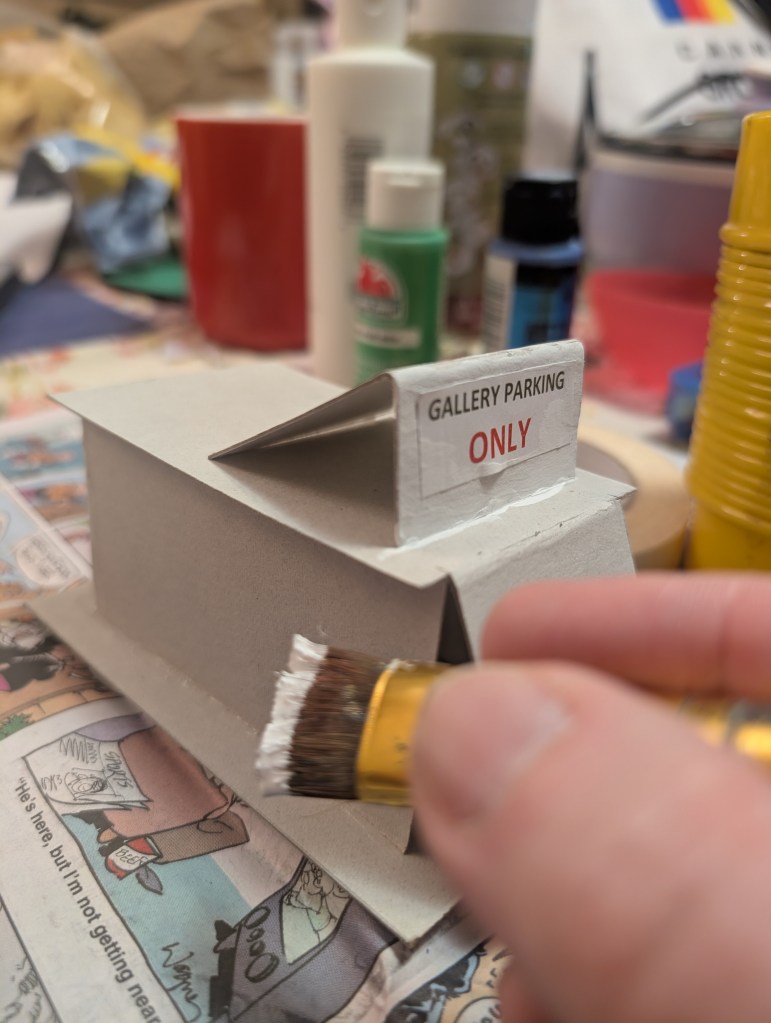
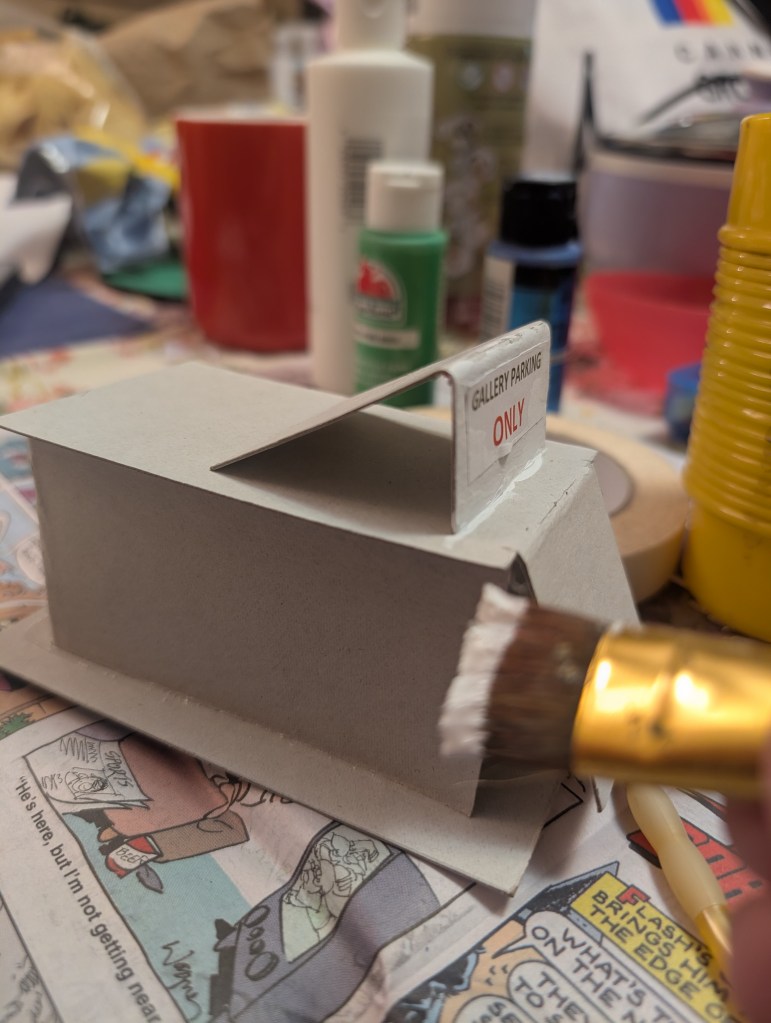
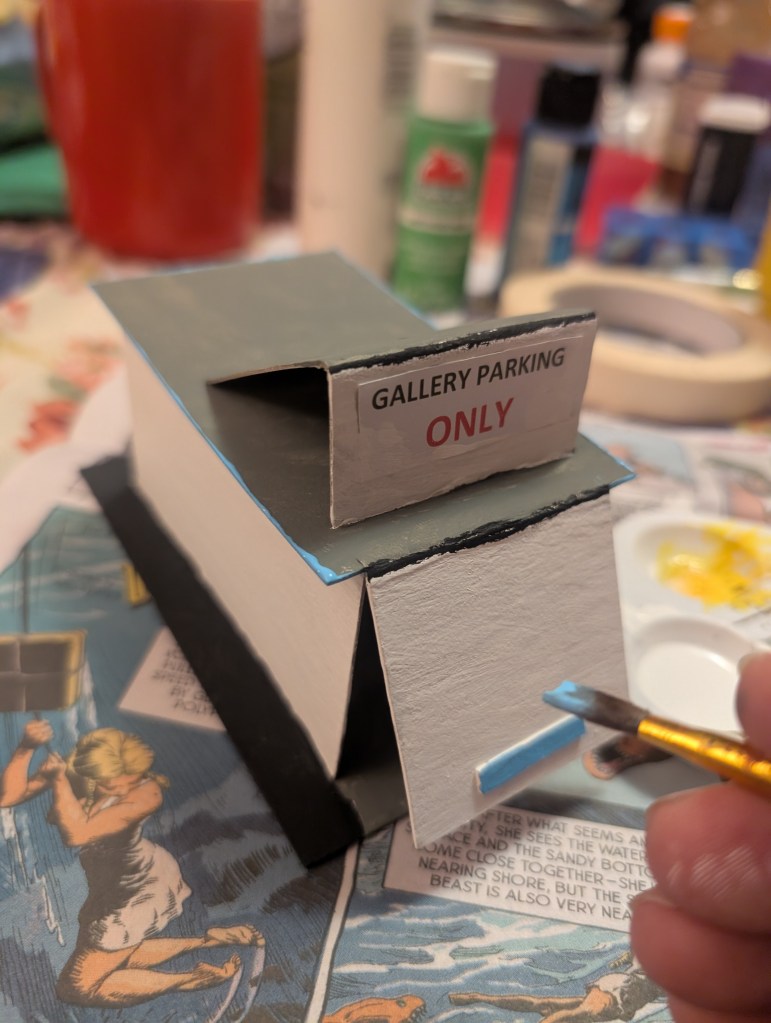
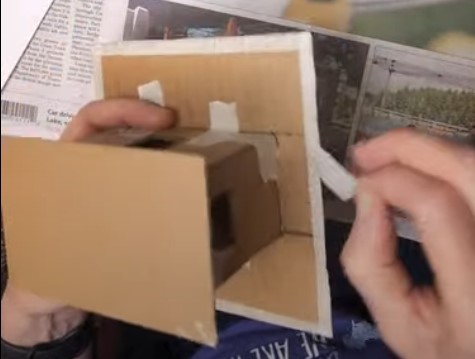
Fold the 3 walls on the dotted lines and glue them to the base. Fold the roof-garage door piece and glue to tops of the 3 walls, but don’t glue the door down. Optional: fold the sign and glue on top of the roof. Use masking tape to hold everything in place until the glue dries. Once it dries, peel the masking tape back off.
3. Paint
Once glue is dry, paint. It’s a good idea to prime everything with white paint first and let that dry, then paint any colors you like. You can also use markers or stickers, anything you want!
4. Optional: extras
Look at real garages. Some have roof vents and things on top. Plastic milk pulls make good roof vents. You can make chimneys out of a few pieces of cardboard glued together. Small bits of cardboard can make a garage door handle, windows and doors. Small bendy straws make good gutter downspouts. It’s a bit easier to add bits before you paint, but it’s also OK to glue details on later, and paint again as you touch up.
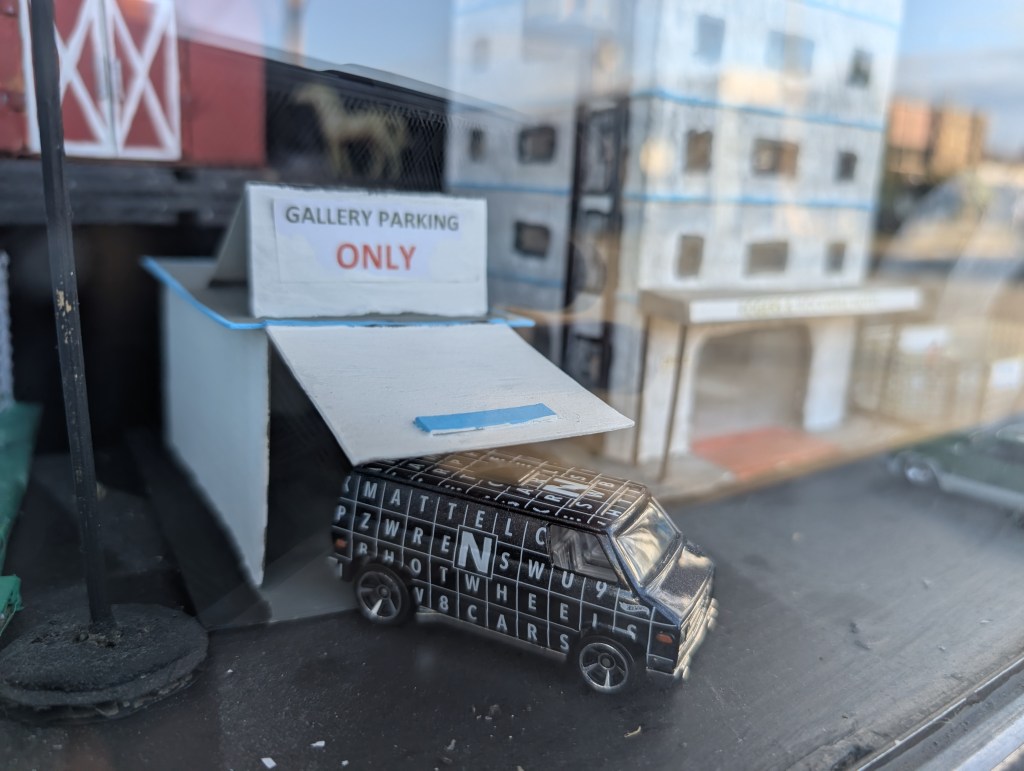
5. Garages
Happy Tree Village has some working garages now. What a great place for cars to go!
Crafty Time art tutorial by Dave Pierik, Shelton-Mason County Journal
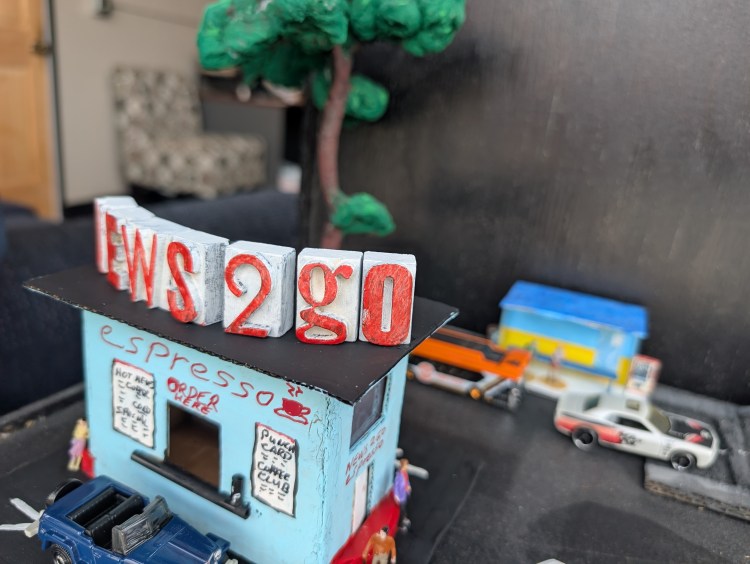
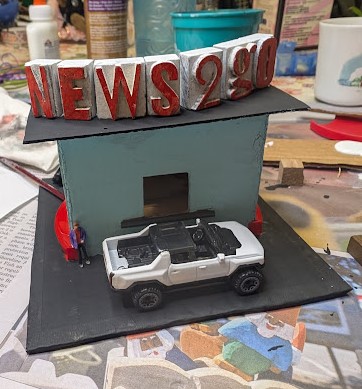
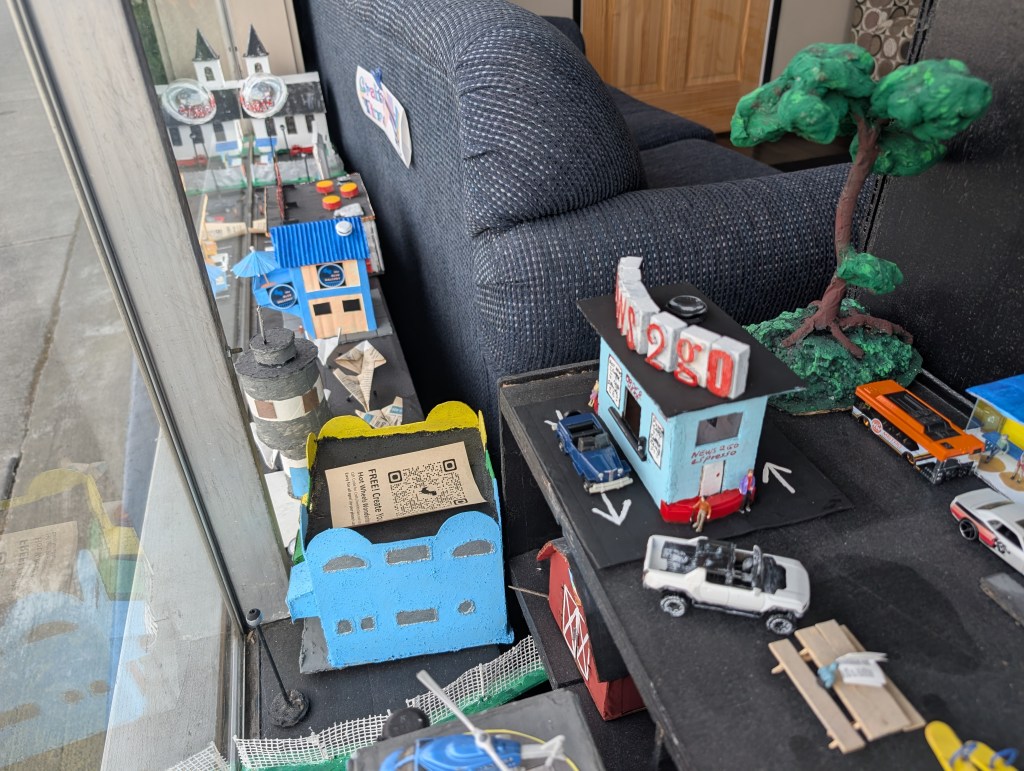
News2Go Espresso, part of Happy Tree City (C)CraftyTimeWith Dave
Paint or use acrylic paint markers for drive-through direction indicators and other details
The doors and sides are nearly identical front and back.
Happy Tree city is a sleepy little village with a lot of drivers who love coffee.
The growing town is open to public view on the corner of 3rd & Cota Streets in downtown Shelton, WA.
News 2 Go Espresso
Happy Tree Village’s (Hot Wheels) drivers swing by for coffee and a paper.
You will need:
Tools: ruler and markers, scissors, paintbrushes
Materials: cardboard (not too thin), a plastic cottage cheese container lid, masking tape, school glue, acrylic paints, a thin coffee straw, a milk pull lid, clear plastic, Hot Wheels cars. Craft letters and figures are optional.
Cost: about 75 cents worth of glue and paint. The craft letters were another $2 at a thrift store and would have been a lot more new, so maybe $3 total depending on how you count it.
Time: about 6 hours.
1. Plan
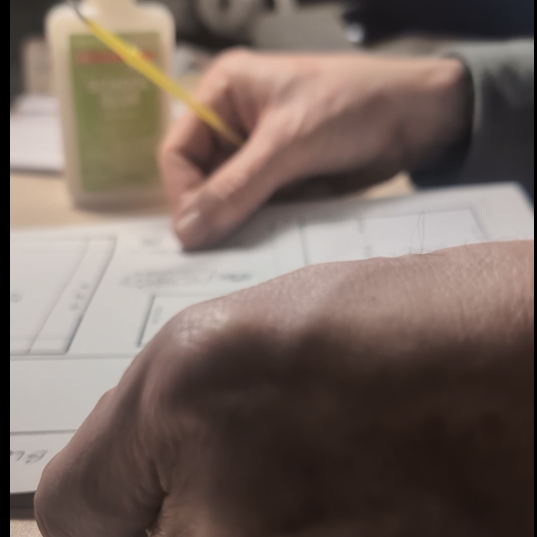
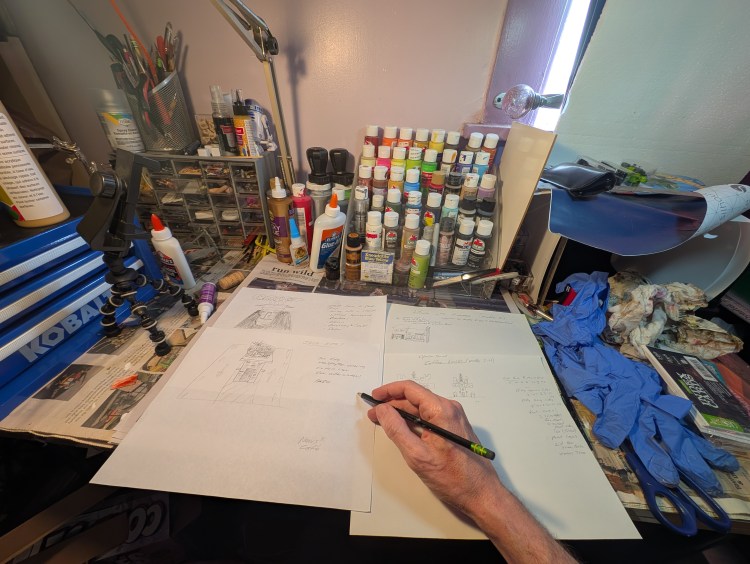
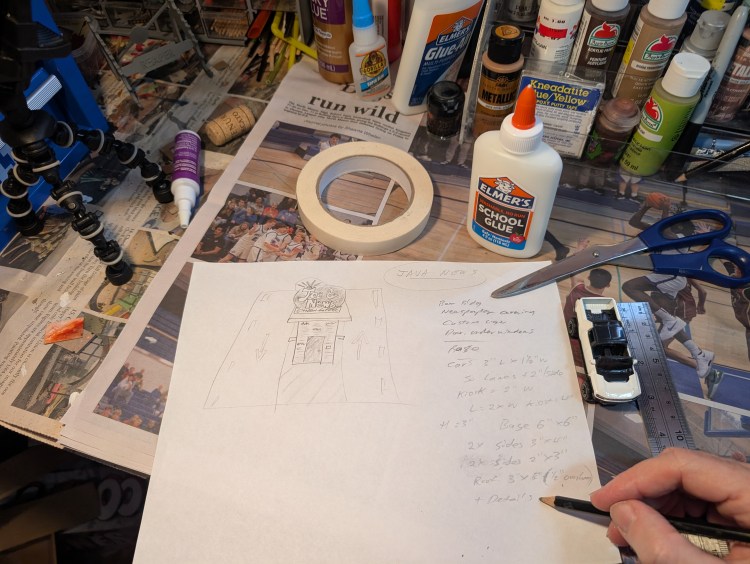
Sketches are a helpful start for planning what to create next.
I like to think about Happy Tree city’s imaginary people, and what they would like next for their town
You can start before you think, or you can think before you start. In art, both are good and there’s nothing wrong with improvising. That said, when you’re inspired with an idea, write it down. Make sketches. You can create them later or change them however you like. The weakest pencil is stronger than the strongest memory. I made several sketches several weeks before picking this one to work up for you to try.
2. Measure and mark
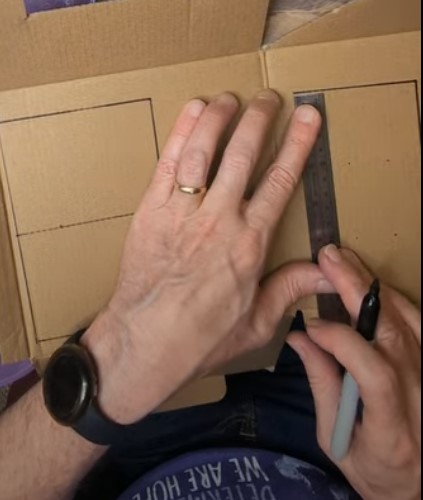
I measure, mark dots and then draw lines, usually in Sharpie so it will be visible in photos like this.
Measuring is an important step for planning. It’s important so don’t guess and don’t forget.
Use a ruler and marker. The square corner of a ruler gives you helpful right angles. A Hummer Hot Wheels Car measures 3” long x 1.5” wide, so we need 2” wide lanes. Espresso kiosks are about a lane wide also, so make a 6” square base divided into 3 lanes 2” wide. Mark 2 sides 3” x 4”, 2 sides 2” x 3” and a roof 3” x 5”.
3. Cut cardboard
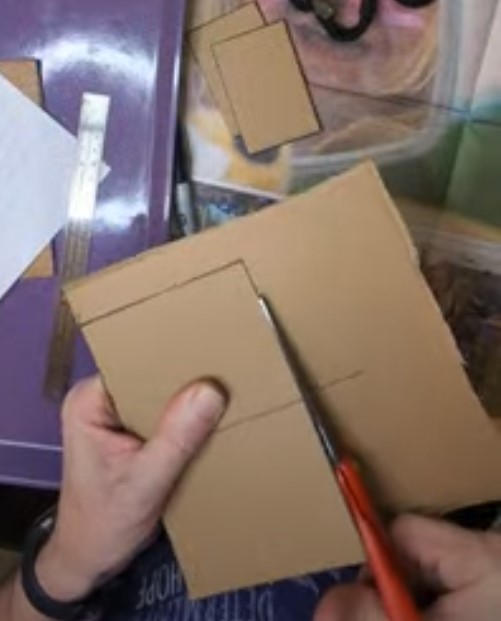
Scissors are sharp. Be careful.
Cut right along the lines. If you want to cut out windows and doors, you might want to use a craft knife. Be extra careful with them.
I put an extra layer of thick cardboard, and use a cutting mat or piece of plastic below that. A good craft knife will cut through more than you think.
Bits of plastic lids can be cut up for details.
Measure and mark everything
Cardboard is everywhere. Trust me when I say, you’re not going to run out.
Be safe and don’t rush with your sharp tools. Use scissors to cut right on top of the lines you marked. Cardboard is everywhere, so if you make a mistake don’t hesitate to start over. Thin cardboard from a cracker box is much easier to cut than thick corrugated box cardboard. If you want to cut door and window openings (optional) be careful and go slow with a craft knife, being careful to protect the surface underneath it.
4. Assemble and glue
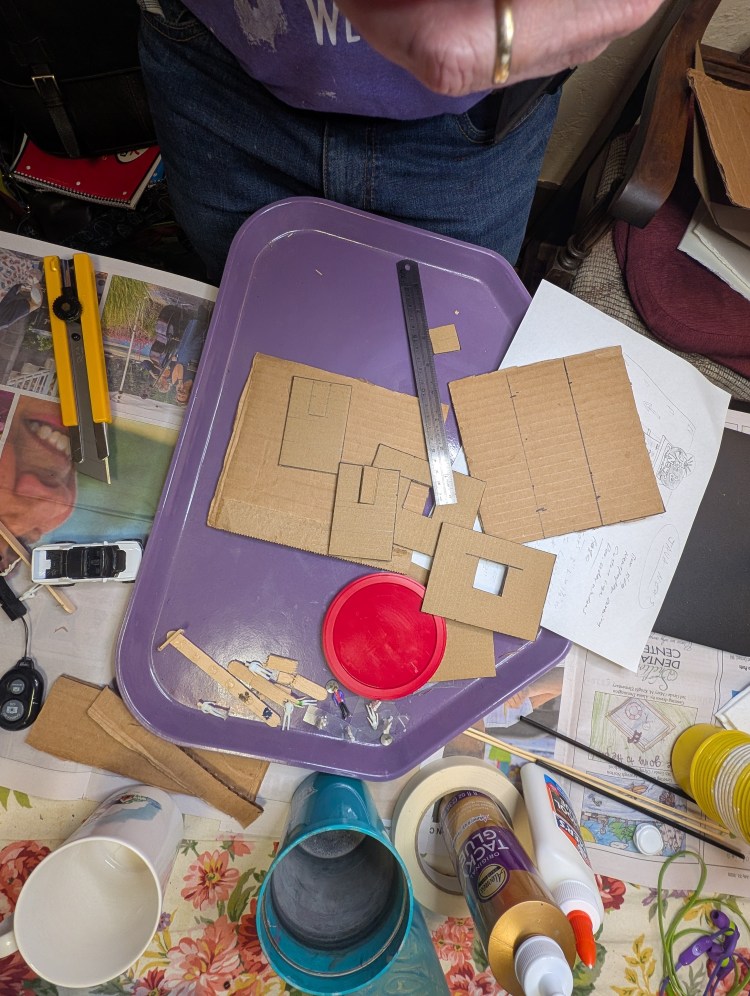
Glue all the edges and line the walls up right on top of the lines you made in Sharpie. Be patient and pay close attention to what you’re doing.
Stack, test fit and adjust parts. Line the walls up to the marks in the middle of your base. Glue along edges and add masking tape as you go, starting from the sides and then the sides to the base to hold everything in place. Set aside to dry.
5. Remove tape
Masking tape holds your glued walls together with the placement you want. Once the glue is dry, slowly pull the tape off, at an angle
Tape also cleans up the corrugated edges of thick cardboard for a cleaner look.
Well, remove most of it. Carefully peel off the tape where you’ve glued edges. If you used thick corrugated cardboard for the base like I did, put masking tape around the outside edge to tidy that up. You can paint right over it later.
6. Barrier curbs
A sour cream lid ridge has just the right curve, color and shape for a barrier curb. It will be painted red much more easily since it’s already read.
Mark and cut a wide plastic lid (such as from a cottage cheese container) until it looks and fits the way you want it too. You’ll be painting it later. That said, if you have a choice of different colored lids, pick one that is close to the color you want to make it easier for yourself.
7. Base coats
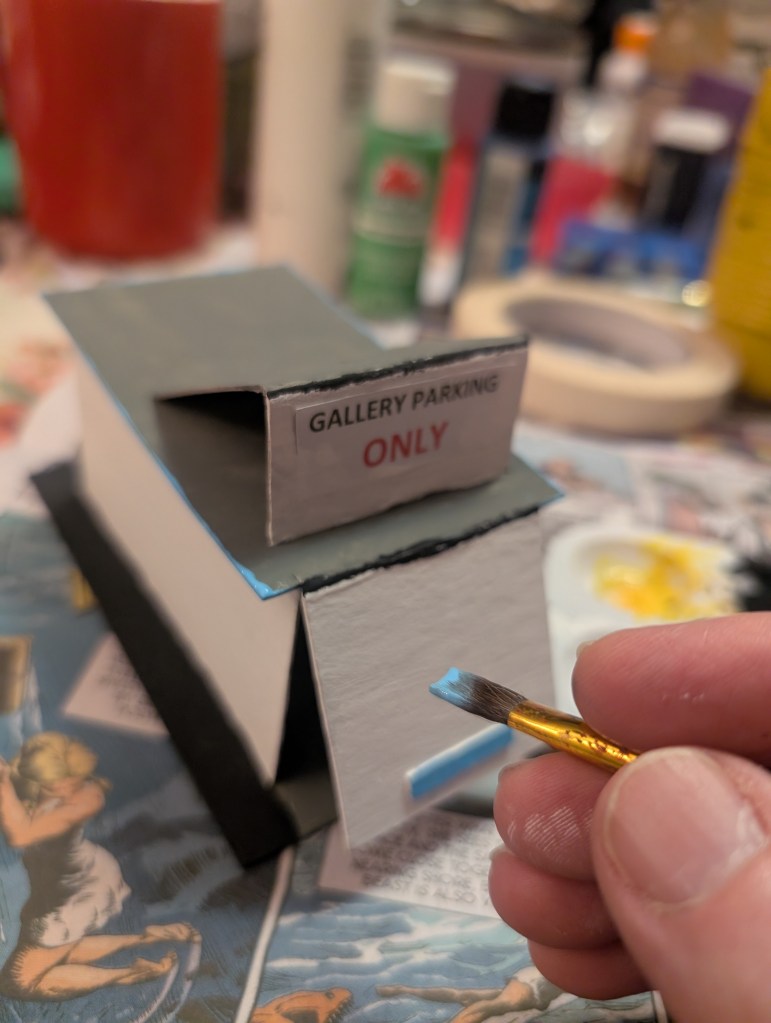
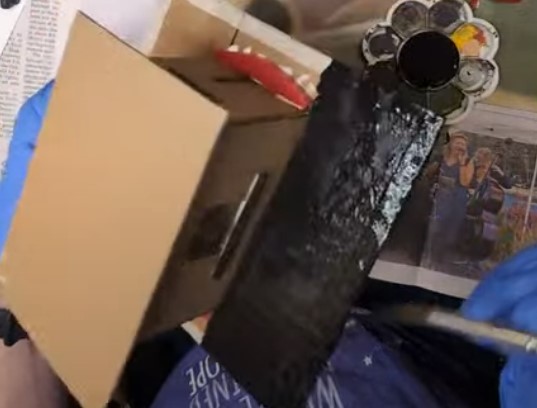
Asphalt and commercial roofs can usually be black. Start with one coat, you can always touch up later. One coat will also work, right on the cardboard, for most building colors. For brighter buildings, basecoat the entire model in white, wait for it to dry completely and then add your base colors over that.
Paint the asphalt and roof black, the building any color you like (I chose light blue this time) and the barrier curbs red or orange. Because it covers everything, I usually save the black for last but looking at the photo I see I didn’t do that this time.
8. Sign letters
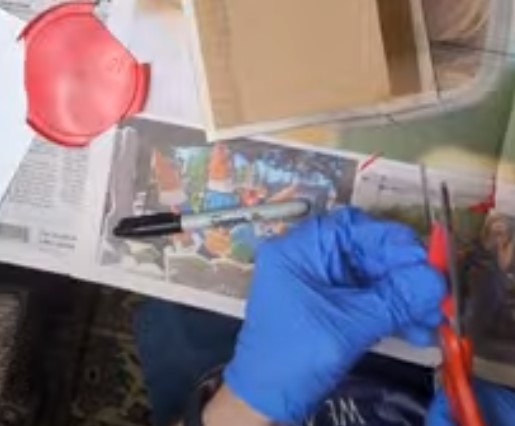
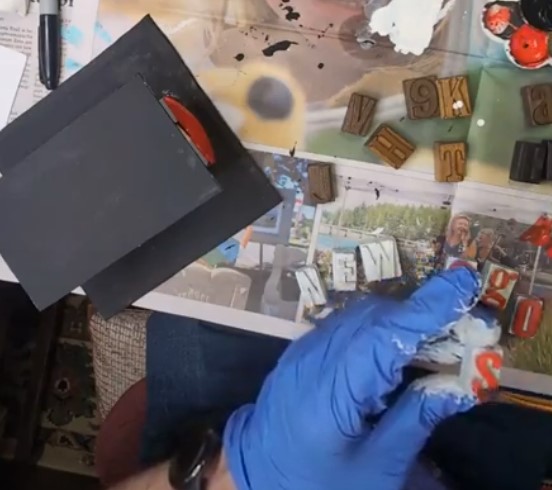
You can paint detailed parts of models either on, or off the model. This time, I painted the detailed sign letters first, and then glued them in place after they were dry. Rubber gloves are optional but they do keep your hands a lot cleaner.
If you have craft letters, they pretty work well for signs. If they only come with one each of number and letter of the alphabet, you might have to rethink the kiosk name. News 2 Go was the 4th or 5th name, after Joe & News, Citizen Coffee, Java News and Hot News were considered and dismissed. Test fit for space on top of the building. Base coat letters in white.
9. Dry brush
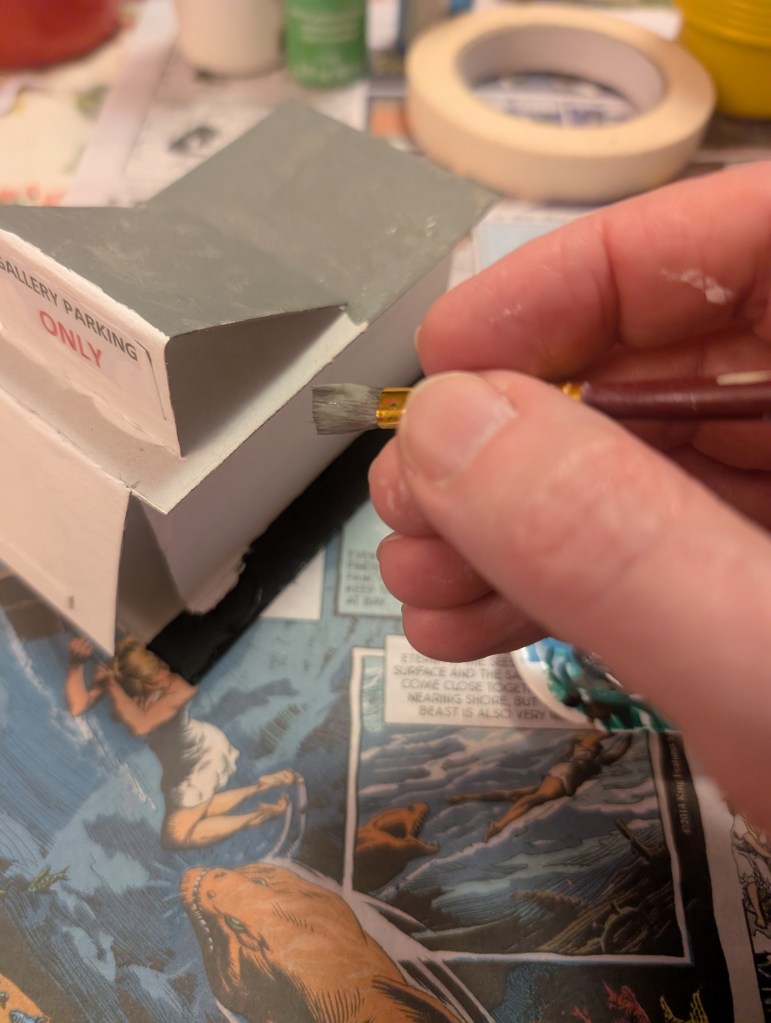
Painting is messy work. Put newspaper down. Protect surfaces. That said, acrylic paints are water soluble. If you get paint on your cloths, spot clean with soap and water right away.Coffee kiosks are not big. Be sure to test fit height for the pass-through window and have it be a bit longer than your longest model car. Note the coffee stirrer pass through window shelf. These letters looked better to me on a curve than in a straight line.
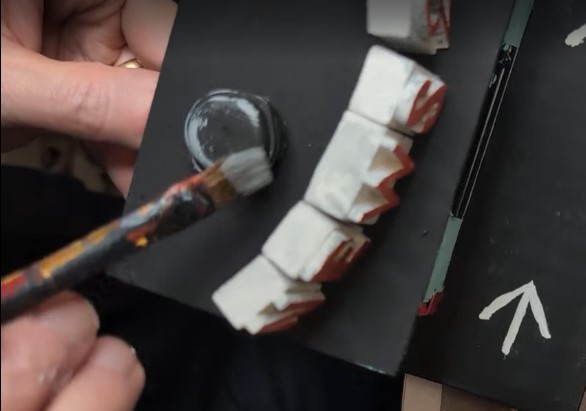
So the red will pop against the white behind it, dab your paintbrush on newspaper before painting the top of each letter so that the paint is not too wet. You only want to cover the top, flat surface. A flat brush works best for this. Paint lightly here, just a thin coat or two.
10. Glue & place
Pay attention to each letter.
Before the glue dries, taka a look and make sure the letters are where you want them.
Before you glue, test fit the letters on the roof again. Pick letters up one at a time, use an old brush to apply glue onto the bottom of each one, and put it back exactly where it was as you go. Once they’re all in place, take a look and adjust placement before the glue dries – you have just a few minutes. School glue is water soluble, but it destroys brushes once it dries, so I use dollar store brushes for glue.
11. Paint details
Basecoat menu boards white. Wait for the paint to dry before adding information freehand. Detail does not have to be perfect, it will mostly be seen from a distance.
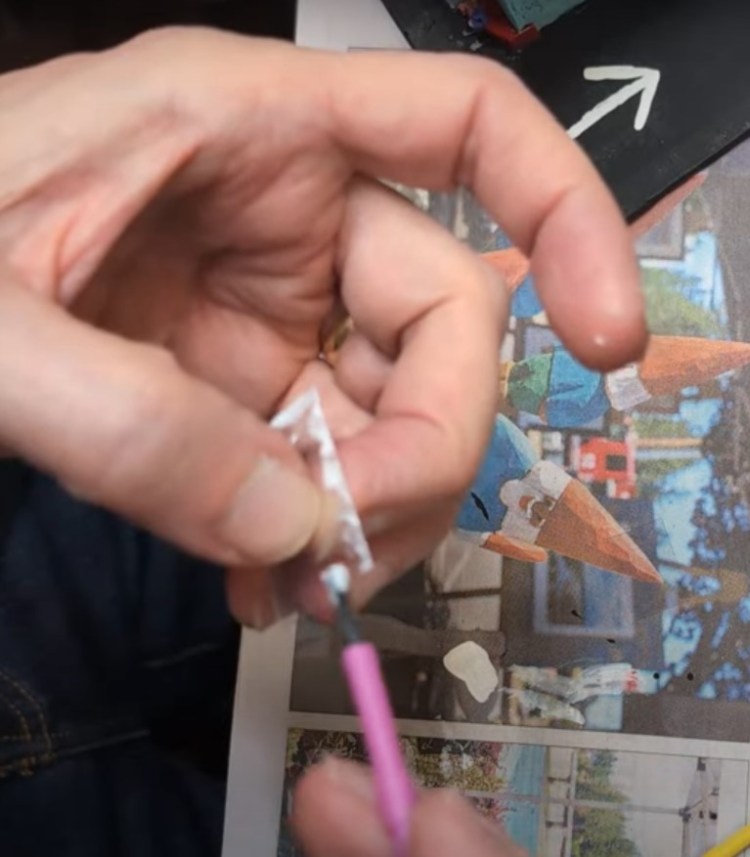
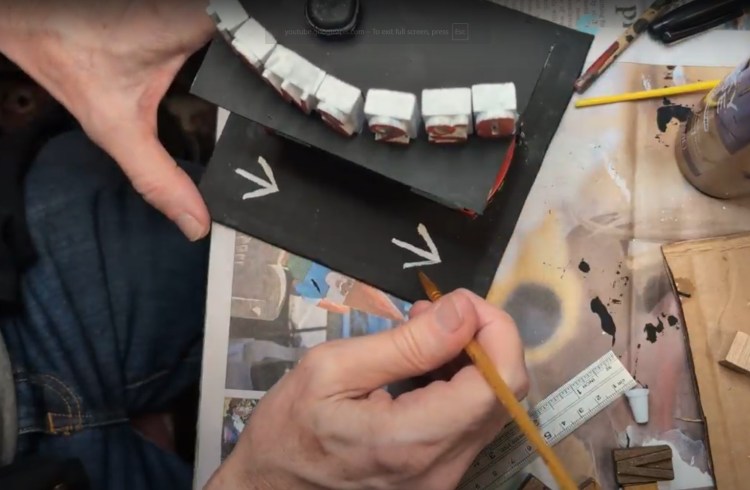
Using a medium round pointed brush, not too full of paint, start with the white. Direction arrows, menu boards and “TIP” on a jar on the drive through shelf (which is a cut down coffee stirrer, glued on). Paint even, straight lines and move the model with your other hand for better control.
12. Final touches
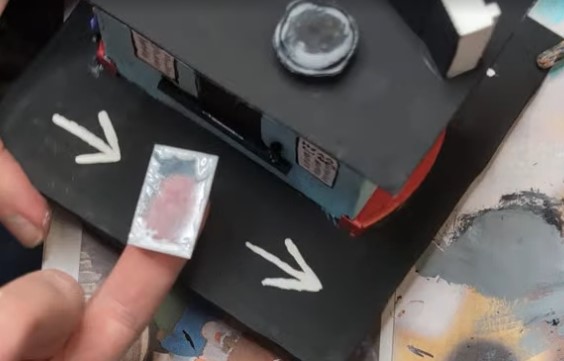
Clear plastic from Hot Wheels packets makes great windows. Glue from the inside. Elmer’s glue dries clear.
Outline the menu boards in black &/or red using a detail brush. Painting a straight line is the only skill you need. Move the model to make it easier for yourself.
A cut down coffee stirrer makes a tip jar. Paint T I P in white, to fit. Wipe paint off with a wet paper towel if you need to start over.
Use a glue brush for better control on the window edges
Wet your finger. Glue side up, press the window into the inside part of the window in the building. The “glass” should be at least 1/8″ wider than the opening, in every direction.
Installing the window. Don’t rush this.
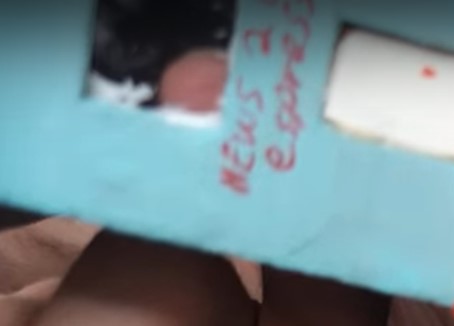
Somehow I got a shot of my finger pushing the window in place from the back side. I got this shot using a cellphone stand.
I painted a milk pull black, glued it to the roof, and then dry-brushed it silver-white to bring out the detail of this roof vent.
Straight lines are the only thing you need to be able to paint, to get parking lot and driveway markings to look decent. Remember, they use paint in real life too.
Acrylic paint markers &/or Sharpies work great for the on-building signage and menu boards.
Paint a milk pull lid black and glue it to the roof for a roof vent. Use black and red markers to finish the menu boards, ORDER HERE over the window, and dots for doorknobs. Glue the edges of clear plastic (from a Hot Wheels package) and carefully push it into the back for the windows. Dry brush the roof vent gray. Touch up paint everywhere. Find a place for it and make vroom-vroom sounds with your cars and figures.
13. News 2 Go Espresso
Happy Tree Village has a new spot to grab coffee and a paper. In case you were wondering, the back is nearly the same as the front. Come take a look in the window in downtown Shelton at 3rd & Cota Streets.
What would you like to see next in Crafty Time? Visit www.craftytimewithdave.com for more photos and project ideas. Please email your feedback to dave@masoncounty.com or call 360-426-4412. Visit our office to see the display!
















 Crafty Time With Dave