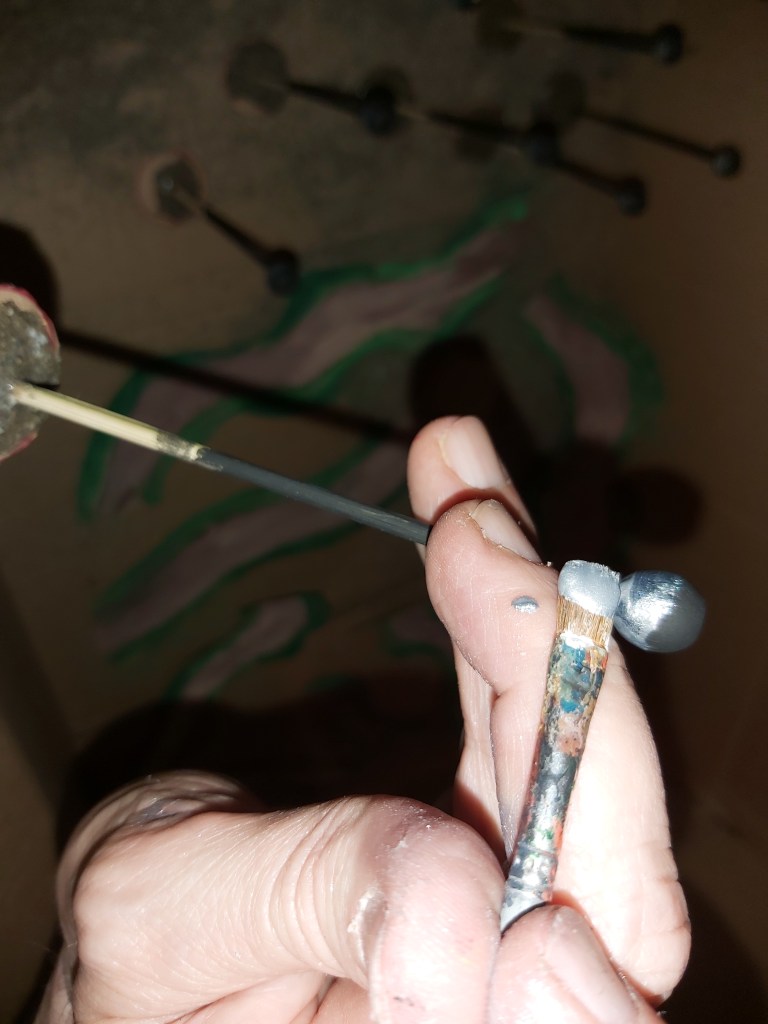
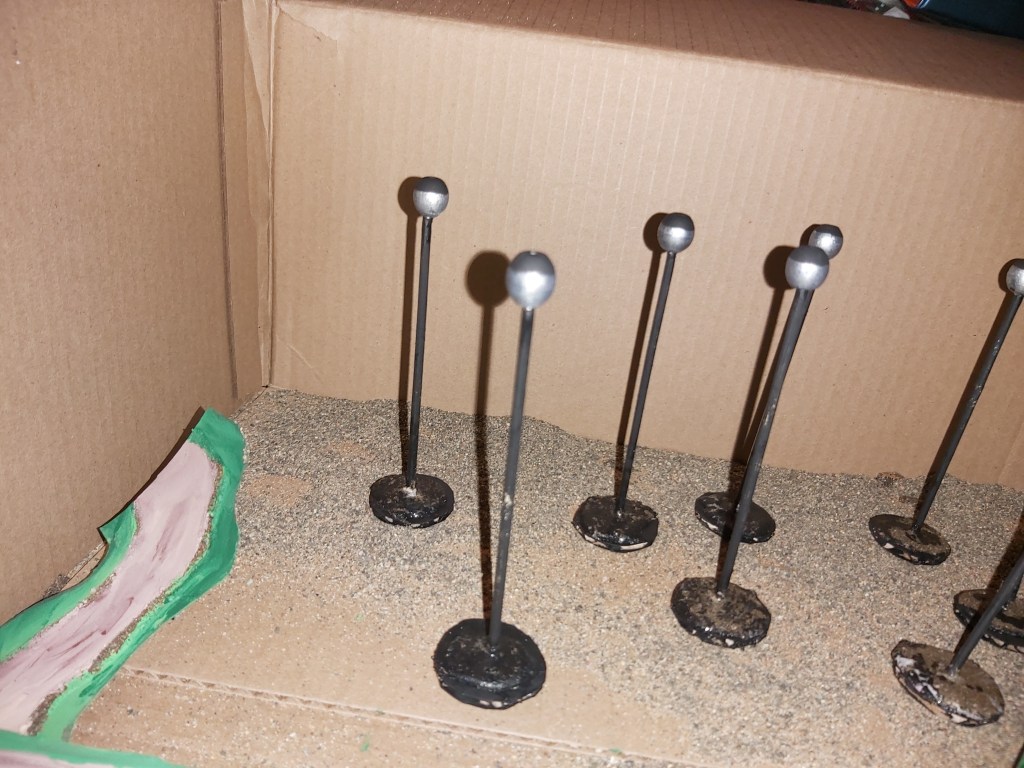
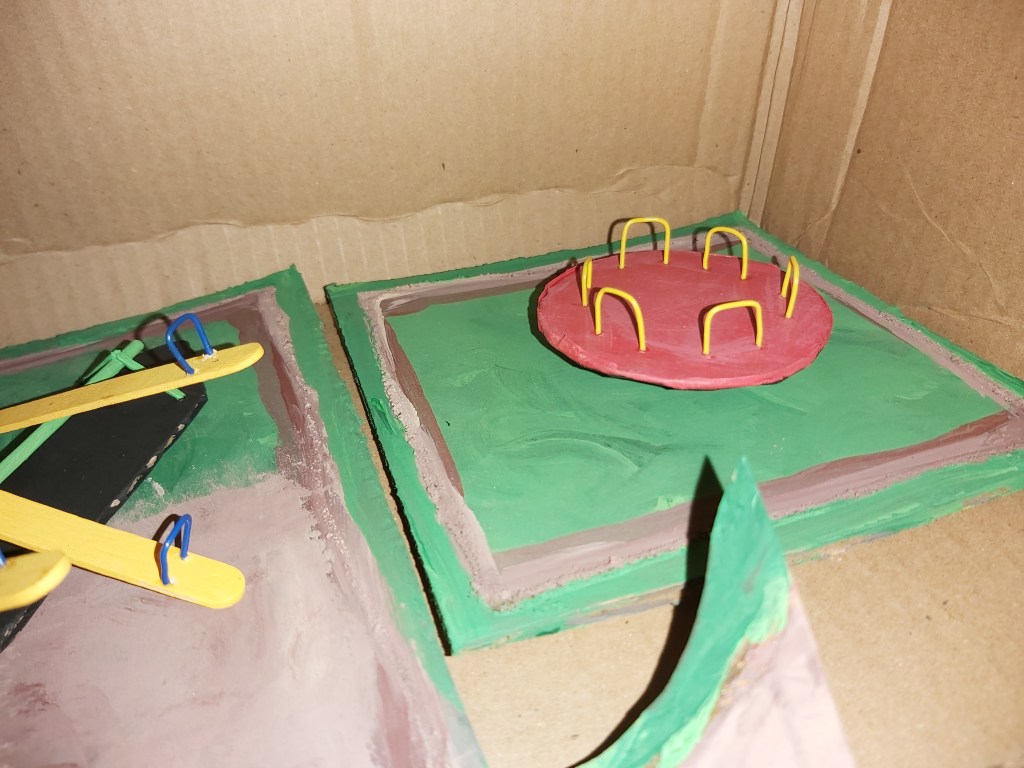
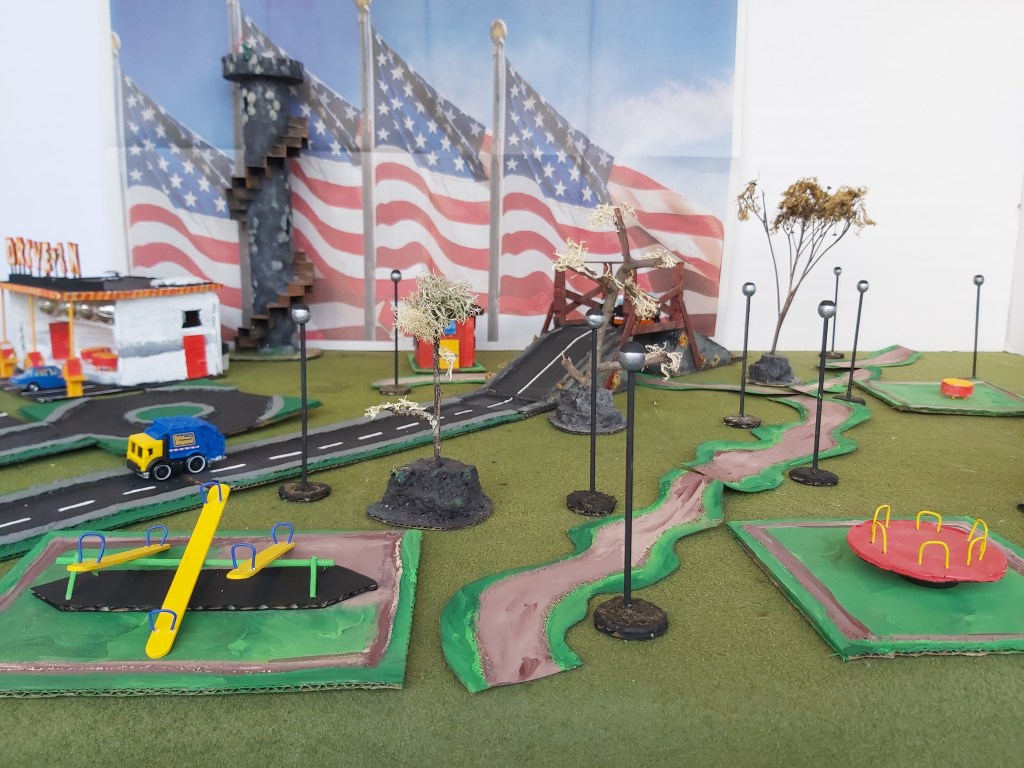
Idea 9: Fishing

crafty time.BaitShackFishing.pierik.25.20

Crafty Time

By Dave Pierik

Shelton-Mason County Journal

Fishing Fun!

A Crafty Time reader suggested that an old bait shack would be fun. Great idea! Happy Tree Village has a drive-in movie spot & restaurant, a castle, a bridge, water, trees, roads and buildings, but nothing like this. Until now!

You will need:

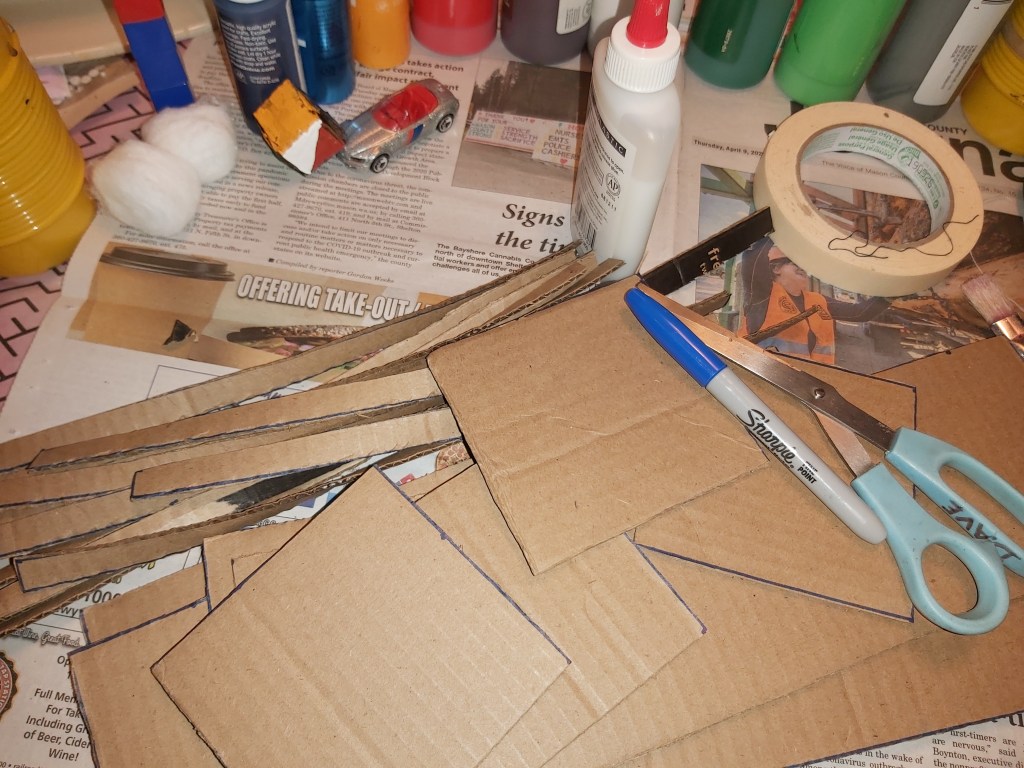
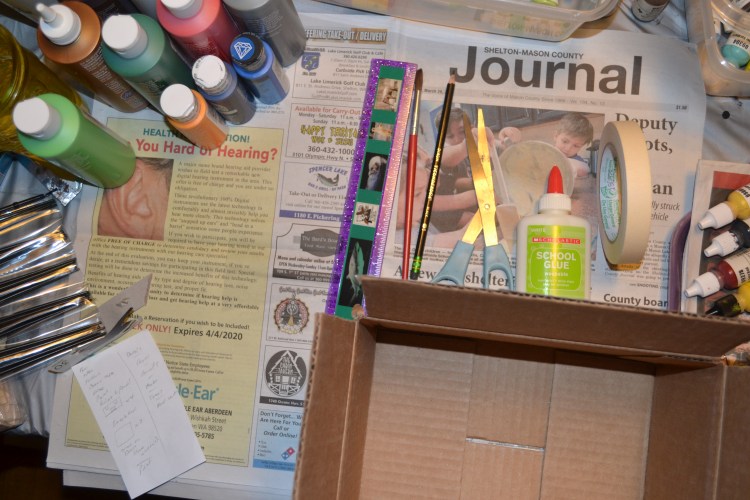
Tools: pencil/pen & ruler, scissors, craft knife, paintbrushes.

Materials: cardboard (corrugated and thin card), school glue, sand, flat toothpicks, bamboo skewers, acrylic paints, masking tape, clear plastic (from window envelopes, for the window “glass”)

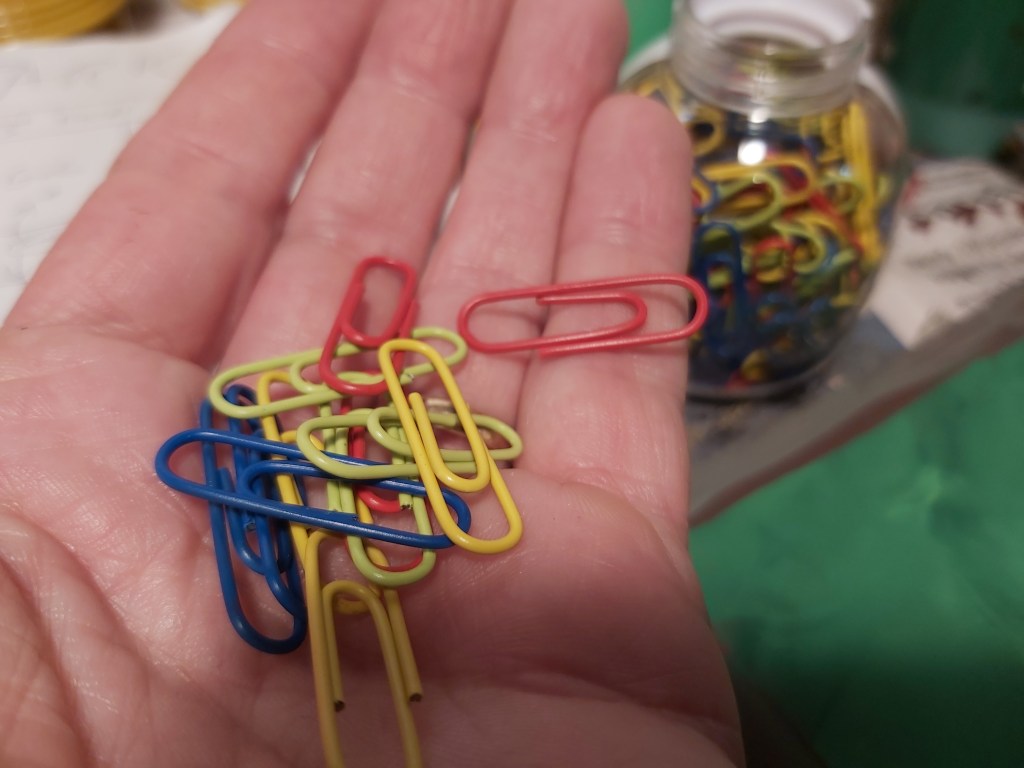
Optional for details: artificial bait (fake fish), a bit of yarn or string (rope detail), paper clips (for fish display pole & fish net rim), thin mesh fabric (for fish net), beads for buoys.

1. A sketchy start  

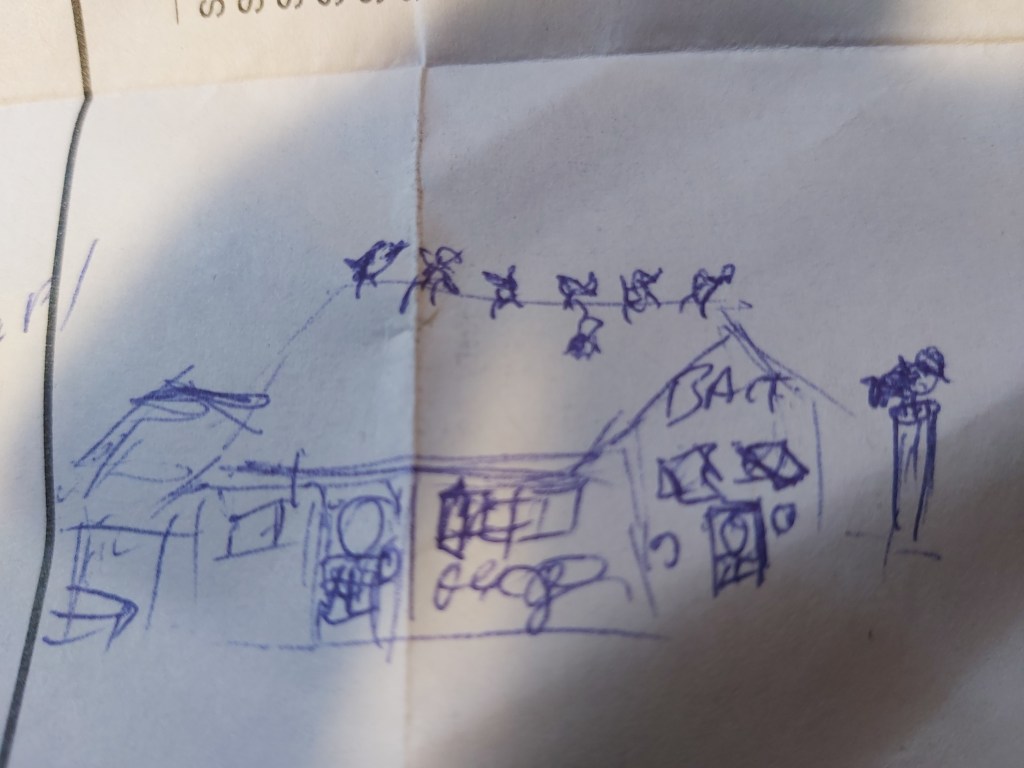
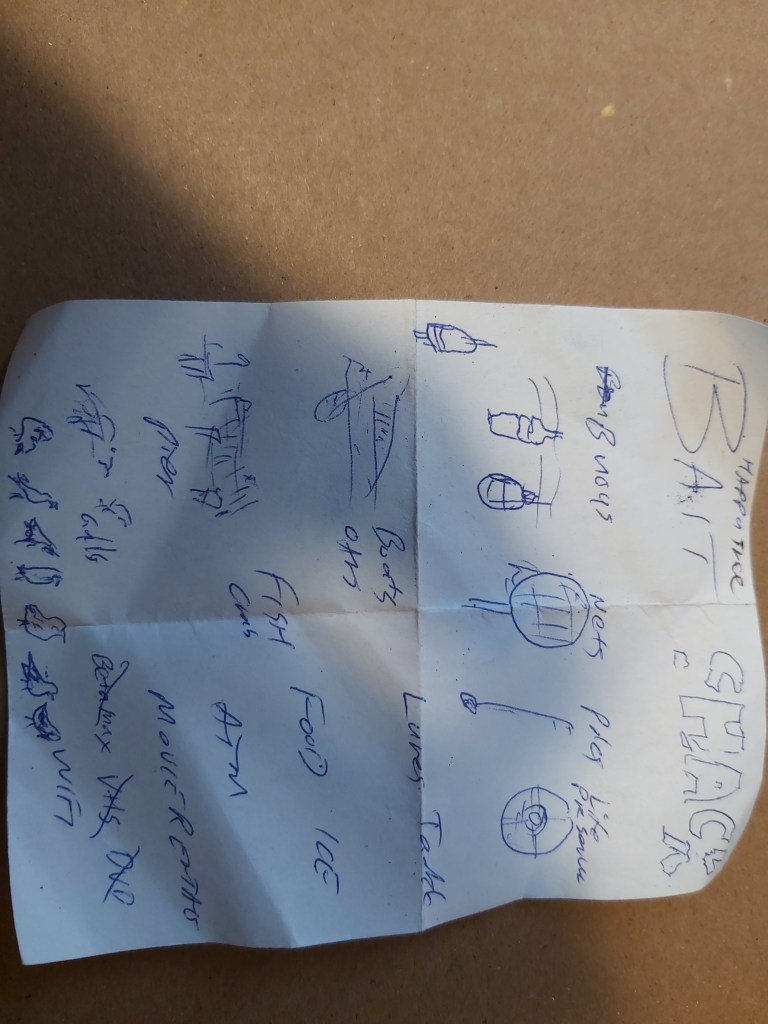
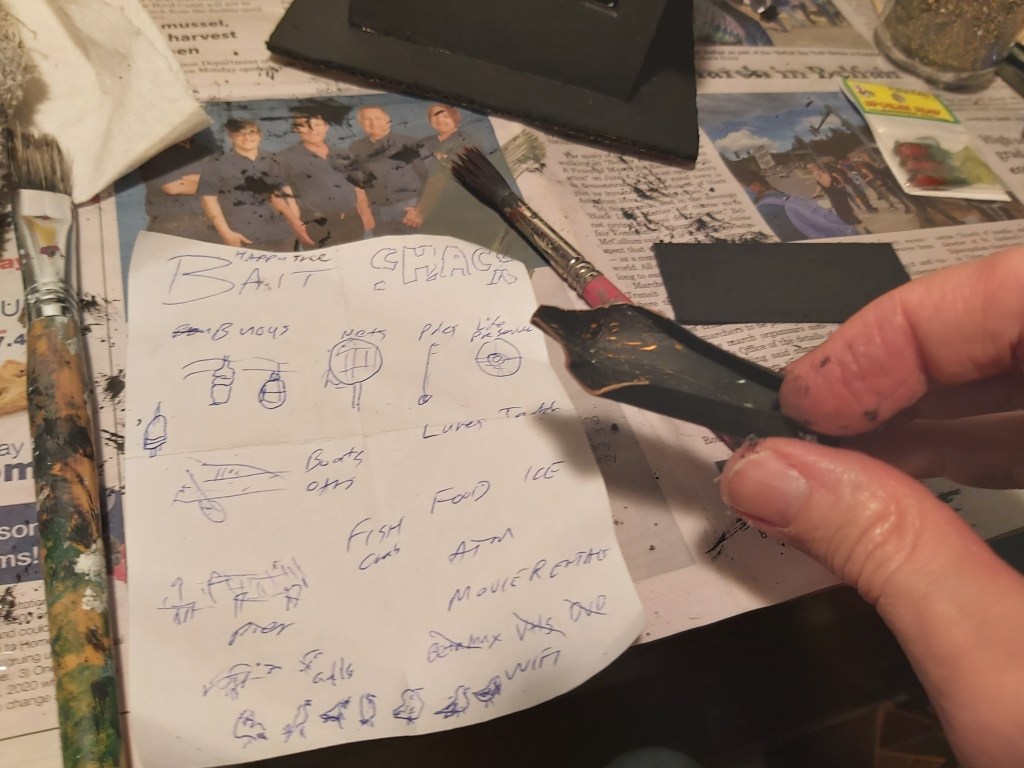
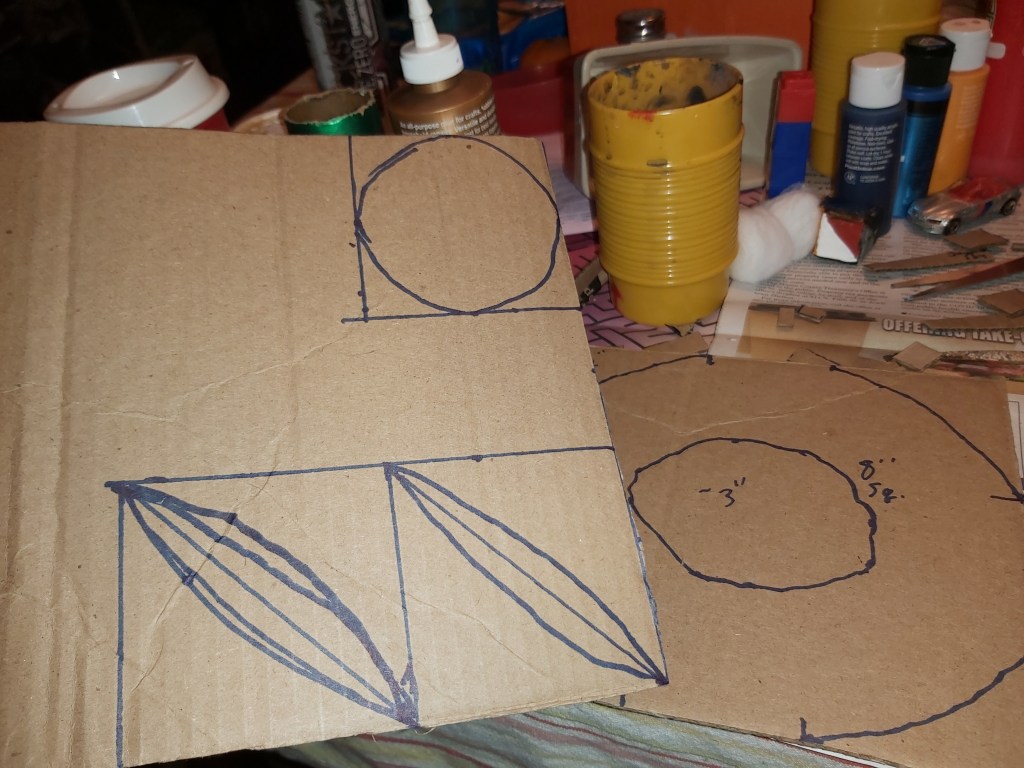
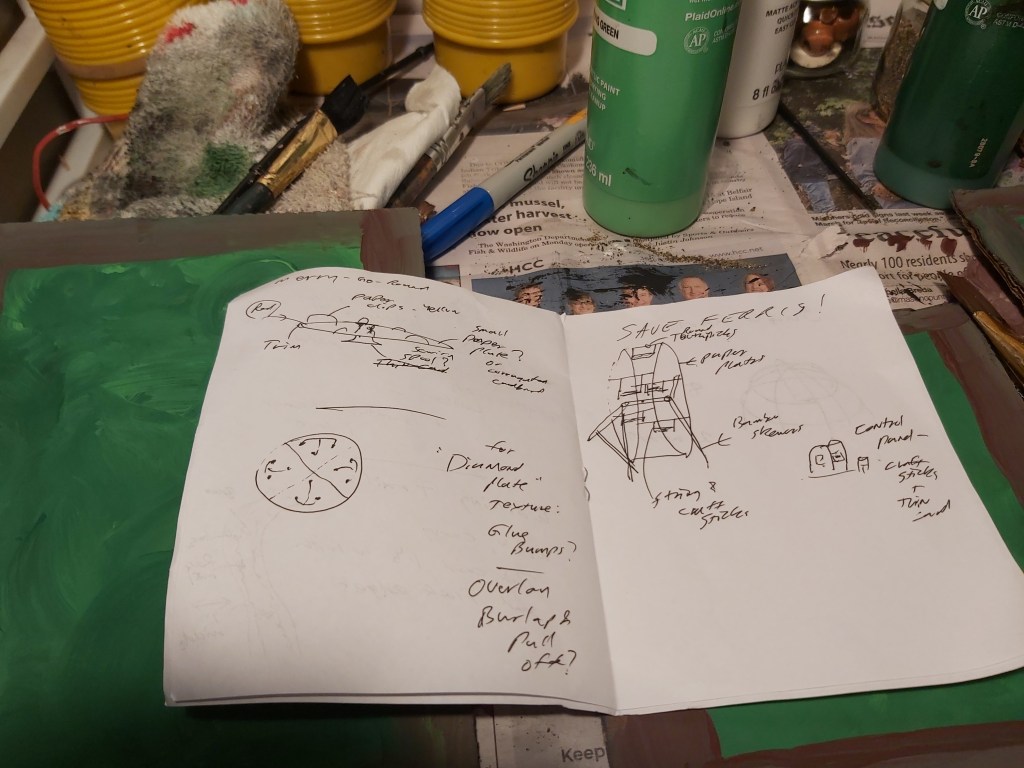
I must confess that I have only been fishing a couple of times. Old bait shops show up in movies and things though. To get an idea of the look, I did a Google image search for inspiration, and then sketched out some ideas.

2. Measure & mark

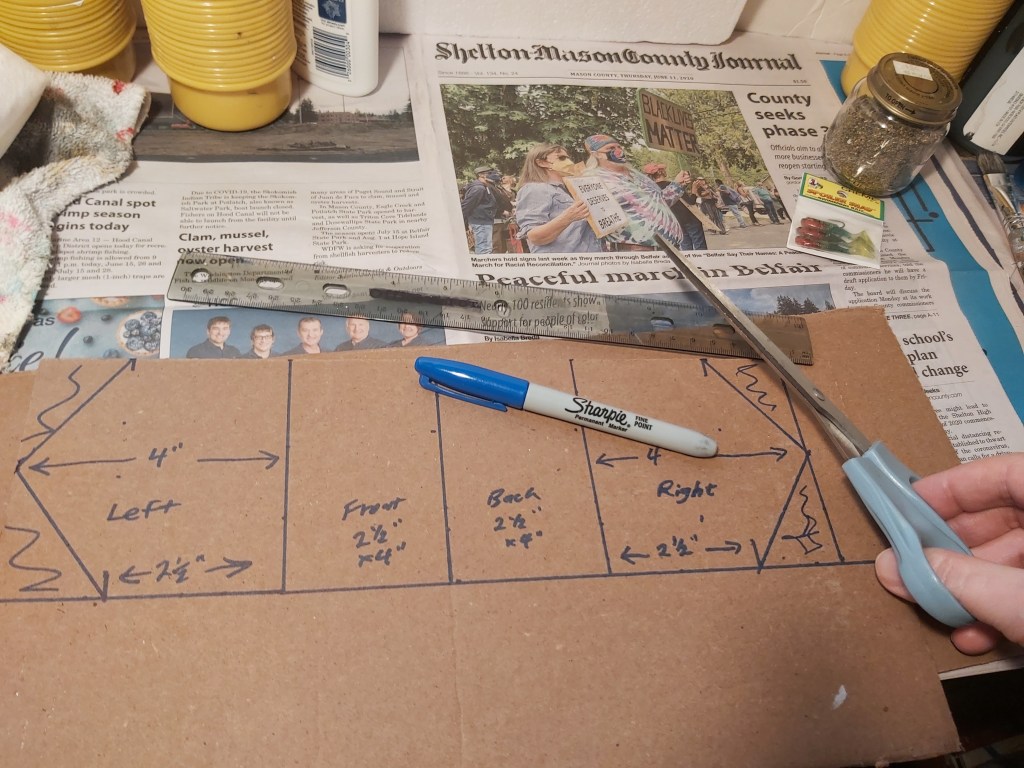
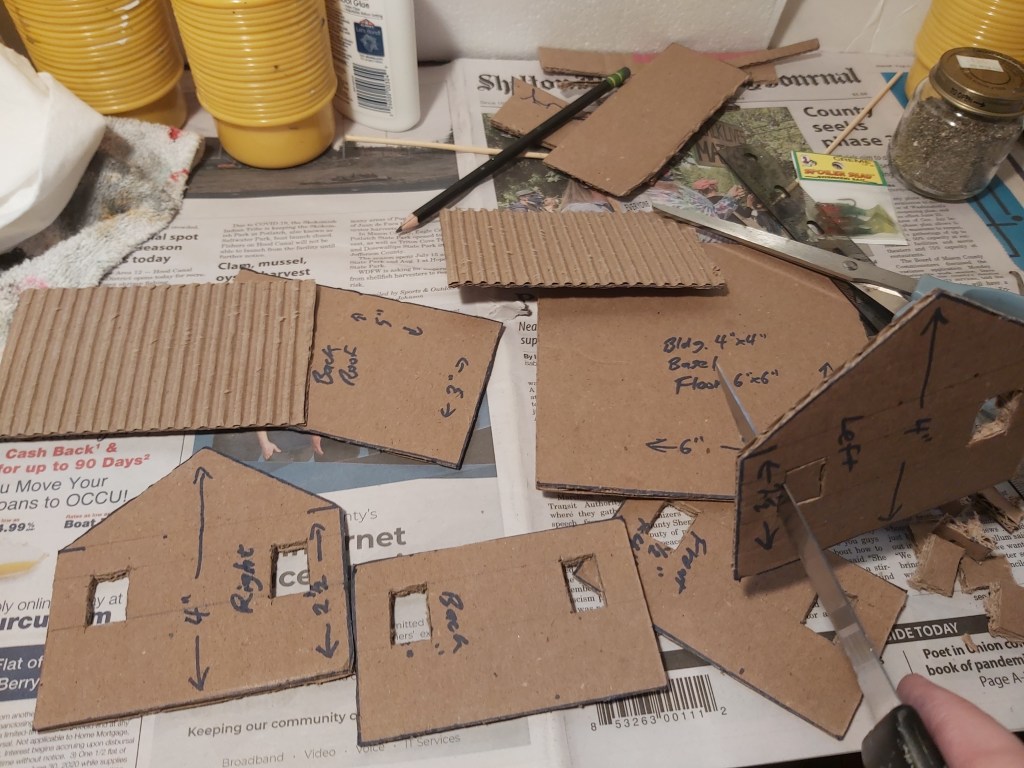
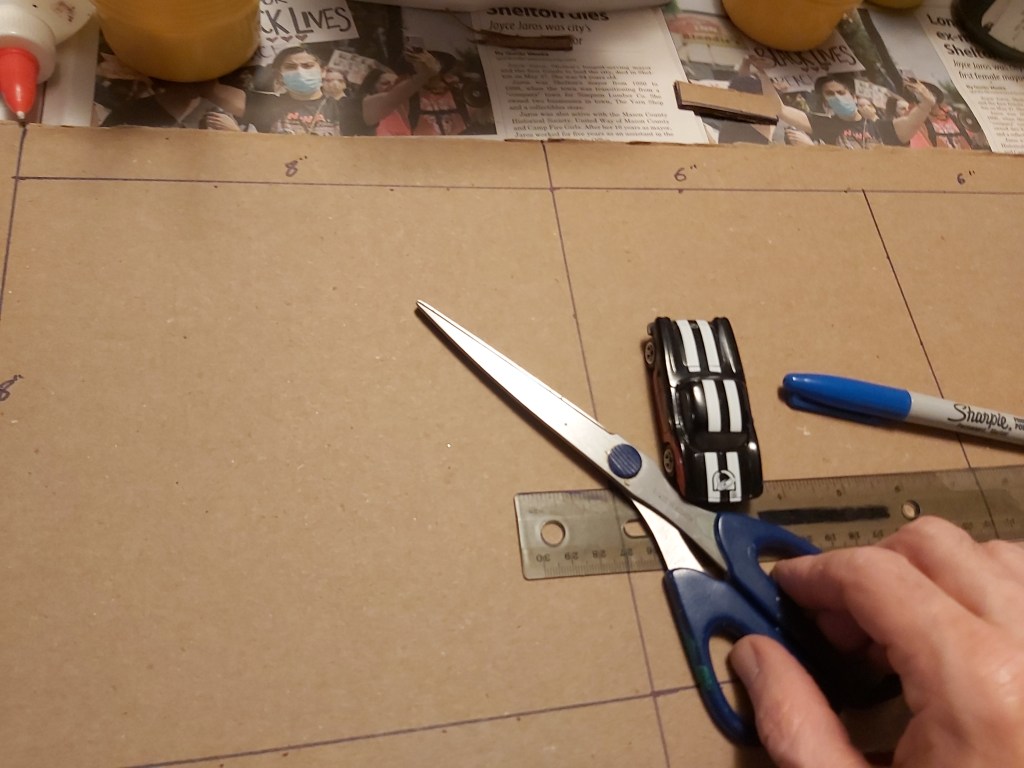
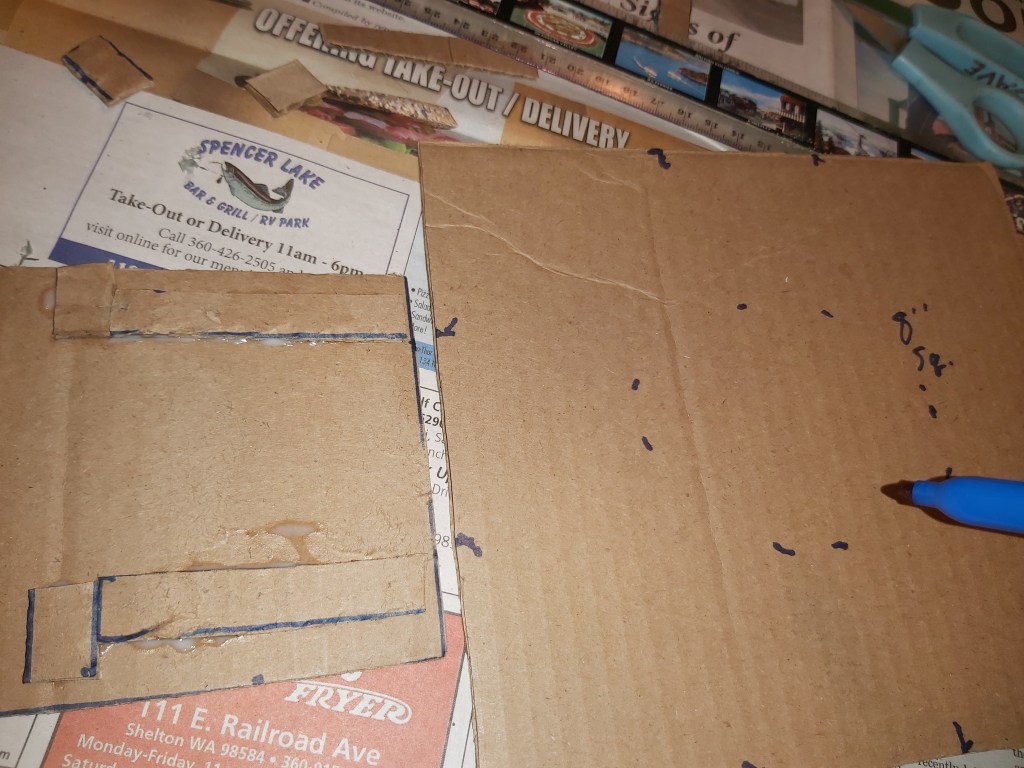
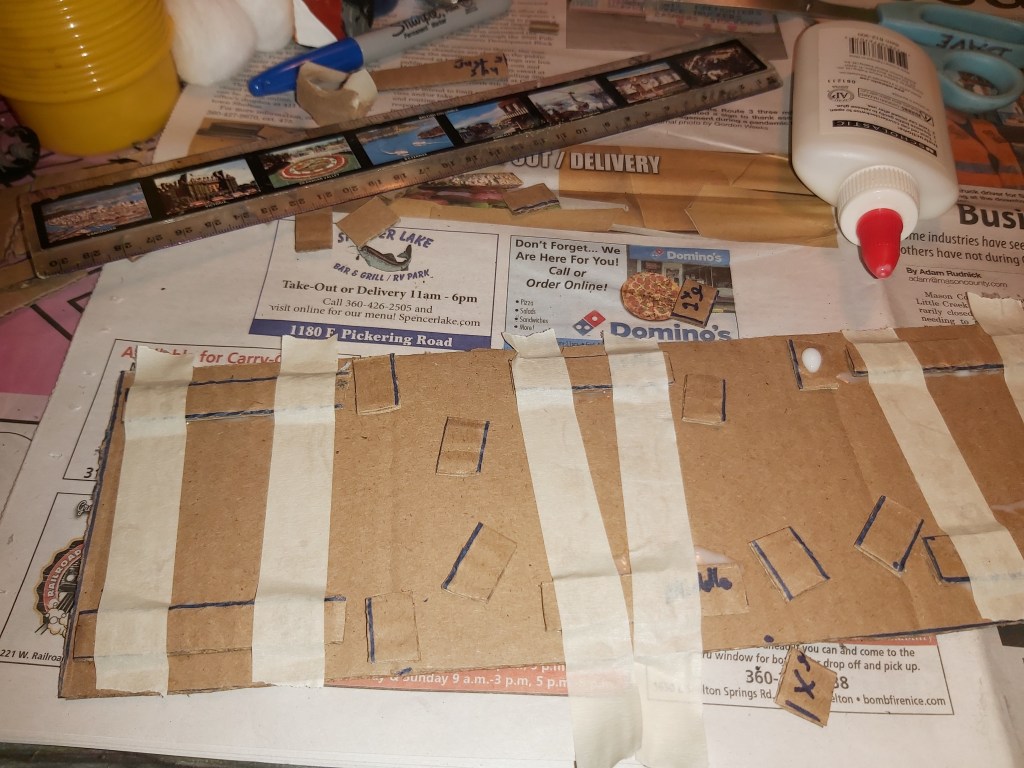
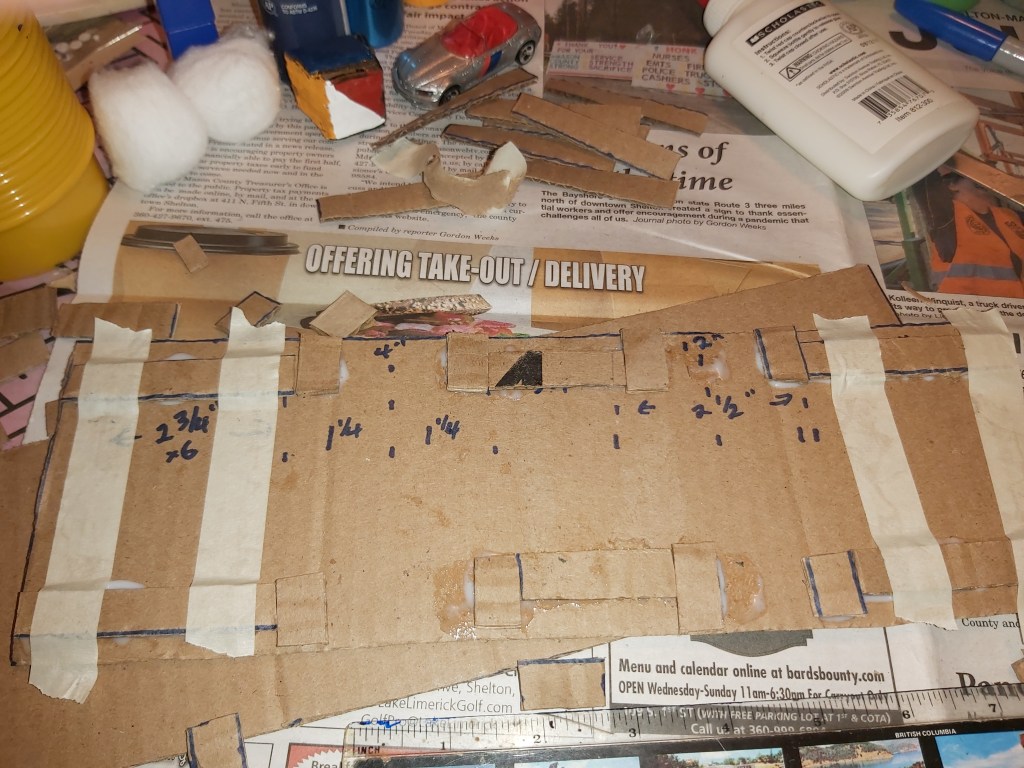
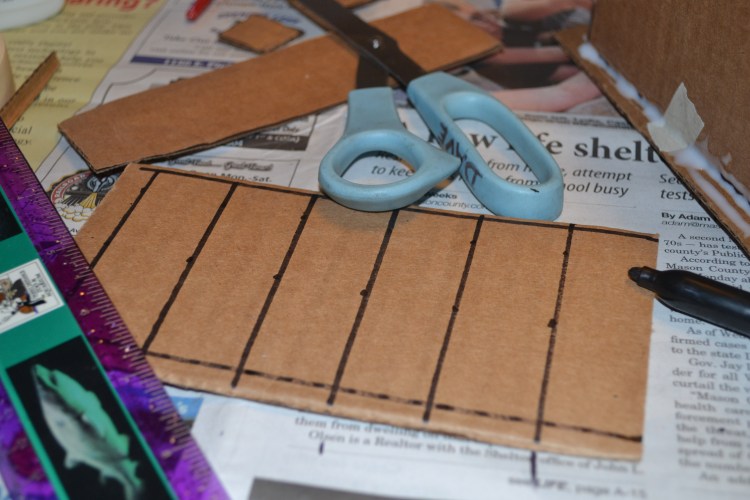
Keeping with the scale of the other buildings, the front entrance will be 2.5 inches tall and 4 inches on each side. To make a peaked roof, the sides will need to be 4 inches at the points.

3. Corrugated appeal

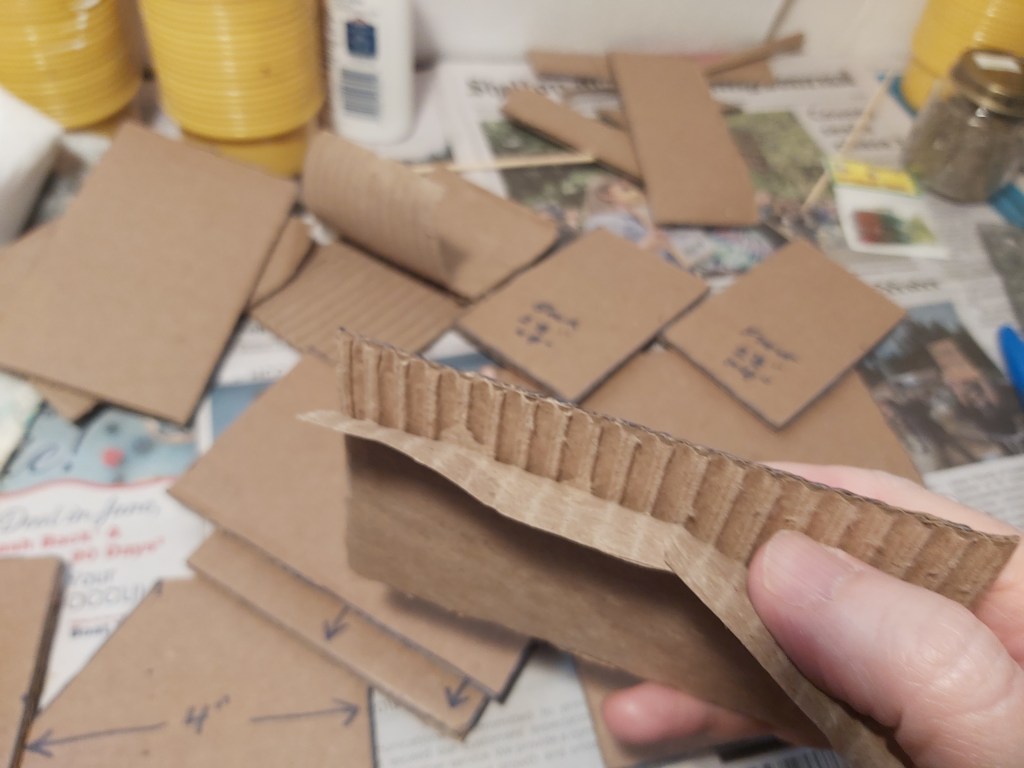
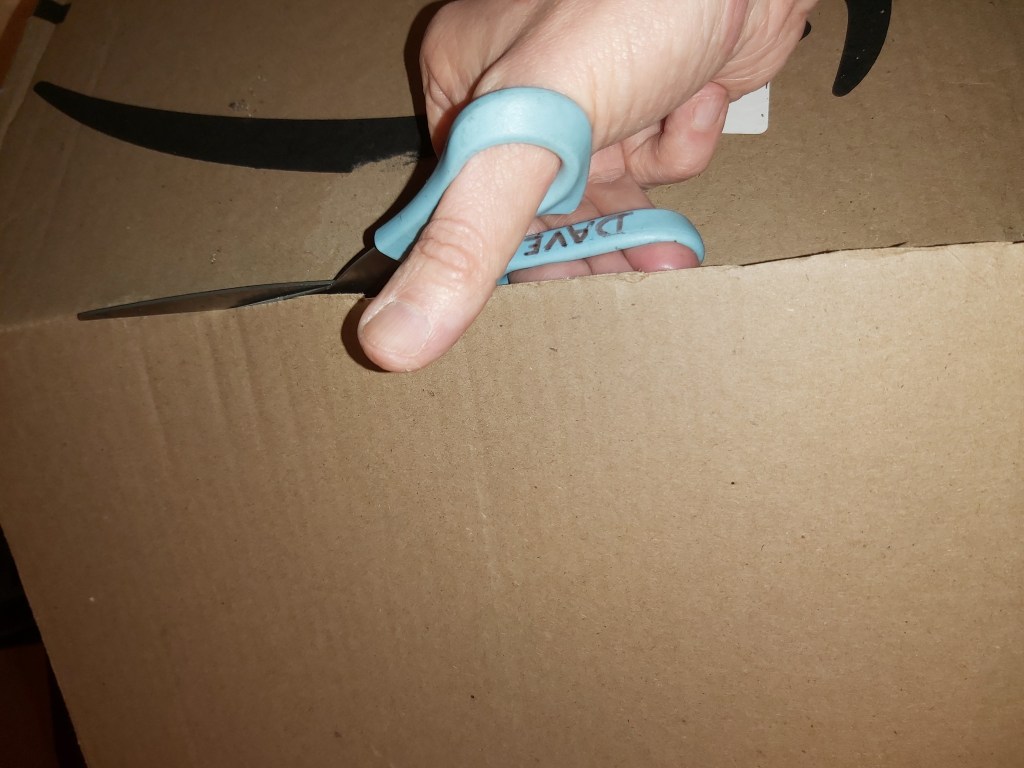
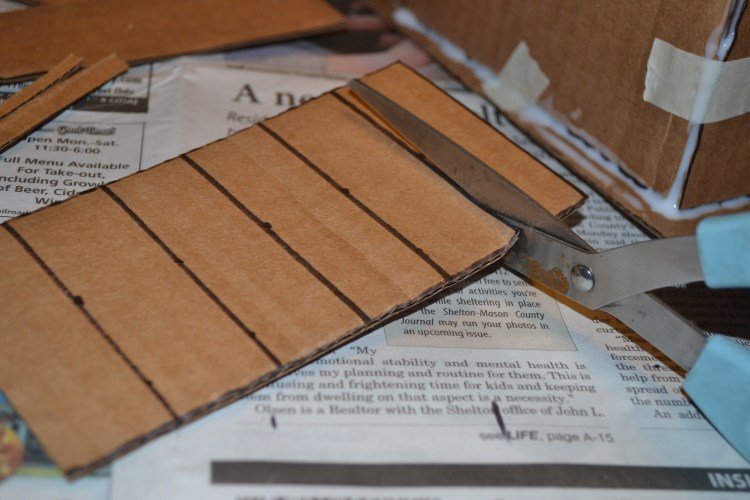
Old corrugated metal roof, meet corrugated cardboard. This looks promising. Could it really be this easy to get the look we’re after? Cut two roof pieces to 5” x 3” and peal a flat layer of the cardboard to reveal the corrugated part. Think about the rain, this is direction-sensitive.

4. Setup

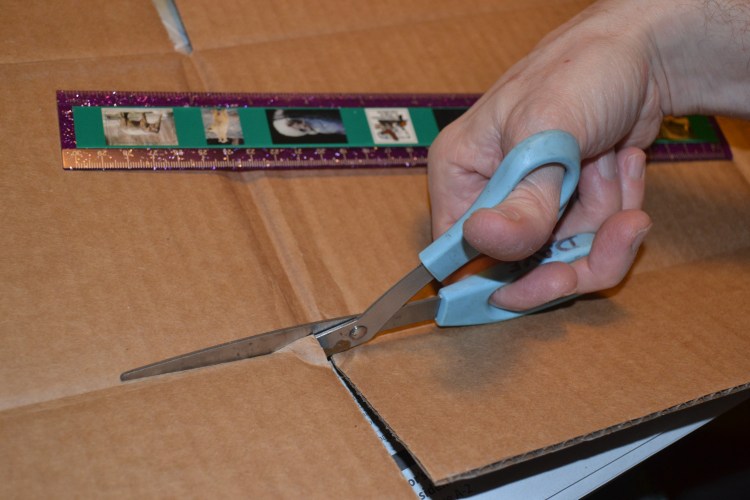
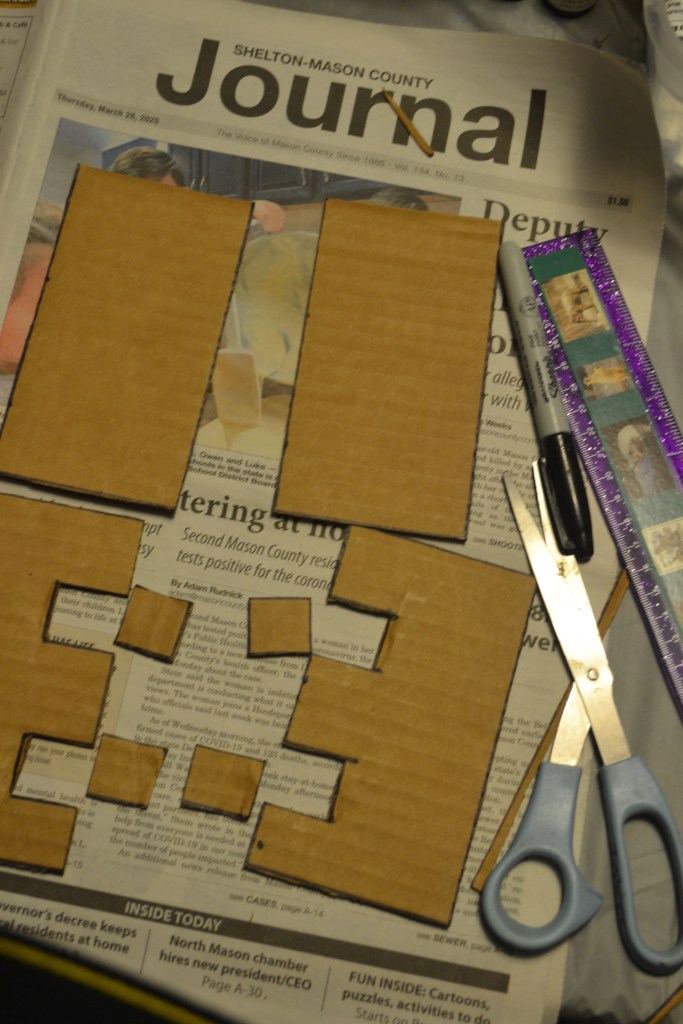
Measure, mark and cut out the windows with a hobby knife (be careful with sharp objects). Make a 6” square base. Double-check each piece for accuracy, holding each up against the others to test for fit and trim or remake pieces as needed. It’s only cardboard so you have plenty of materials.

5. Assembly – walls

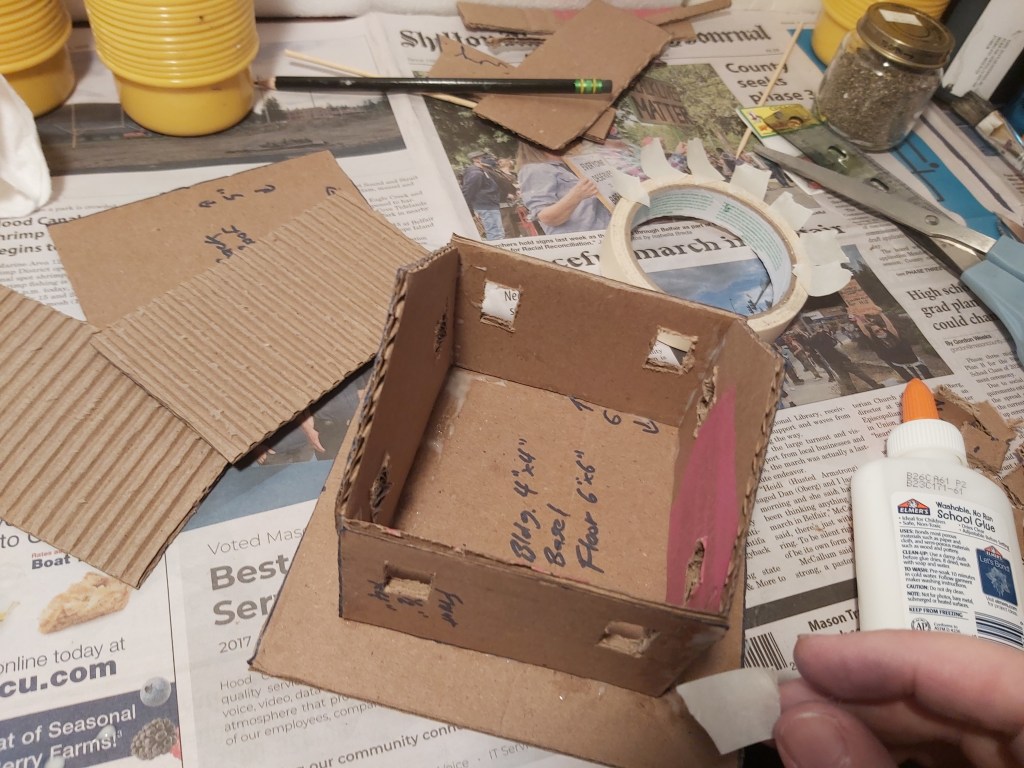
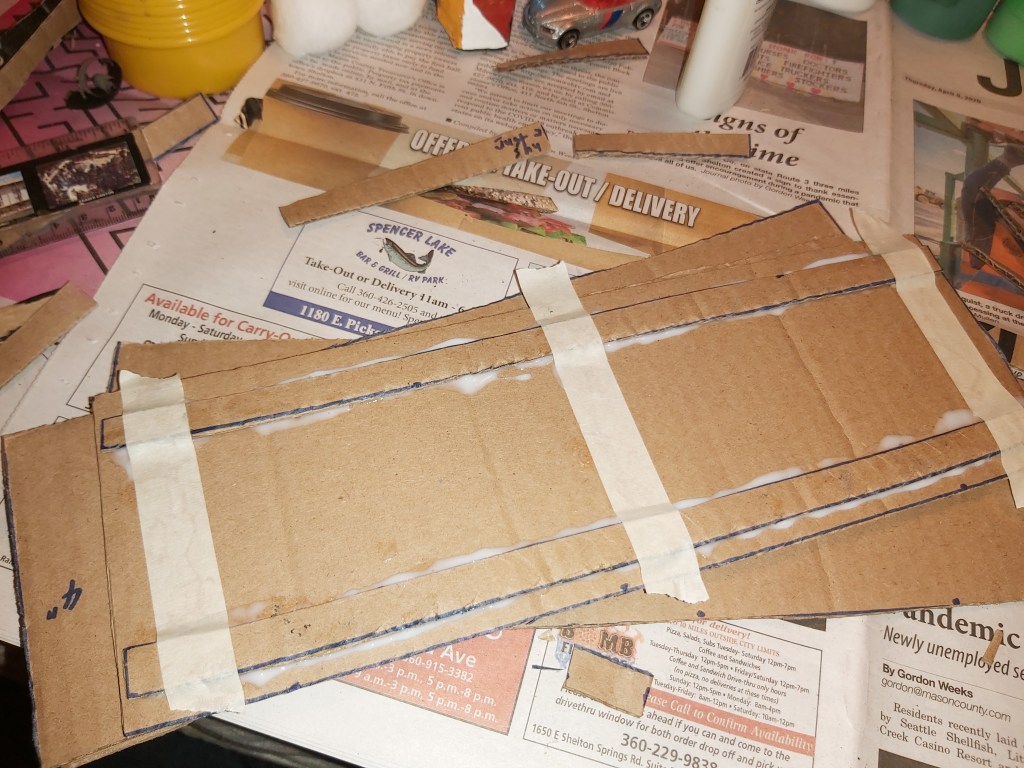
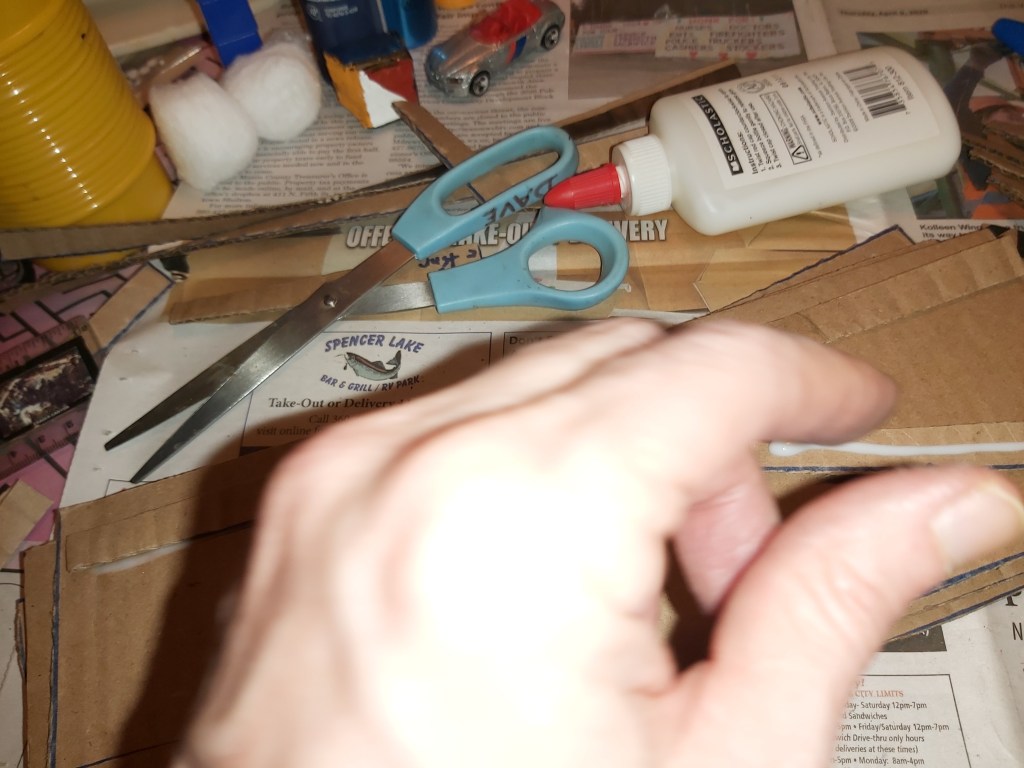
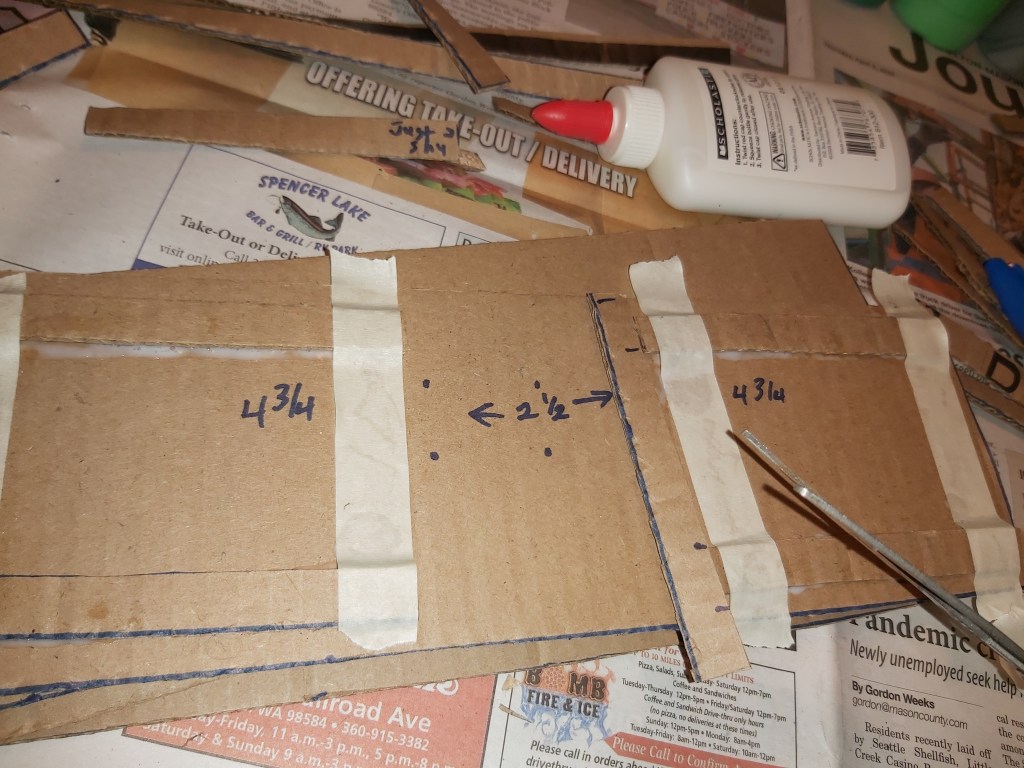
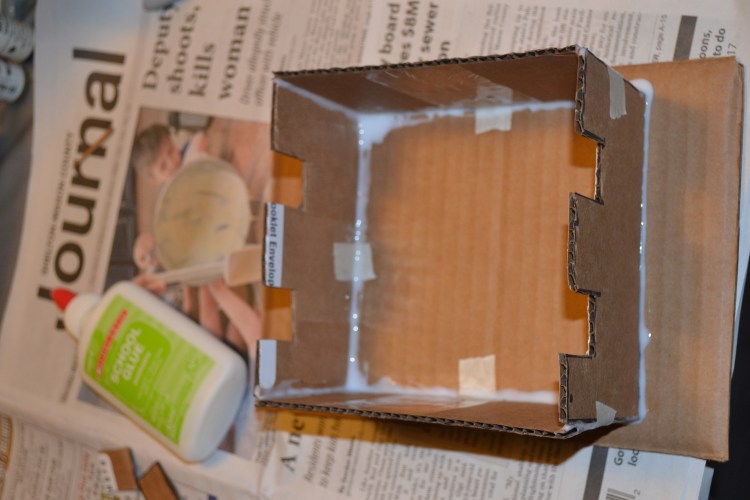
Line everything up and run beads of glue along all of the edges. Adjust as you go, and use masking tape to help hold pieces together. If you’ve ever made a gingerbread house, this is similar.

6. Roof and cap stick

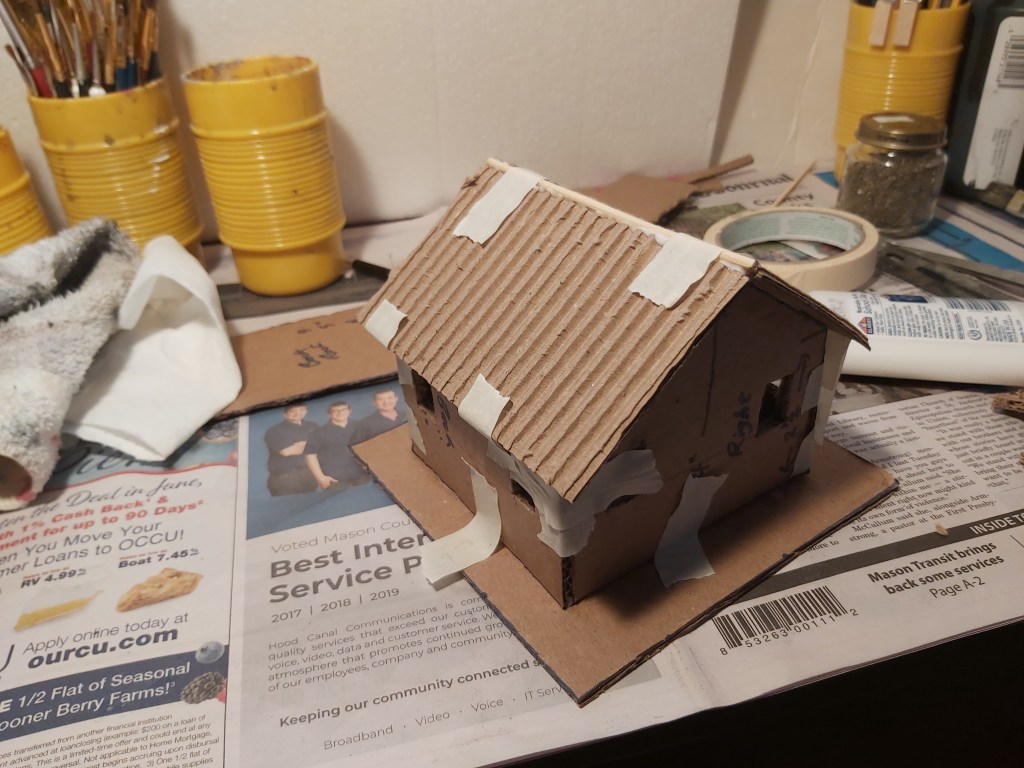
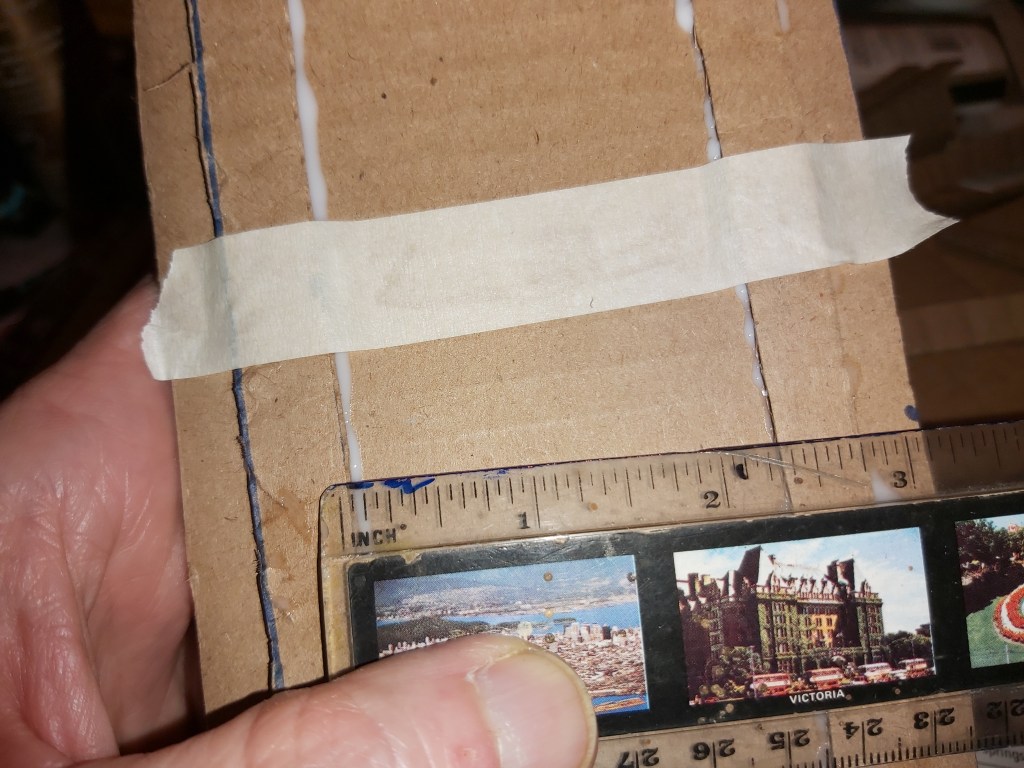
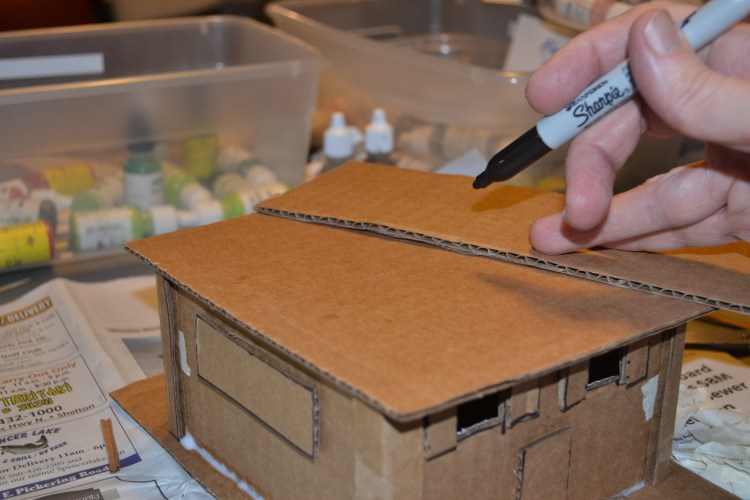
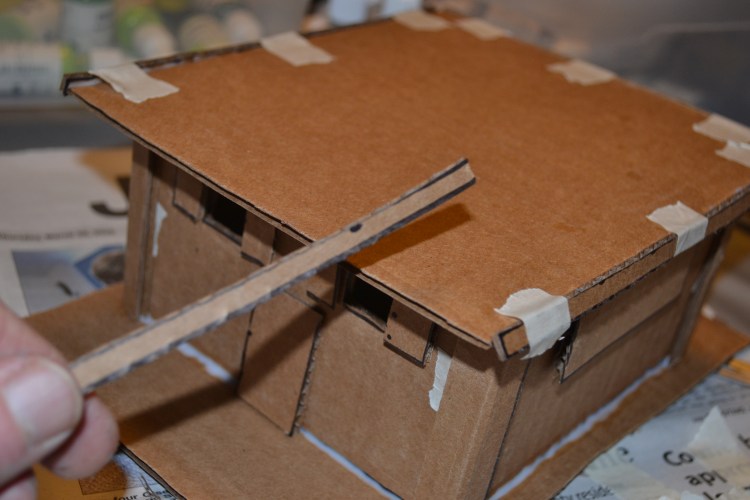
Cut a piece of bamboo skewer to the same length of the roof (should be 5”). Glue it all together and put masking tape across the top to hold it together. After the glue dries, peel the tape off.

7. Trim

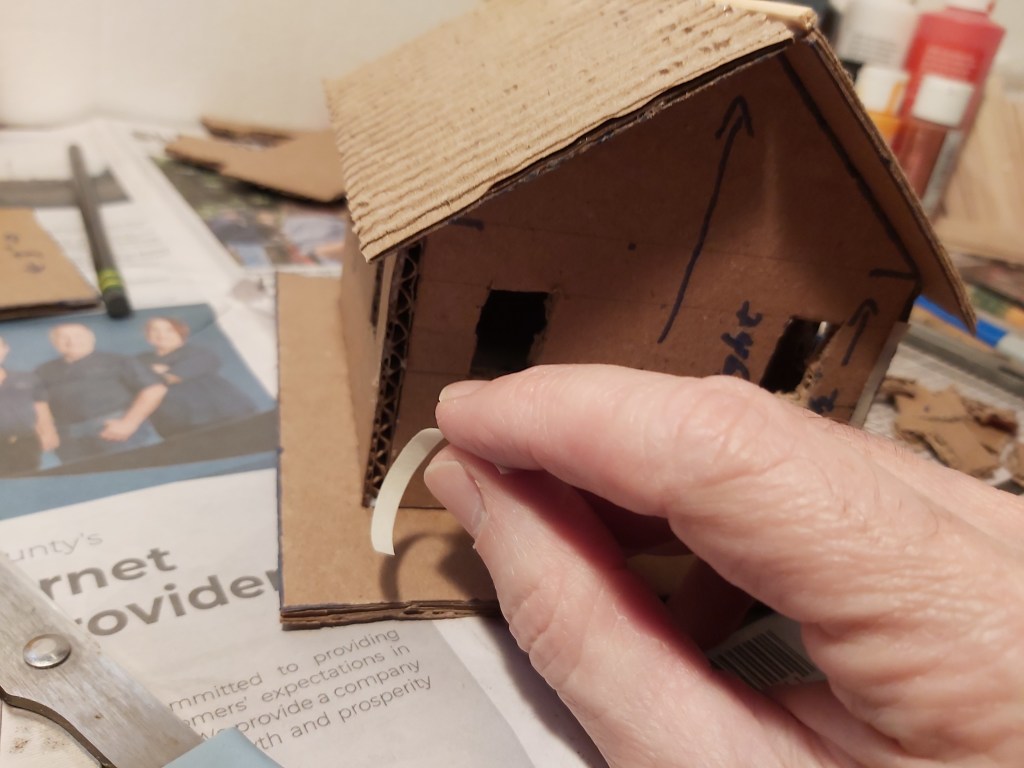
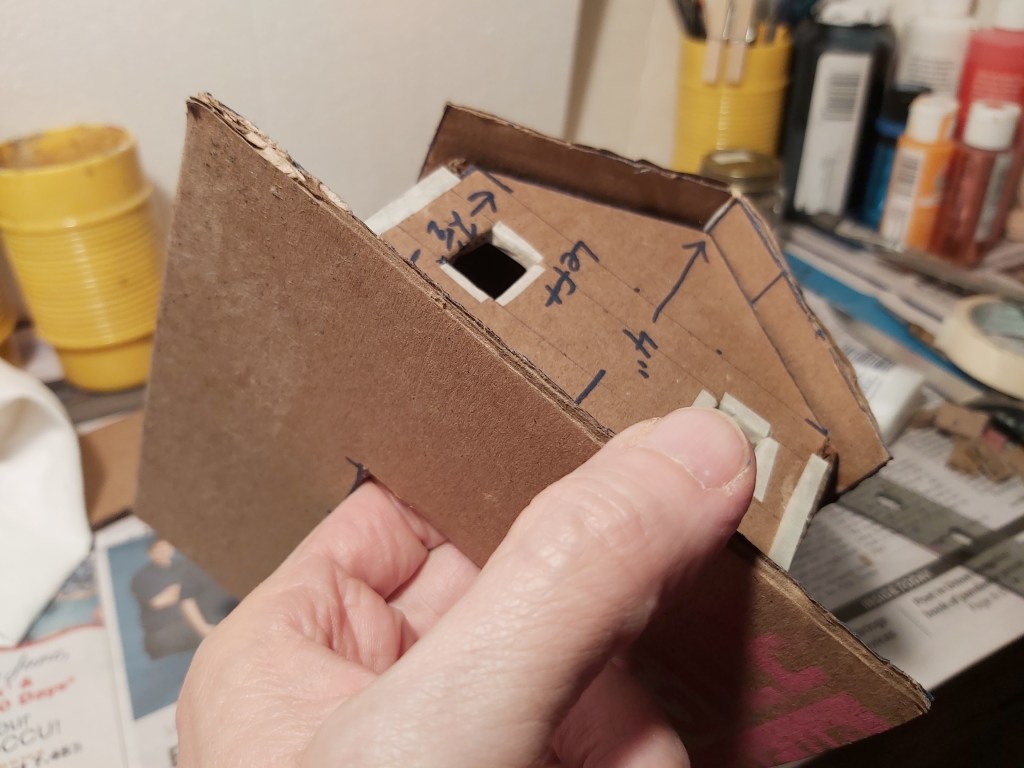
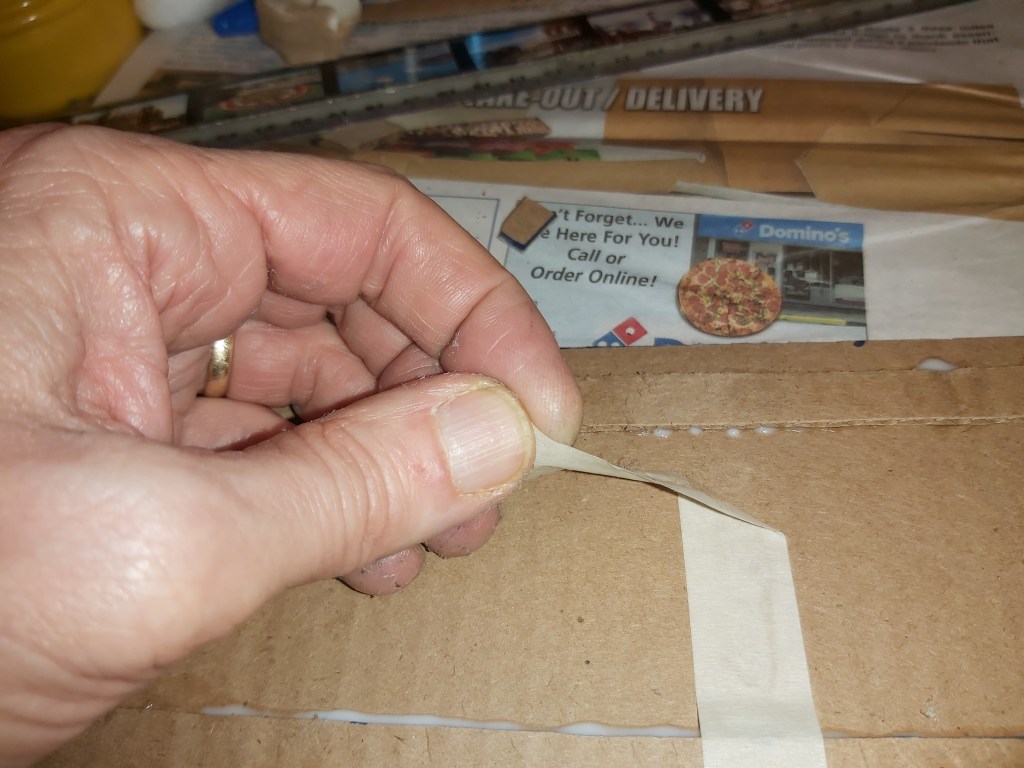
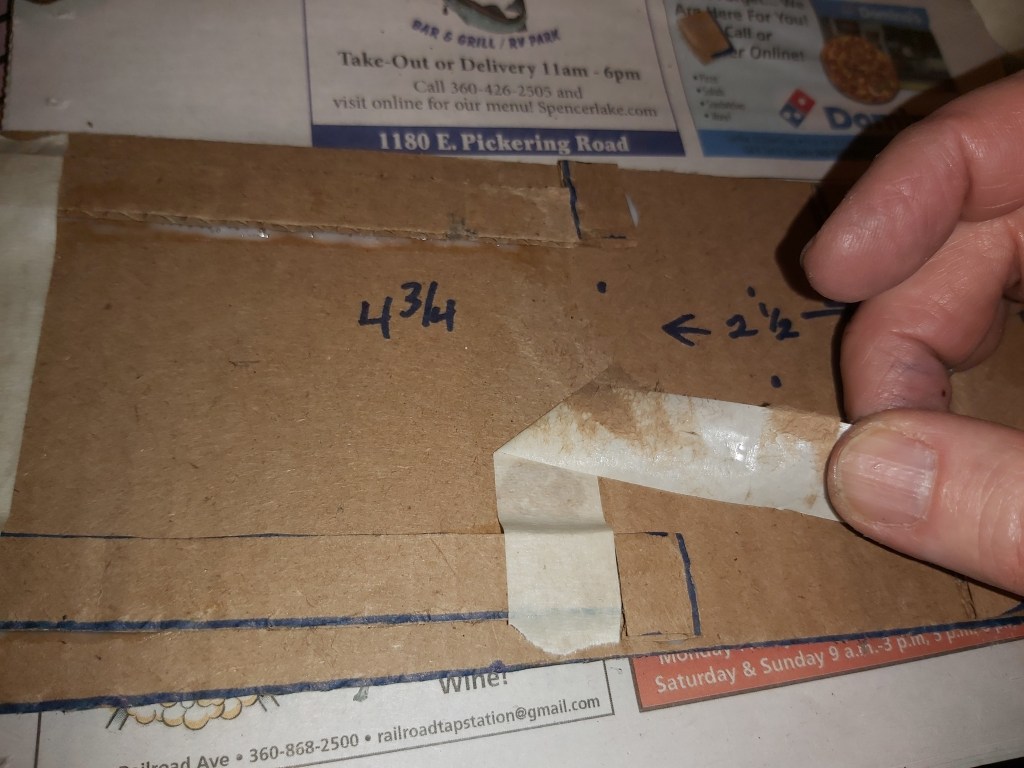
With scissors, cut bits of masking tape down to size, and cover the side edges of the walls and windows. Cut a hole in the bottom of your shack so you can reach the opposite side and carefully press the tape down into place. This will tidy up the look.

8. Happy mistake

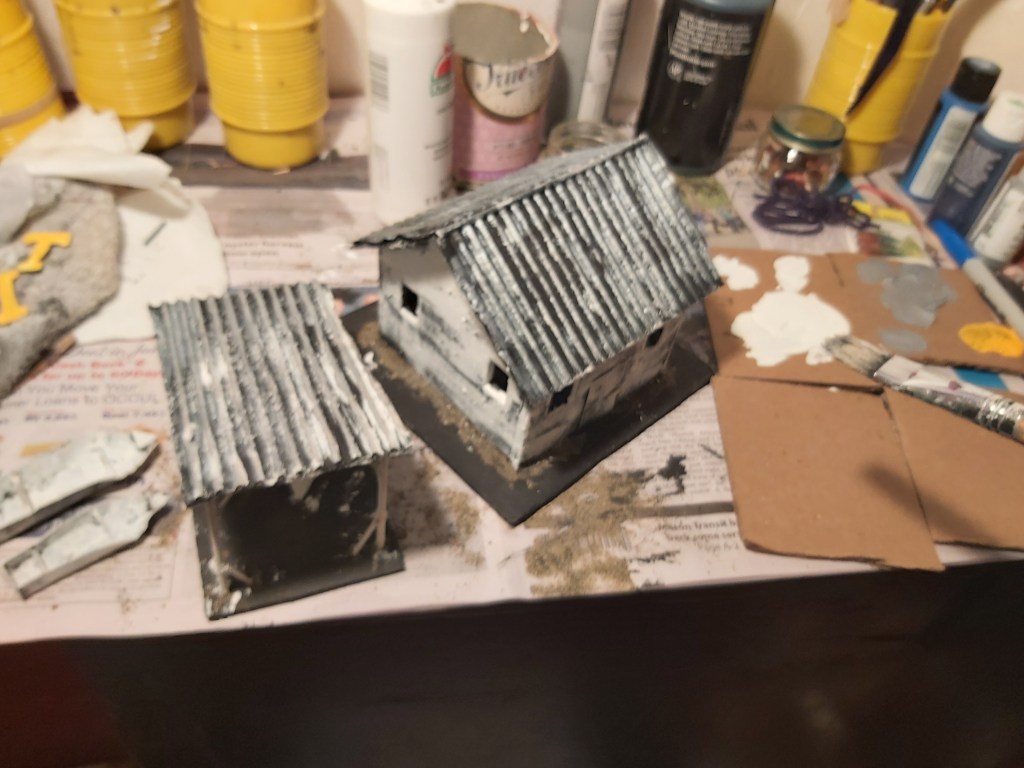
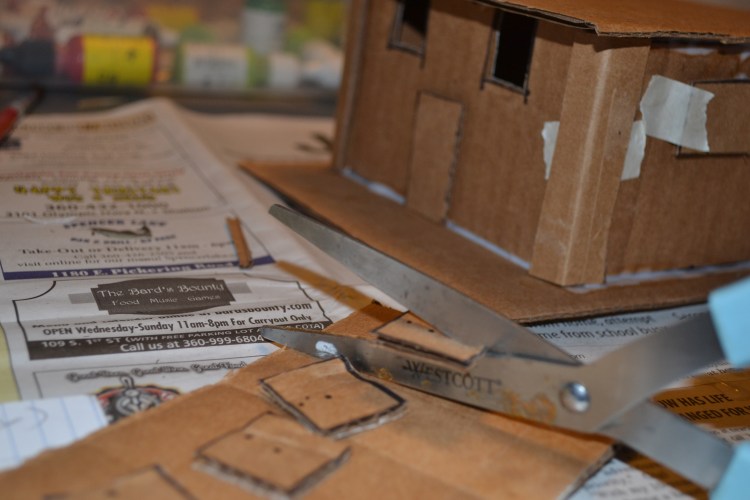
A roof piece that was facing the wrong way will make a great outdoor shed. Cut down bamboo skewers for the main poles, then add flat toothpicks for extra support. Basecoat everything in black. Sketch out a sign for the roof, on thin card.

9. Simple boats

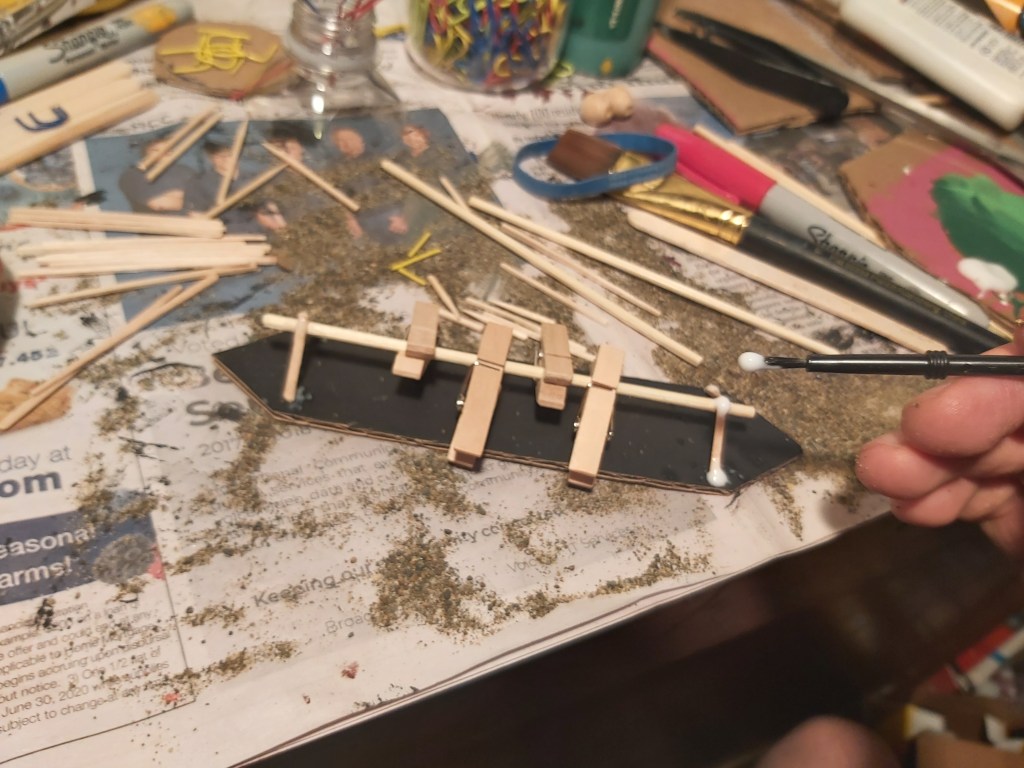
Fold a rectangle of thin card in half down the middle. Cut a curve to a point at the front. Fold the back part into thirds. Open and stand on back to trace back panel, cut and glue. Cut, glue and place a couple of toothpicks across the middle. Let dry. Basecoat black, dry brush white, then paint color and details. Make two or more.

10. Net

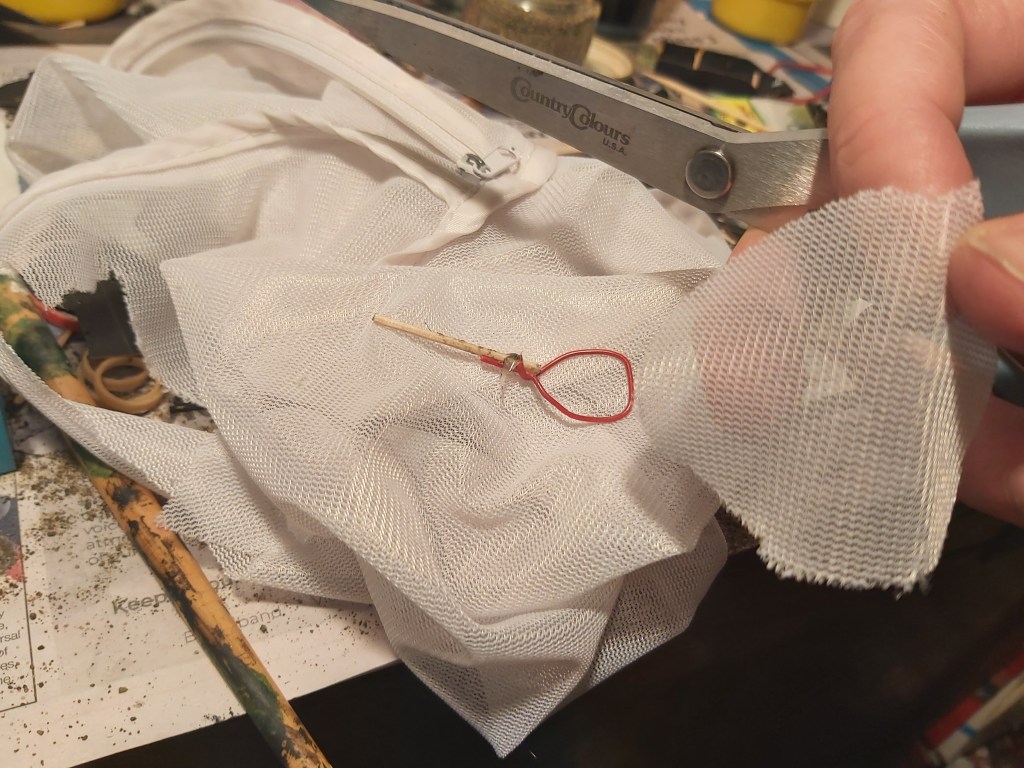
Use a round toothpick, a metal paper clip and some mesh. Shape and twist the paper clip to the toothpick, then shape cut and glue the mesh to the rim. Let dry. You could paint yours but I didn’t.

11. Flock & dry brush

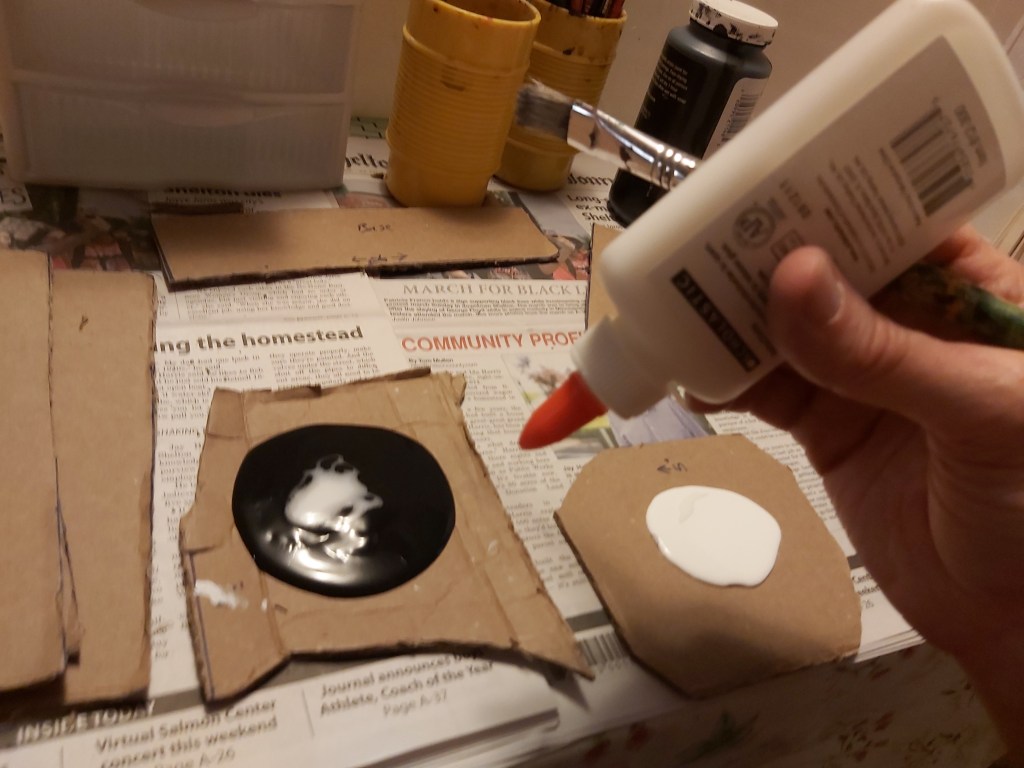
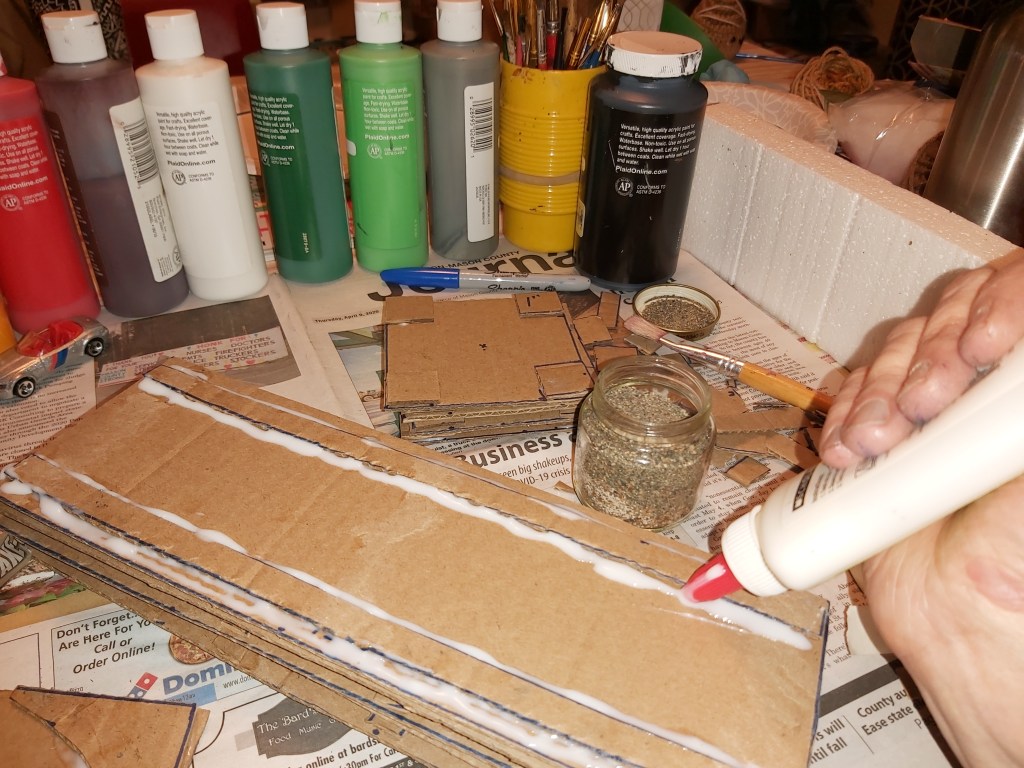
To flock, add glue to joints and edges, then sprinkle with sand. Shake off the excess. This will fill gaps and strengthen everything while also looking great. Thoughtfully paint white over the top of things, giving it a heavy dry brush but leaving black in the low areas. This will brighten up the base coats to prep for color.

12. Color and detail

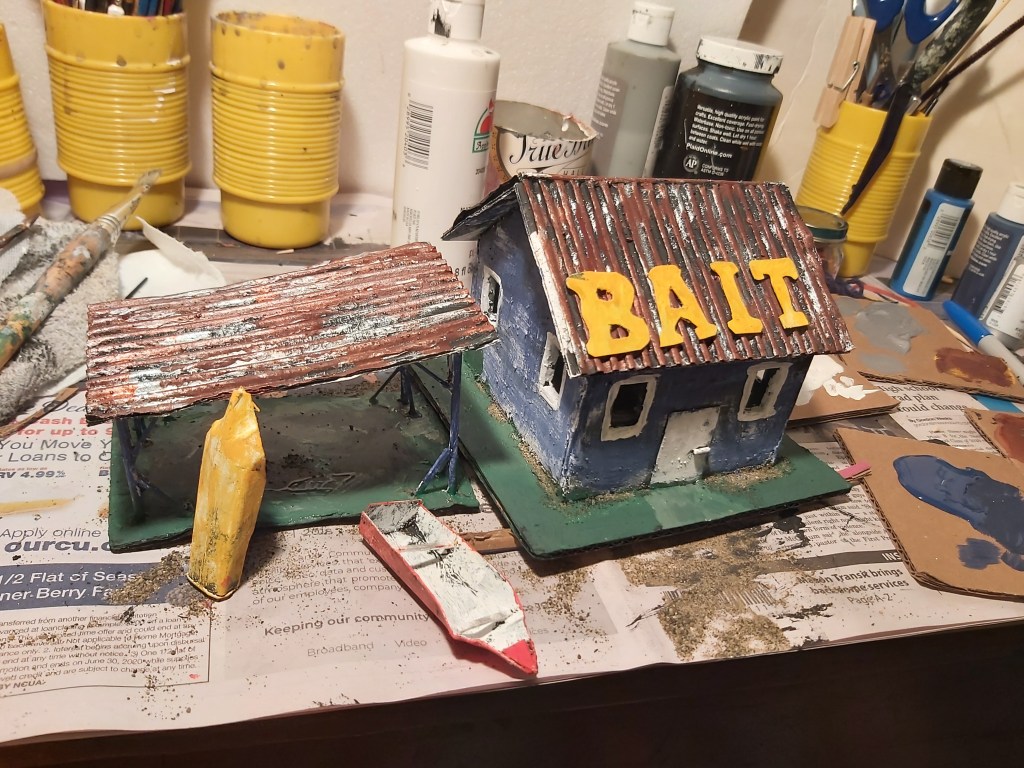
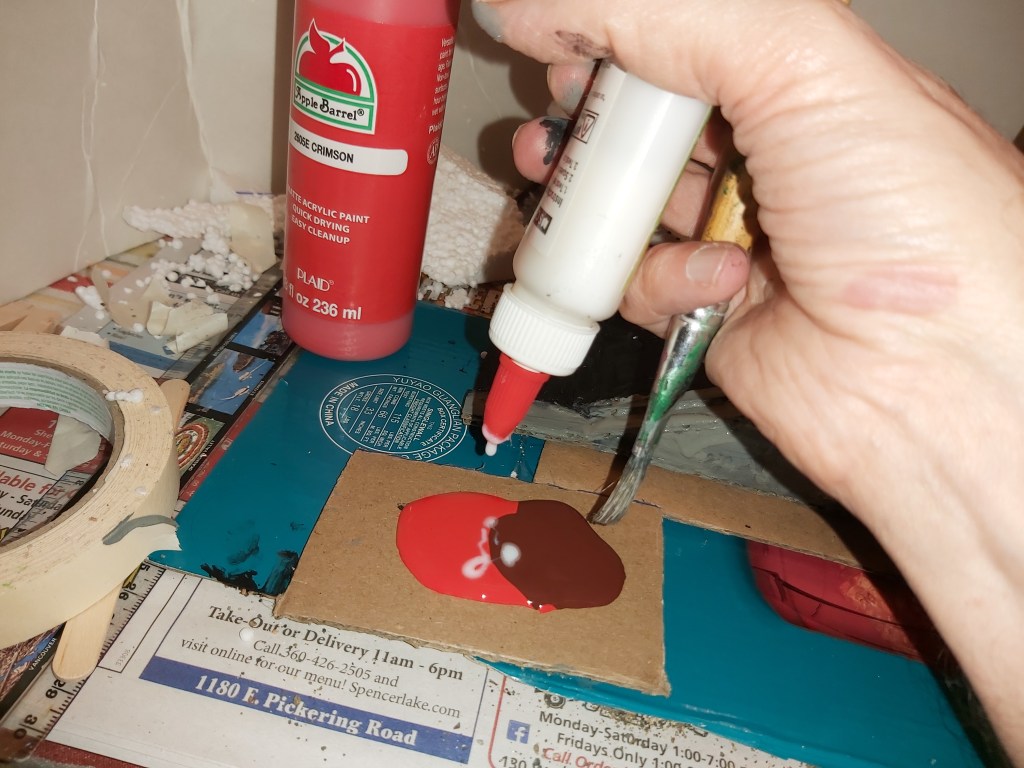
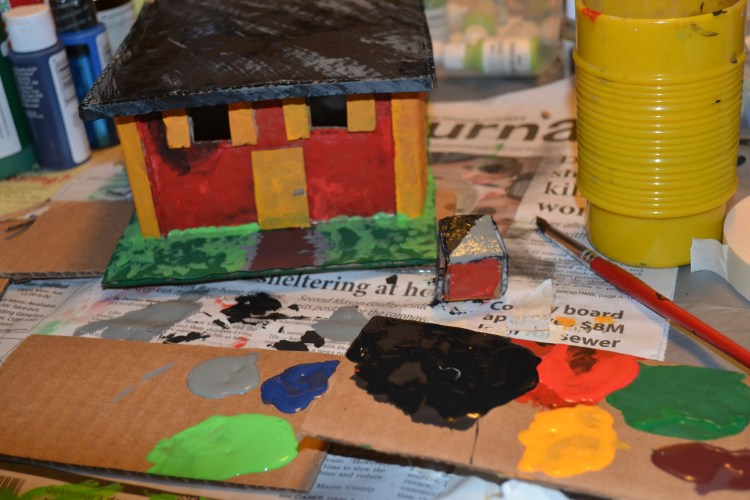
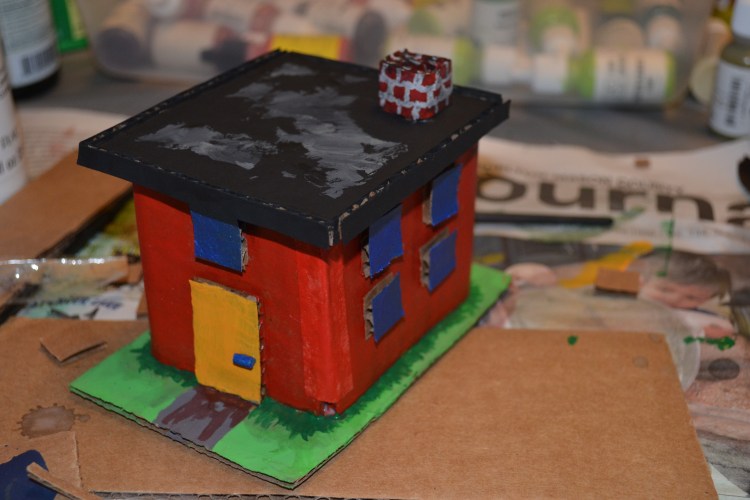
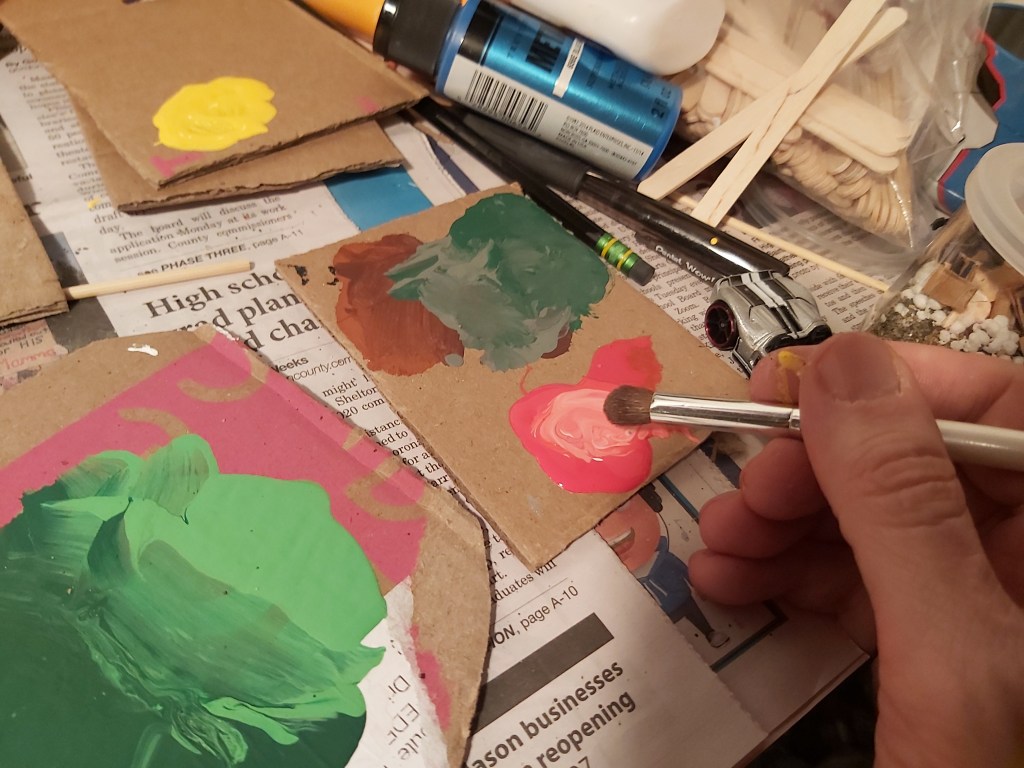
I painted the sign and one boat yellow. Then, I added silver to the roof (keeping some black and white for texture), so for a minute there it looked kind of new. Finally, I slopped around a rough mix of copper, brown and a bit of the yellow with a big brush. It looks like I worked hard for this look, but I didn’t. You can do this – it’s easy and super fun!

13. Bait Shack Fishing

A battery-powered tea light adds an inner glow of character to our new Happy Tree Village addition!

Idea 8: Cosmic Motor Theatre

crafty time.CosmicMotorTheatre.pierik.24.20

Crafty Time

By Dave Pierik

Shelton-Mason County Journal

Movies Fun!

Previously, we’ve made a drive-in restaurant, a castle, water, trees, roads, and buildings. Now our village needs a movie spot!

0. You will need: (Will – there is not to be a photo for this, it’s not a “step”)

Tools: ruler, scissors, craft knife, paintbrushes.

Materials: cardboard (corrugated and thin card), school glue, round toothpicks, craft sticks, acrylic paints, masking tape. Optional: 2” craft ball (Styrofoam), bamboo skewer, clear dome drink lid.

1. Screen & parking lot

As always, think and plan what you want first; get vehicle and screen dimensions. Measure and cut corrugated cardboard for the screen (7” wide x 5” tall), three parking lot sections (one 8” square and two 8” x 6”, and one screen base, 8” x 2”.

2. Base coats

Mix a bit of glue into your paint and basecoat the screen (on both sides) and Syrofoam ball with two coats of white. Basecoat everything else with one thick coat of black (on one side is fine). Set aside to dry.

3. Cosmic, man

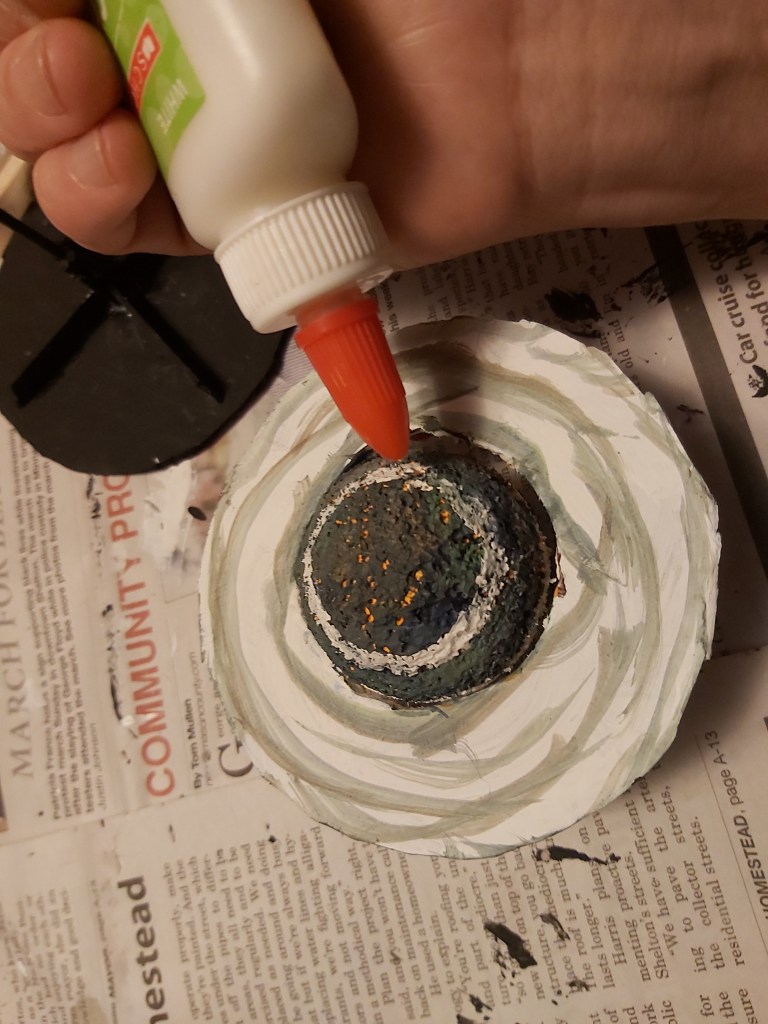
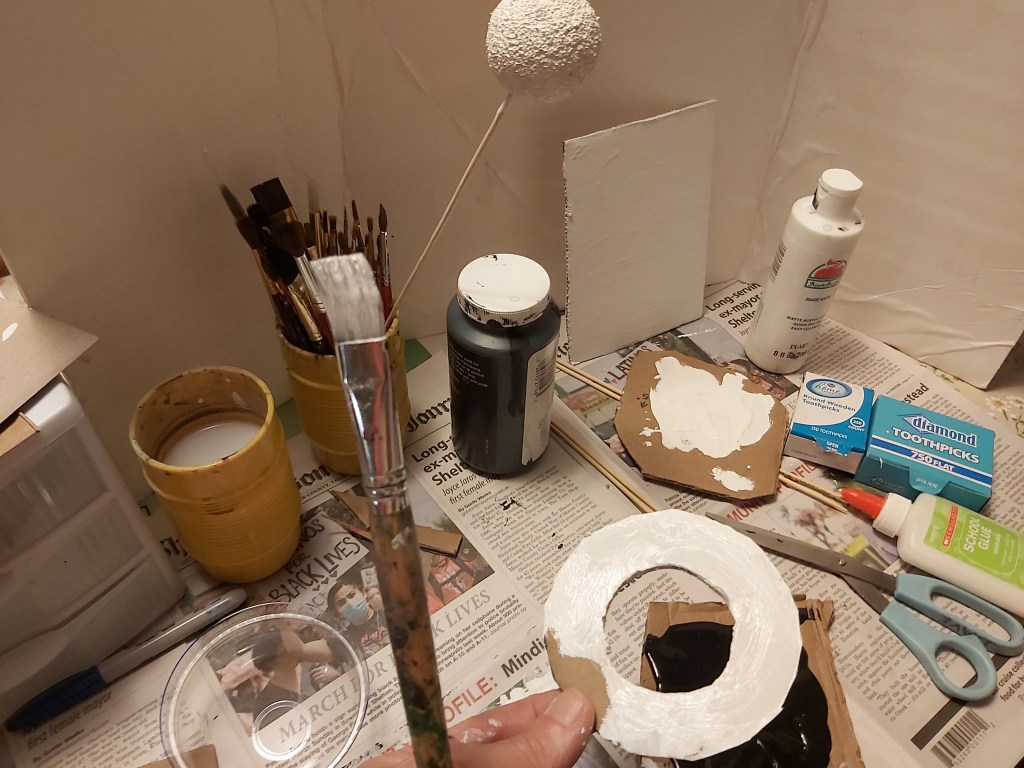
You don’t have to be an astronaut to go to space. Fine-scale modeling takes you anywhere! Measure and cut a cardboard ring for your planet, with a 2” inner and 4” outer diameter. Basecoat in white, and glue on. Masking tape and your brush holder work great for holding your planet while it dries.

4. Sign prep

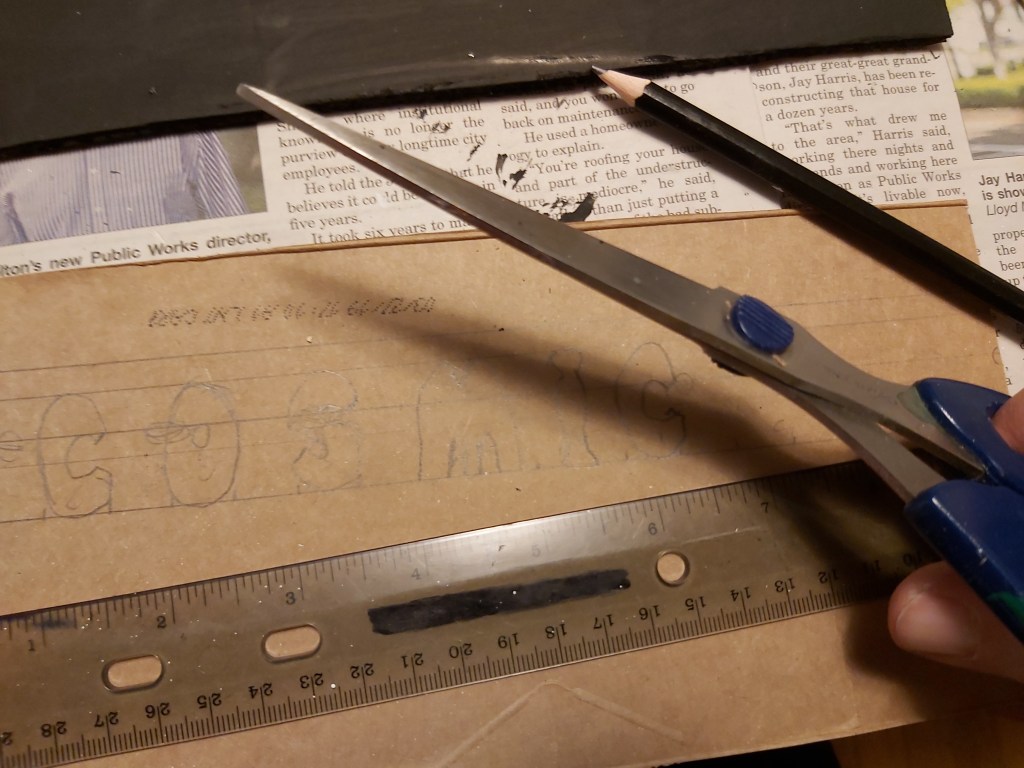
Line, measure and pencil sign lettering onto thin cardboard. Most of this can be cut out using scissors. To cut out the middle of the “O” you will need a craft knife. Be careful and patient. Base coat on both sides with two coats of white. Let dry.

5. Stand sticks

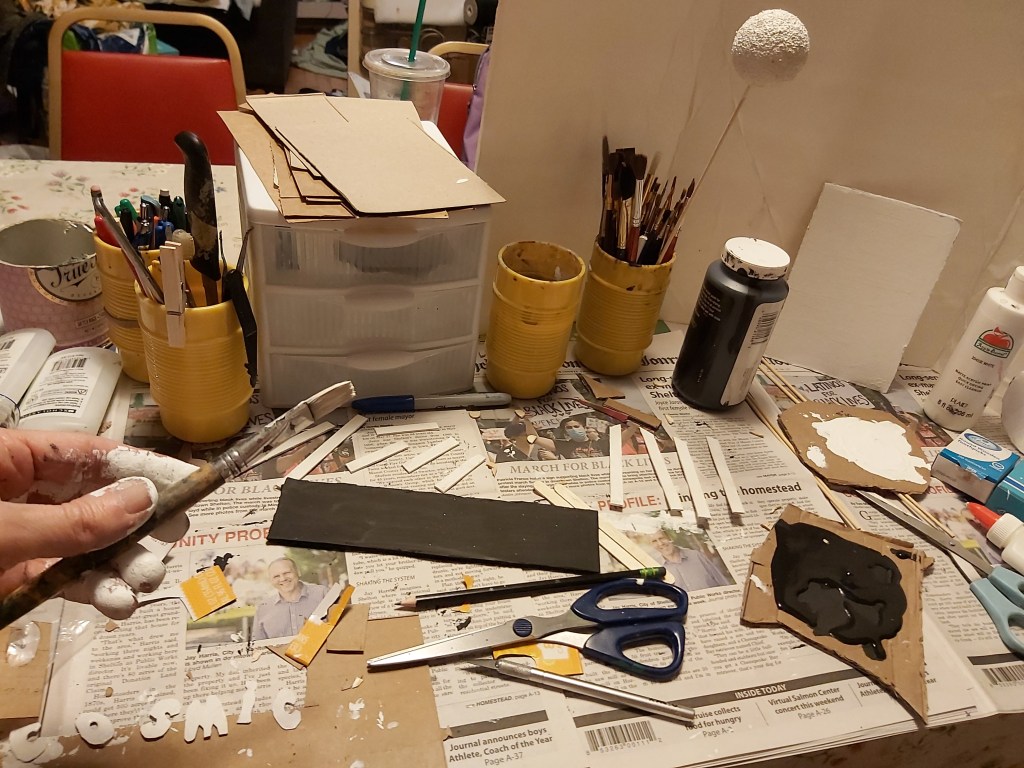
For screen stand, cut the rounds off of several craft sticks. You will need four 2” pieces 2” long, and four 4” pieces with angles cut on one end. Base coat them all white. Let dry. Repeat for sign stand and base coat in black over a 4” round base with a bamboo skewer in the middle.

6. Movie screen – stand

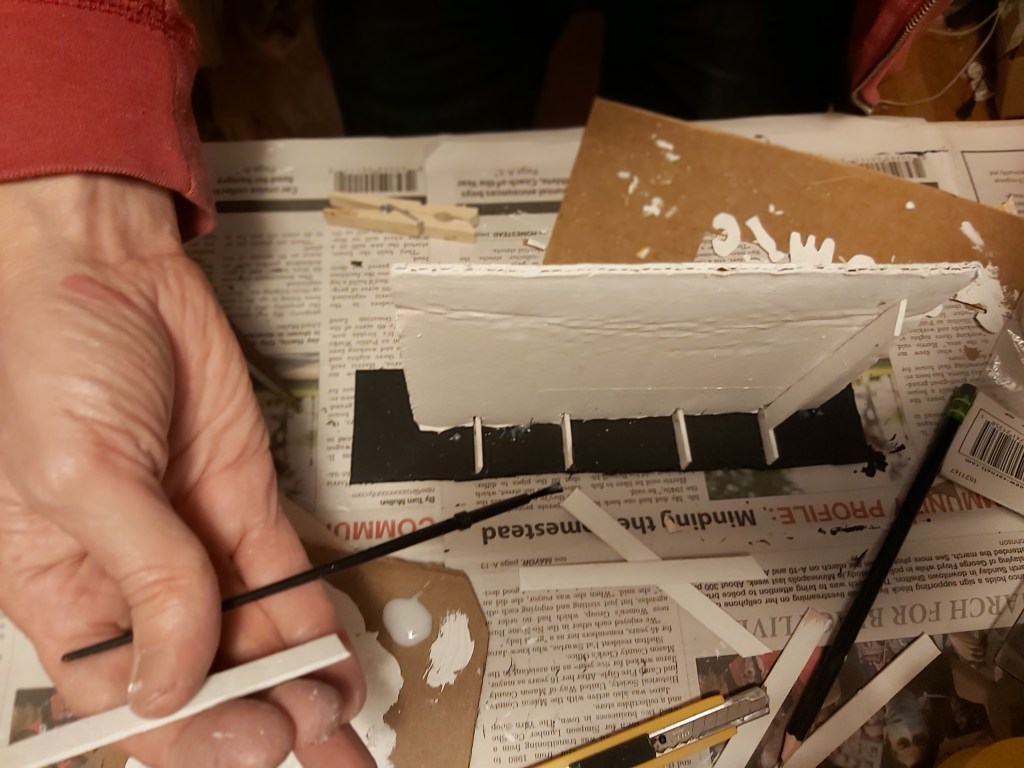
Measure mark and cut four narrow notches in the bottom. Turn upside-down and glue the white 2” craft sticks to them, flush with the cardboard. Run a bead of glue along the bottom edge of the cardboard and craft sticks. Center and place on the base. Gently bend cardboard to be flush with white 4” angled craft sticks. Glue them to the top of the base sticks and up the back of the screen.

7. Dome sign

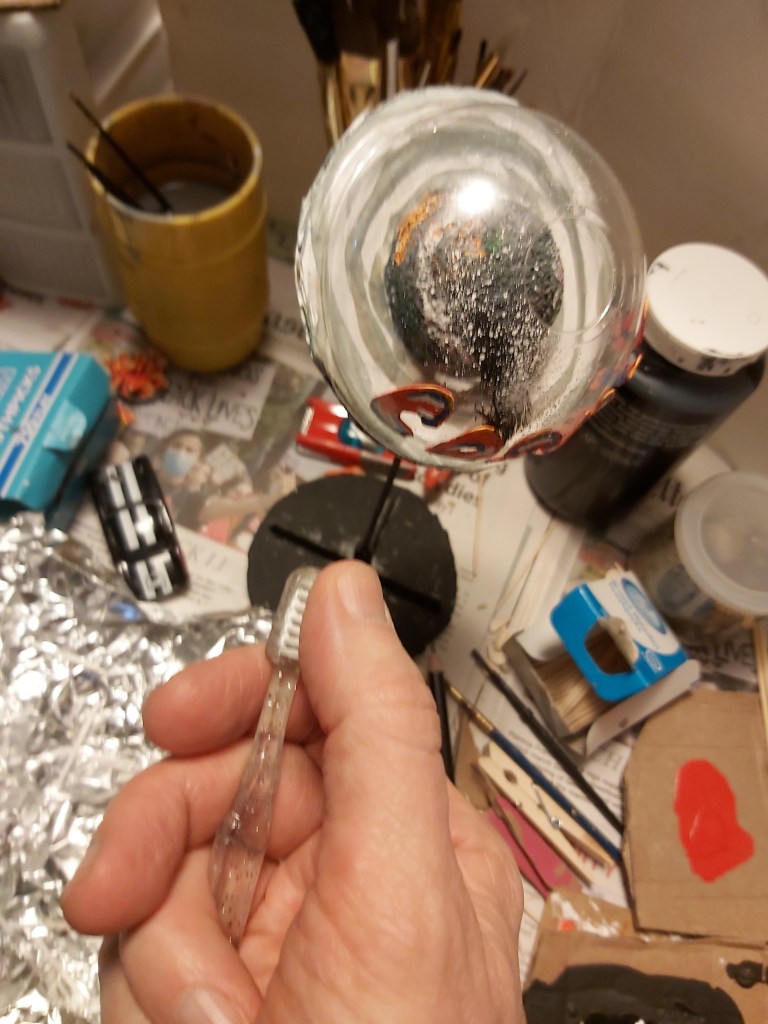
Paint color and detail on both sides of the sign lettering. Let dry. Trim the outer lip of the dome lid, then glue the letters on. Glue that to the top of the planet ring. Set a light weight such as a glue bottle on top, and let dry.

8. Tilt

Decide how much tilt you want on the ring before you attach the planet to the top of the sign base. Test fit, then flip upside down and glue.

9. Sticks & scale

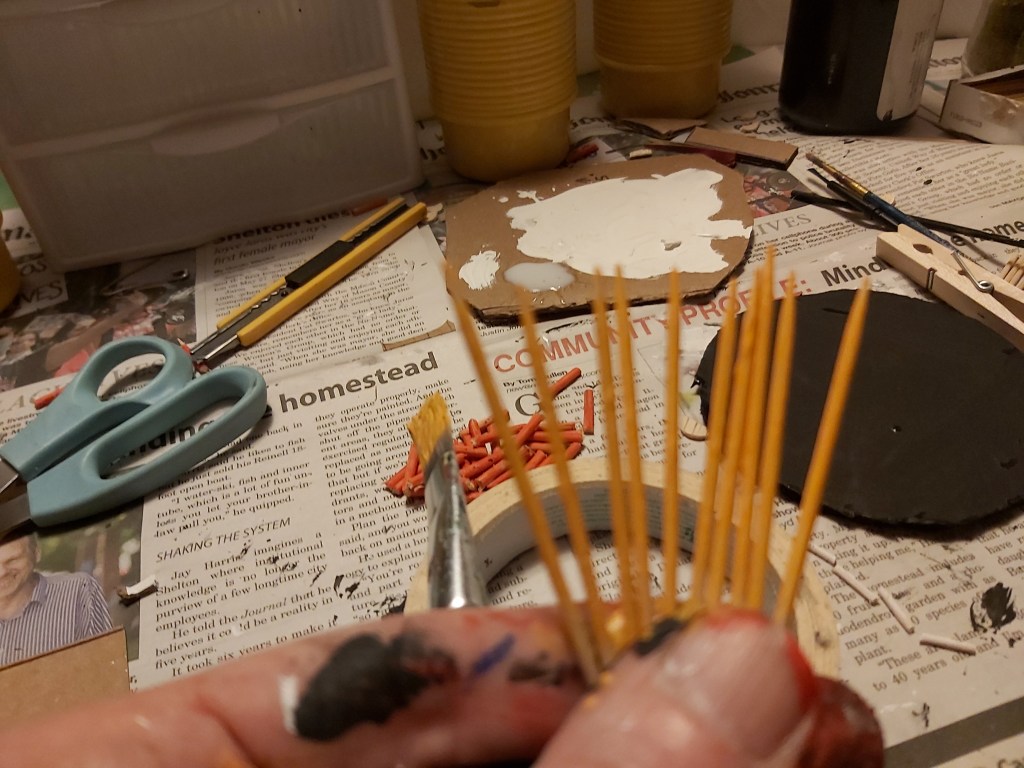
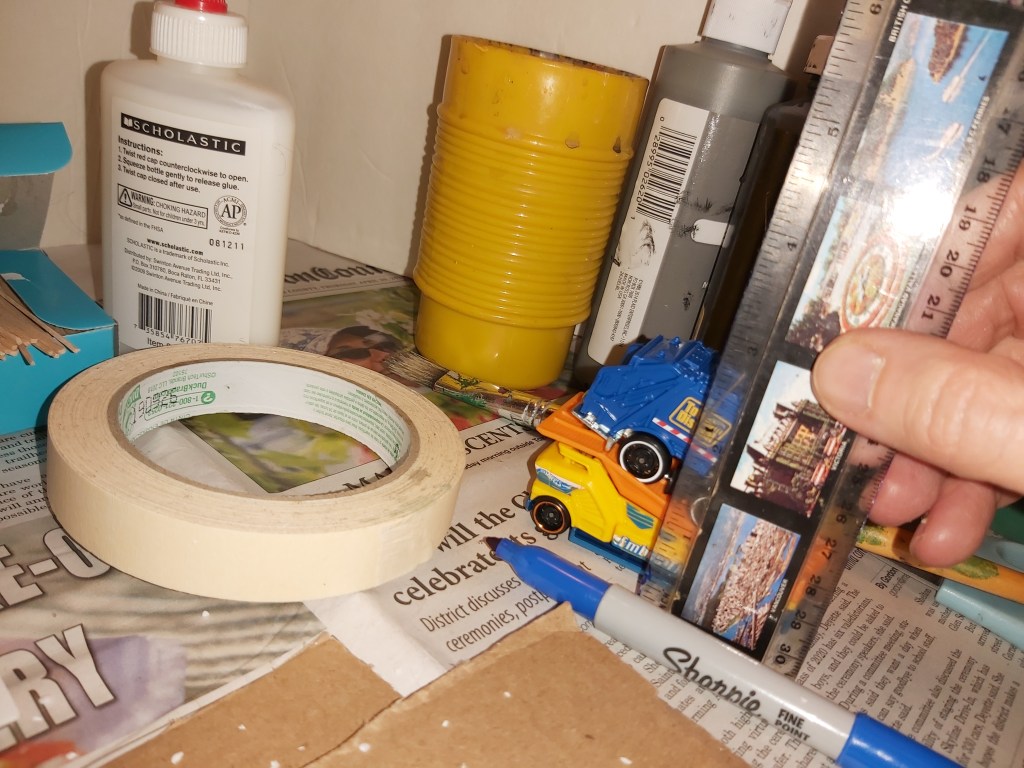
The height of regular masking tape is about right for the speaker stands. Paint two bamboo skewers red, then mark short lengths with a pencil. You will need 20 or so of these. Cut red car pole lengths into the middle of the tape roll.  The inner tape roll sides help catch the bits so they don’t fly everywhere as you go.
10. Down to size

Repeat the process with round toothpicks. You will need four similar height ones, in white (glue to front of screen base) and about 50 very short yellow ones, a little taller than they are wide. Set everything in bottle caps until needed. Paint glue on the tops of the red poles, and place a yellow “car speaker” on each side. Set aside.

11. Parking lot stripes

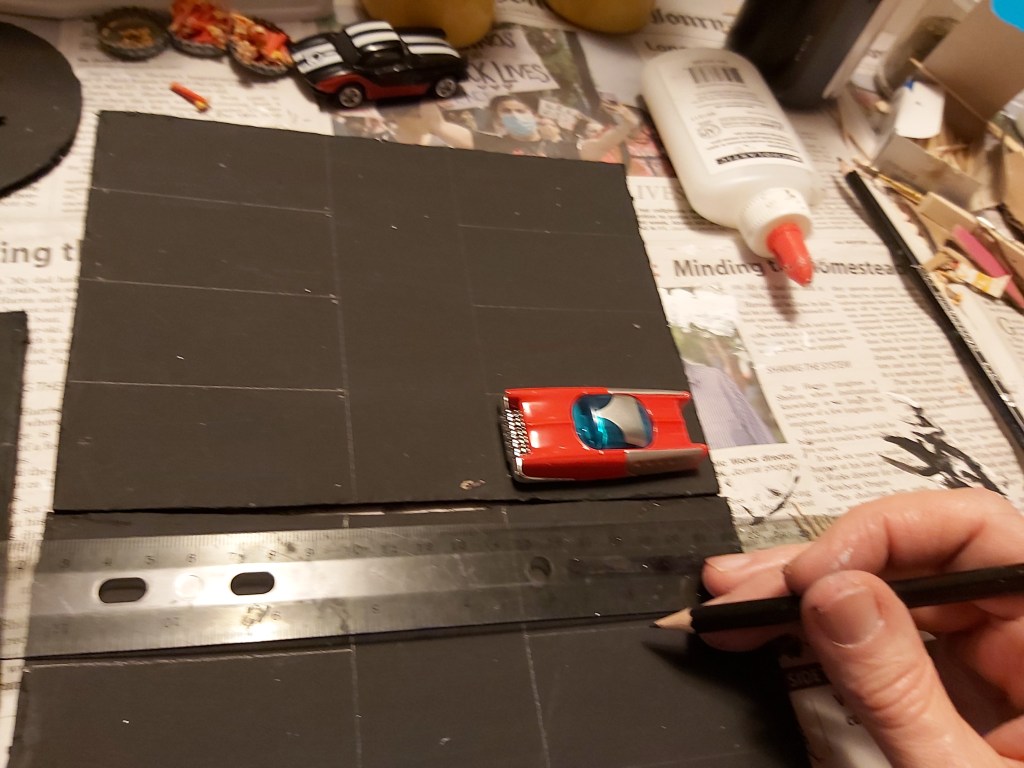
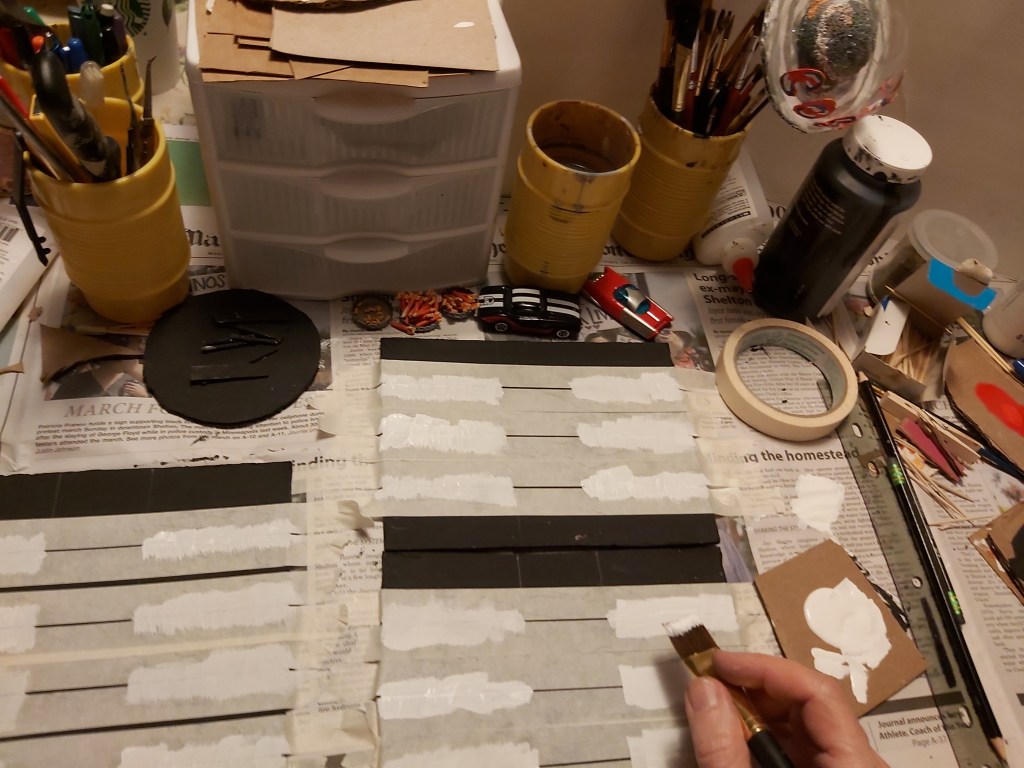
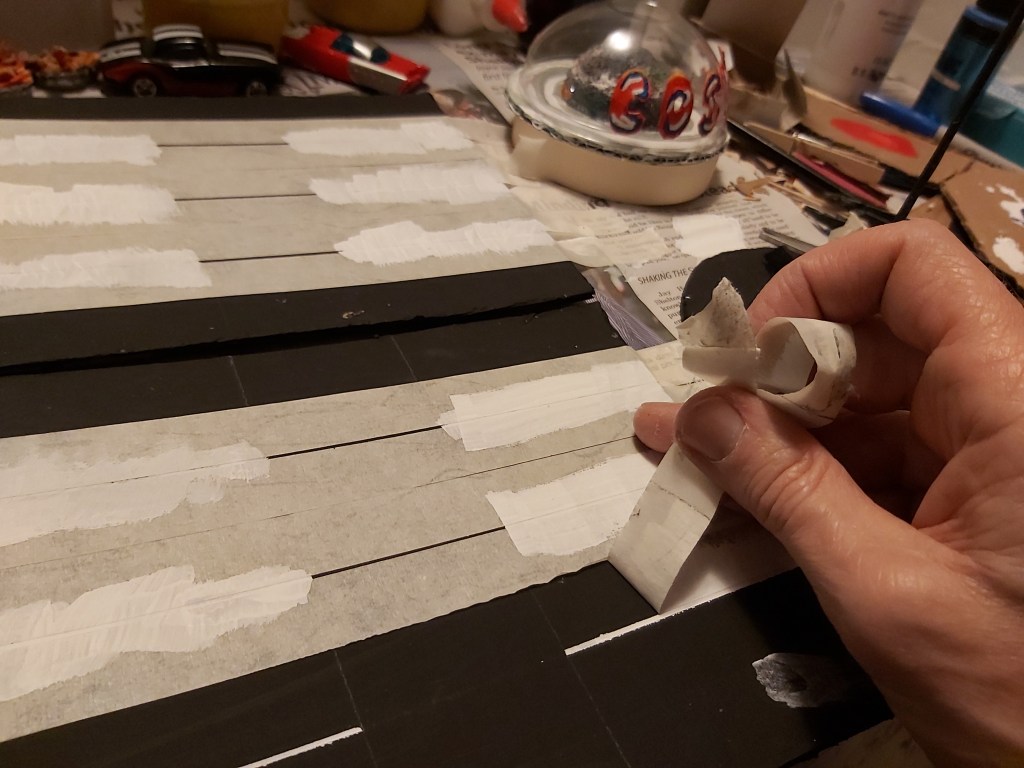
Test fit parking spots with a car you will use. In this case they are about one and a half inches wide. Mark lengths in pencil and use that as a guide. Mask off. Paint white, let dry, and remove tape. Touch up with black. Let dry.

12. Speaker poles & parking blocks

Glue two yellow “speakers” to the sides of each red pole. Let dry. Basecoat black cardboard for the bases. Use thin card at the bottom and small corrugated bits to support each pole. Cut flat toothpicks to one and one-quarter inch lengths and paint parking blocks white.

13. Cosmic movies

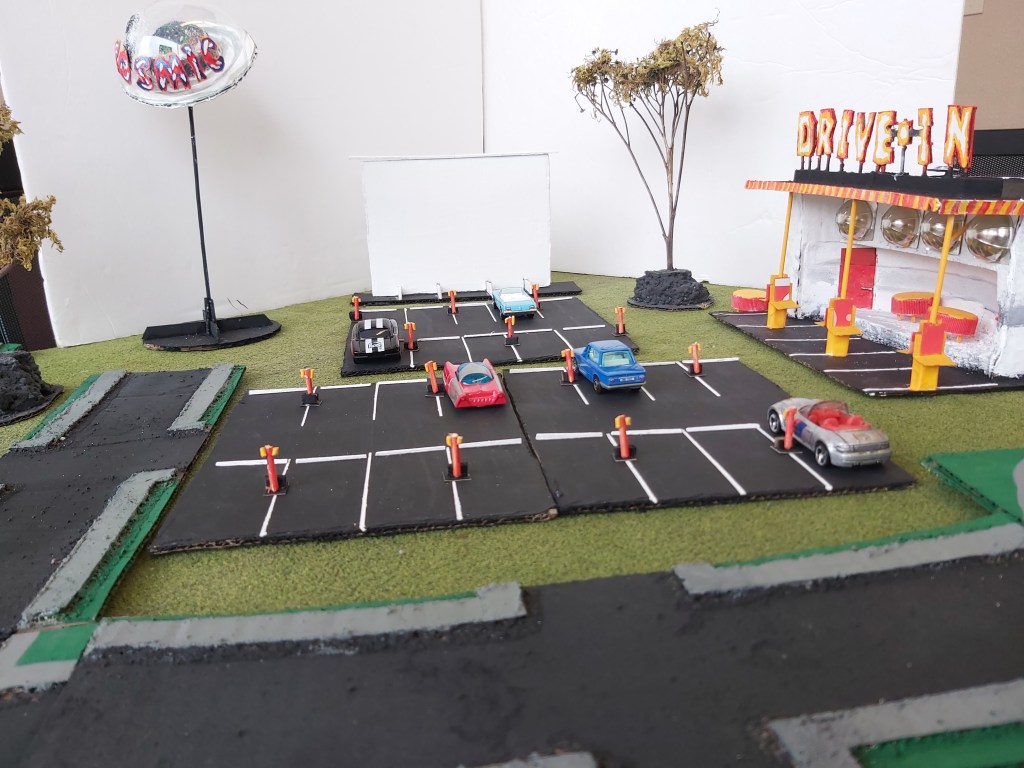
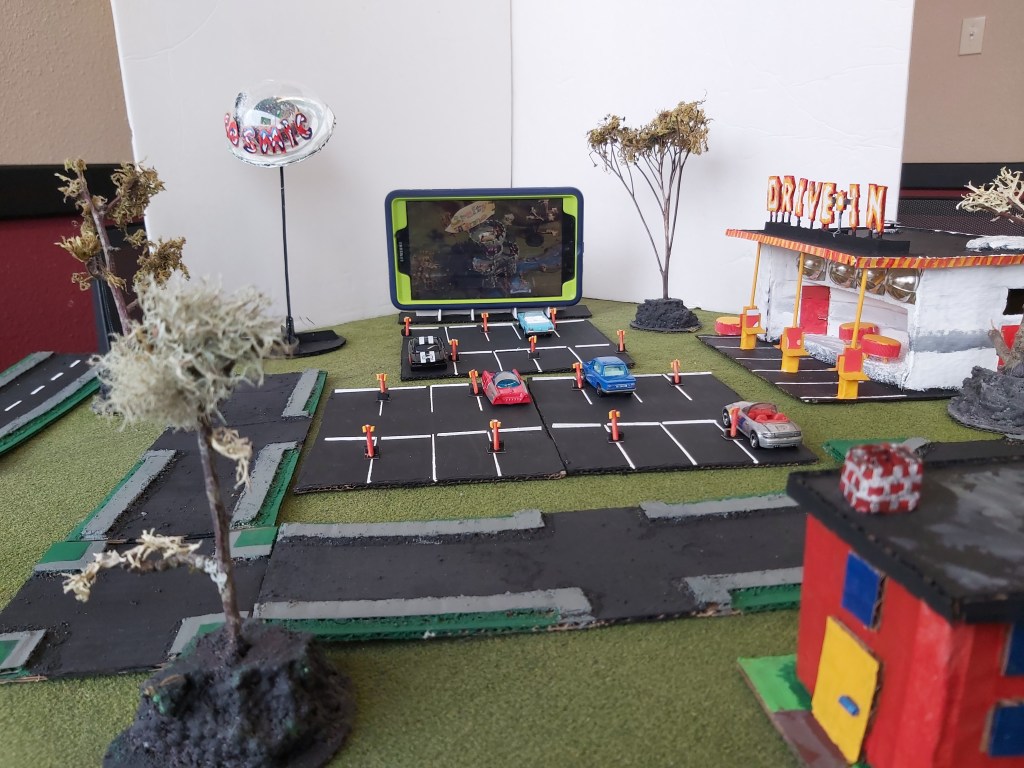
You can set your phone or device on the front screen holders and watch along with your Happy Tree Village friends!

Idea 7: Drive-In Restaurant

crafty time.Drive-In.pierik.23.20

Crafty Time

By Dave Pierik

Shelton-Mason County Journal

Fun with a Drive-In

Previously, we’ve made a castle, water, trees, roads, and buildings. Now our village needs a restaurant!

0. You will need: (Will – there is not to be a photo for this, it’s not a “step”)

Tools: ruler, scissors, craft knife, paintbrushes.

Materials: cardboard (both corrugated and thin card), Styrofoam, milk pulls, bottle caps, bendy straws, masking tape, sand, school glue, round and/or flat toothpicks, craft sticks, acrylic paint (black, white & red).

1. Storefront

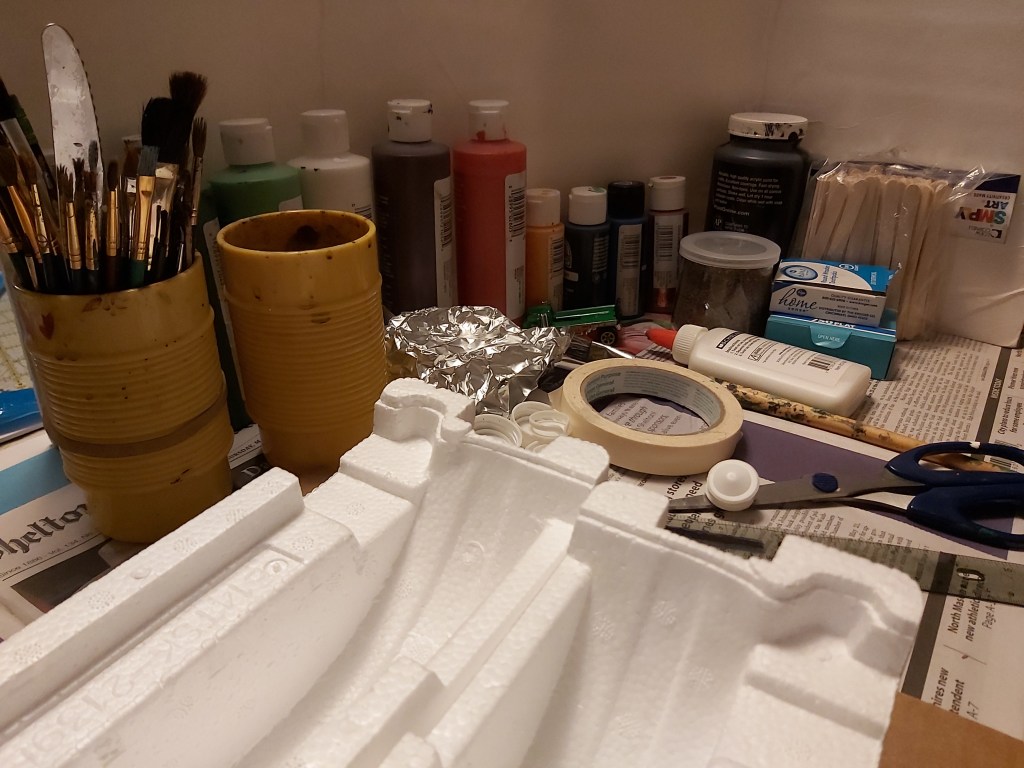
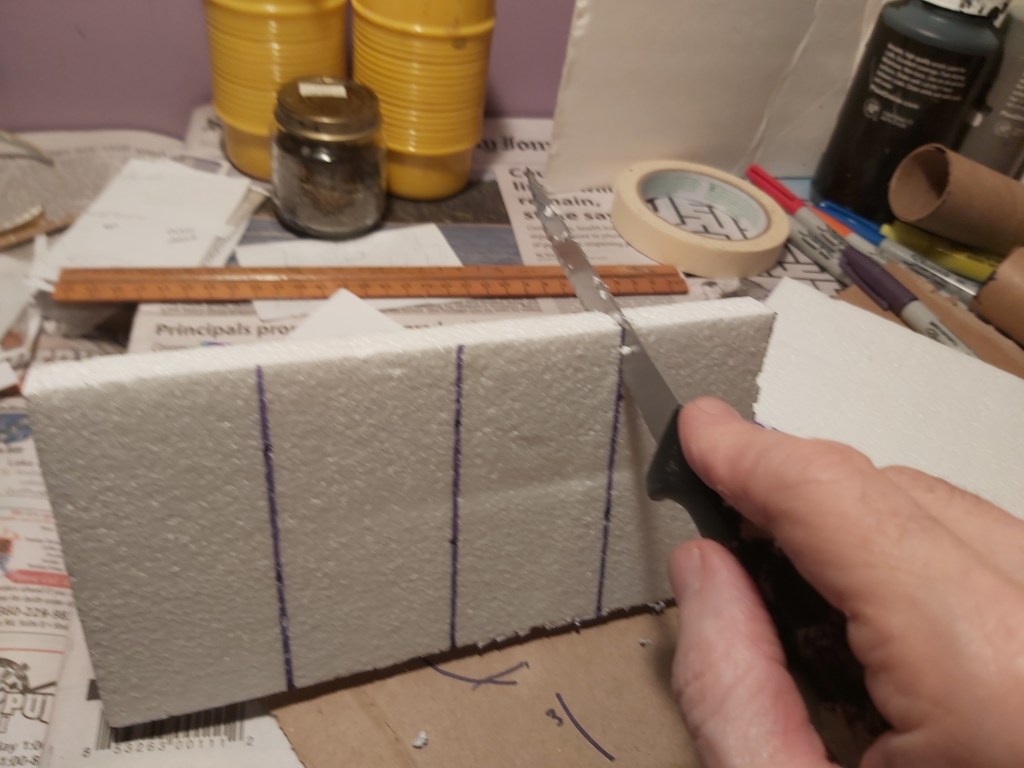
Find interesting-shaped Styrofoam, and with your craft knife, carefully cut away the parts you don’t need.

2. Walls

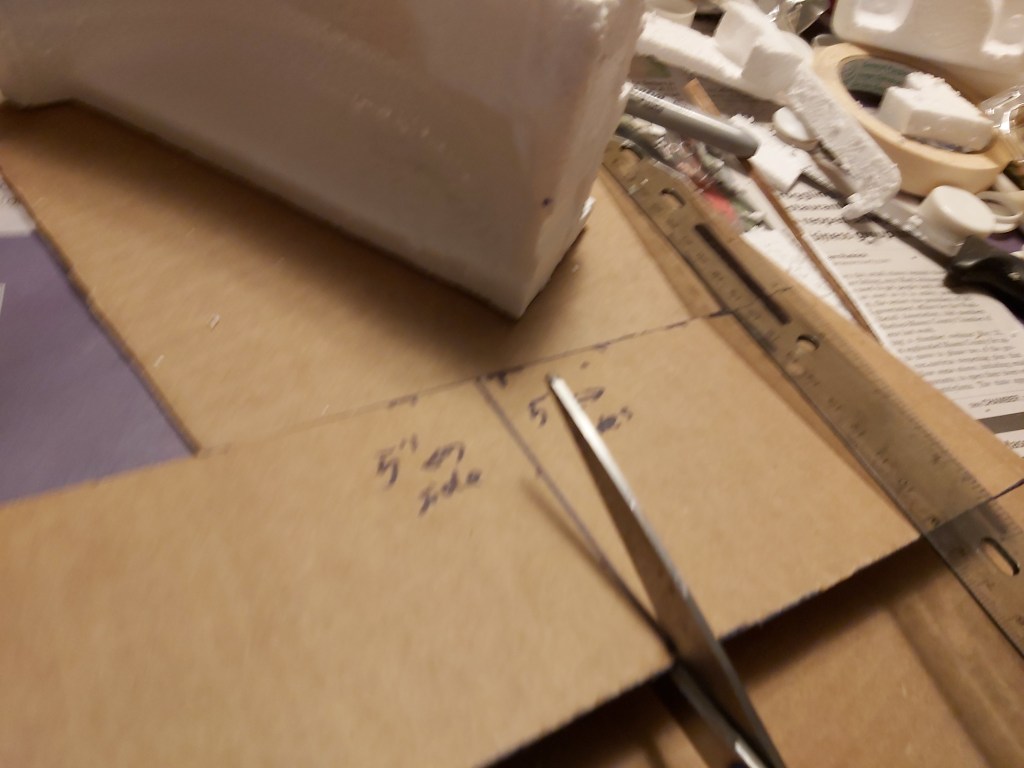
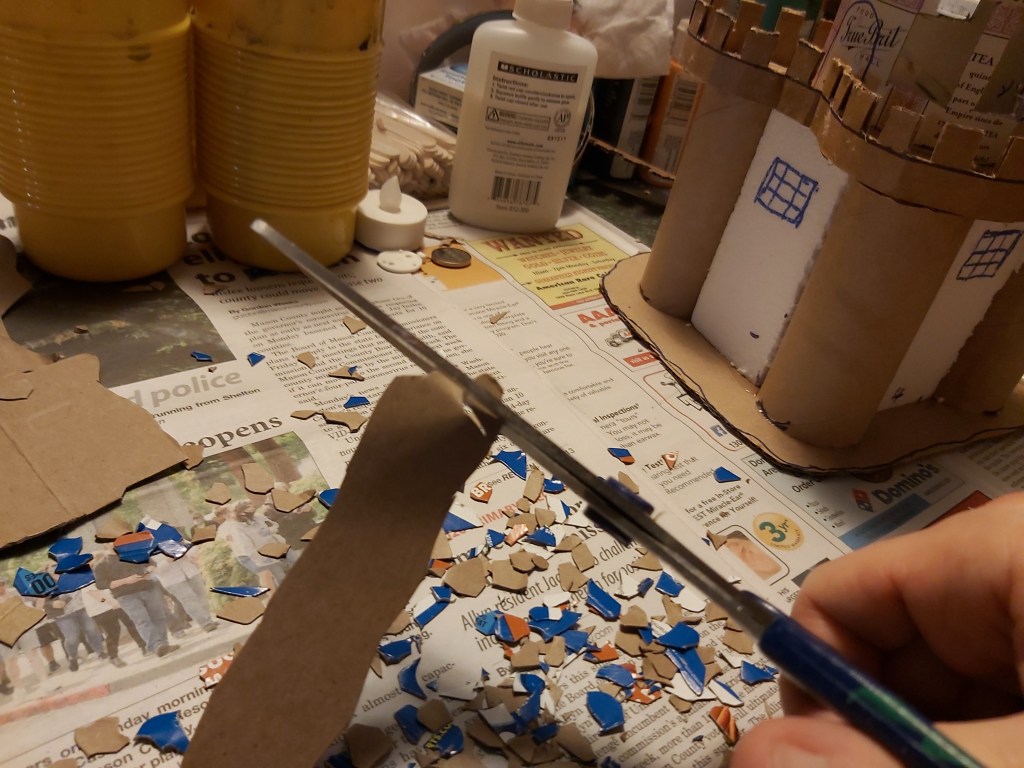
Mark the height of your Styrofoam on a piece of cardboard, then cut a long piece (or pieces) of cardboard to that height with scissors.

3. Floor Plan

Set the Styrofoam on a base of cardboard, allowing room for where the parking area will be. Think about the footprint you want for the building. I chose to make the Happy Tree Drive-In about five inches deep by about nine inches wide and about four inches tall. Adjust as needed.

4. Structure

Line everything up. Run beads of craft glue along all the edges, and clamp in place with masking tape. Let dry. Flip over and repeat steps for the roof, allowing about half an inch overhang on the sides and back, and up to about two inches in the front for the awning.

5. Sign Prep

Line, measure and pencil sign lettering onto the cardboard, knowing you will need to trim it all out with a craft knife. Be careful and patient. Alternate option: use extra/old refrigerator magnet letters.

6. Set Up Sign

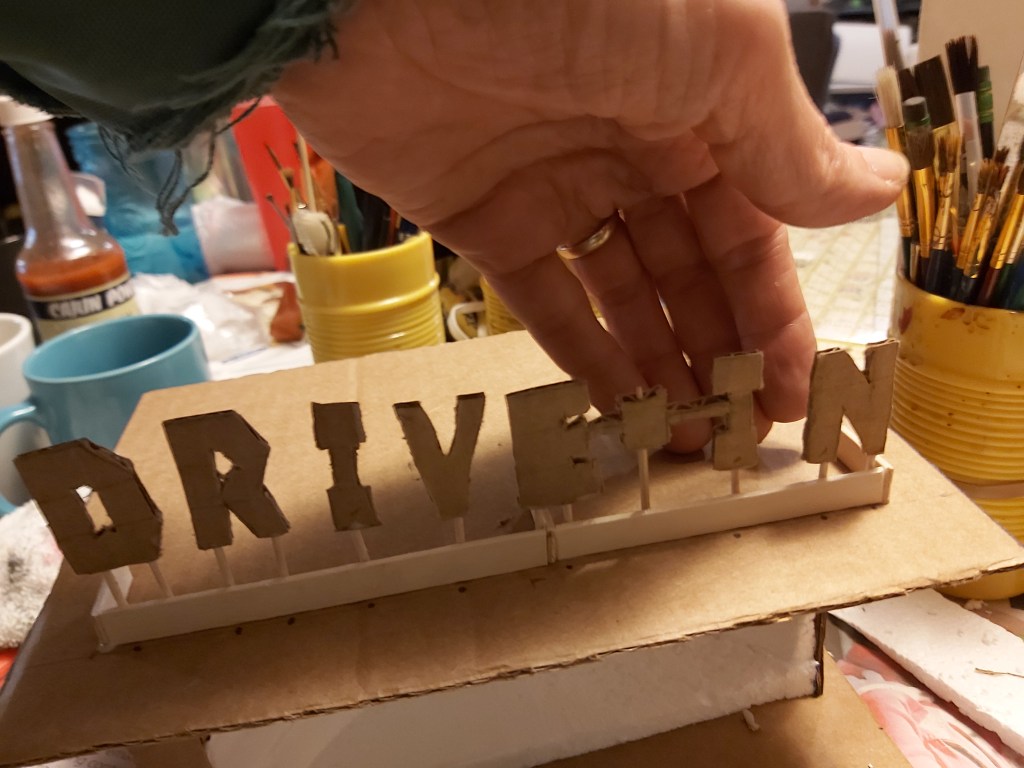
Set the letters on the roof, then eyeball and mark positions. Cut and glue craft sticks to make a base, then cut and glue toothpicks, and stick them through the cardboard. Let dry, glue again and flock with sand, let dry then shake off the excess.

7. Adjust Sign

As the glue dries, you will find you need to adjust the height and angles of the sign. The craft sticks at the base help keep the toothpicks vertical, so that helps.

8. AC Roof Detail

Trim bits of Styrofoam that look great for extra details. This piece looks like an air conditioner, so why not use it? Be sure the bottom is flat so when you glue it to the roof it will be flush with it.

9. Gutters and Doors

Thin card, in this case a seltzer box, works great for details. Measure and cut roof edging/gutters and doors. Glue on.

10. Downspouts

Speaking of gutters, bendy straws make wonderful downspouts. Cut them down and glue them on the back corners of the building. Let dry.

11. Basecoats

Mix some glue, water and sand into your black paint. Coat the parking lot, roof, and windowframes in black. Let dry. Repeat with white for the building, and sign letters. Let dry.

12. Details

While paint dries, make three tables using bottle caps and cut down toothpicks. Paint the outside edges red, the tops white and the legs black. Paint the doors of the building red. Mix colors, make stripes, and have fun!

13. Happy Tree Drive-In

A burger, shake and fries, please! Our village now has a hangout for us cool kids.

What would you like to see next on Crafty Time? How about a drive-in movie setup featuring a stand for your phone or tablet device? I would love to hear from you. Please email your thoughts, ideas and photos to dave@masoncounty.com or call the Shelton-Mason County Journal office, 360-426-4412.

Idea 6: Castle

Crafty Time

By Dave Pierik

Shelton-Mason County Journal

Fun with castles

Previously, we’ve made buildings, roads water and trees. Now our village needs a castle!

0. You will need:

Tools: colored markers, ruler, scissors, small carving knife, paintbrushes, small tweezers or pliers, clothespins.

Materials: clear plastic (from window envelopes), cardboard tube (from containers and roll centers), masking tape, cardboard (both corrugated and thin card), Styrofoam, acrylic paint, sand, school glue, round and/or flat toothpicks, craft sticks.

Optional for the pennant flag: battery-powered tea light, bamboo shishkabob stick, & copy of the Shelton-Mason County Journal. Optional for the stained glass layout: graph paper to put underneath.

1. Stained glass prep

Using the clear plastic from some window envelopes, fill all the space with colors and designs of your choice, saving black for later. Once dry, carefully glue another clear piece over the top. Set aside.

2. Tubes base

Lay down a piece of corrugated cardboard, and place your cardboard tubes for sizing, spacing and layout. Note: you can reinforce thin card tube by doubling it up. Cut down the long way, remove a quarter inch and glue the extra ones inside.

3. Styrofoam walls

Using the height of the ground floor towers and the width you want, measure, mark and cut your Styrofoam walls. For this example, I wanted a fairly small castle. But you could make a giant one! Be careful with sharp objects.

4. Castle deck

Glue the walls to the ground floor towers and clamp them with masking tape while they dry. Trace onto the cardboard, remove & trace a concentric line on-half inch further out. Cut. This is your castle deck. Glue, and set a bit of weight on top while it dries (I used small paint containers).

5. Top windows prep

Cut down a section of larger cardboard tube. Shown is from a tea container, about 4” tall but you could change it up. Carefully cut out where your windows will be later. Trace, then add a half an inch and cut the roof. I also cut a hole in the middle of the roof for access. Do not attach this section to the castle deck.

6. Crenellations

Measure, mark and cut a couple of long lengths of corrugated cardboard. 1” tall, with the crenellations half an inch tall by half an inch wide, with quarter inch gaps. Run a bead of glue around the outside of each deck, and wrap it, clamping in place with masking tape as you go. Let dry, then remove the tape.
7. Raised detail rock prep
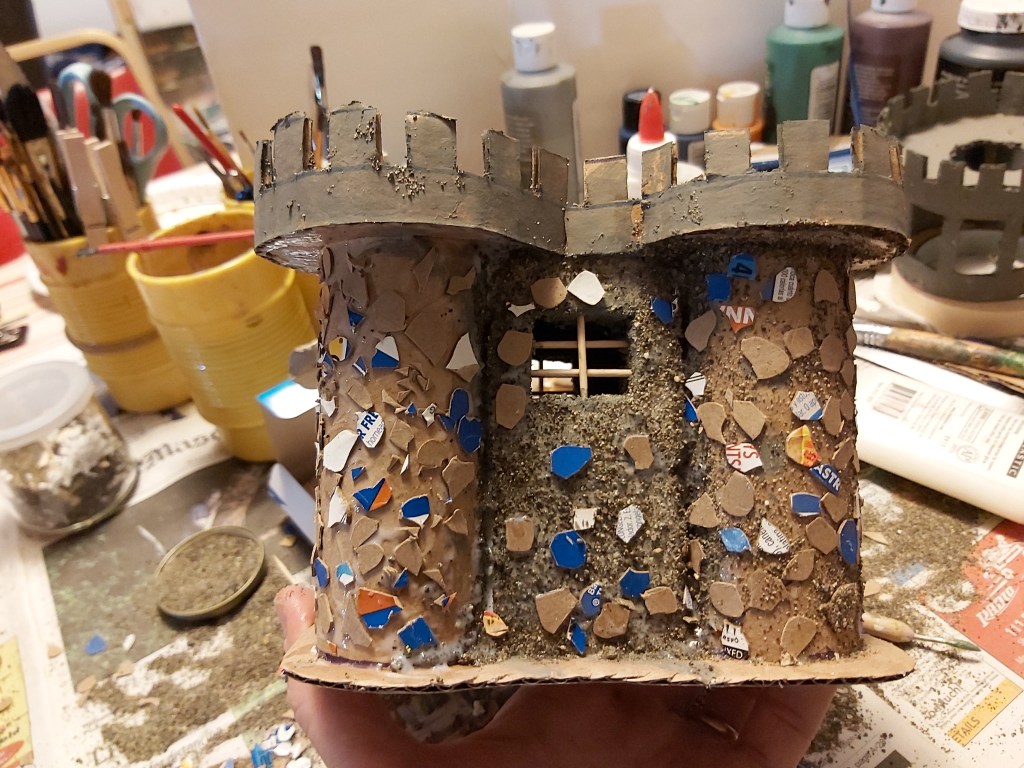
Thin cardboard (from a toaster pastry container in this example) works great for creating raised details. Allow time, you will need a lot of little (approx. quarter inch) rock shapes for the exterior. While things dry, create more of these and put them in your bits box. During this step, you can also make exterior doors for the top tower.

8. Carving the pumpkin I mean castle

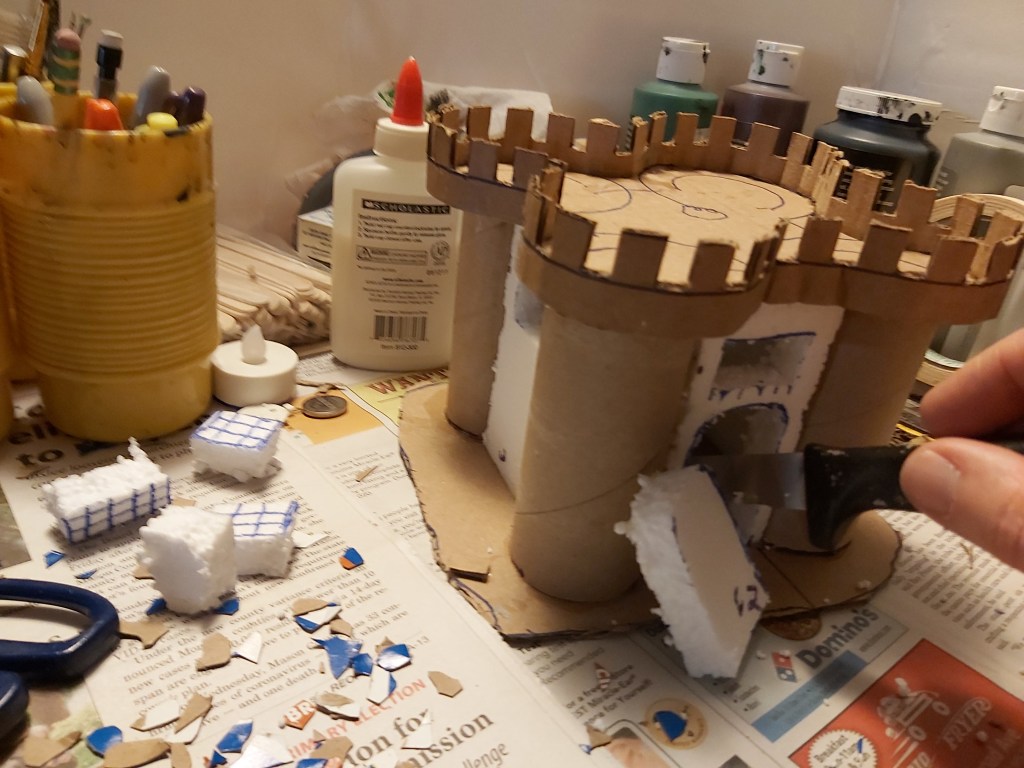
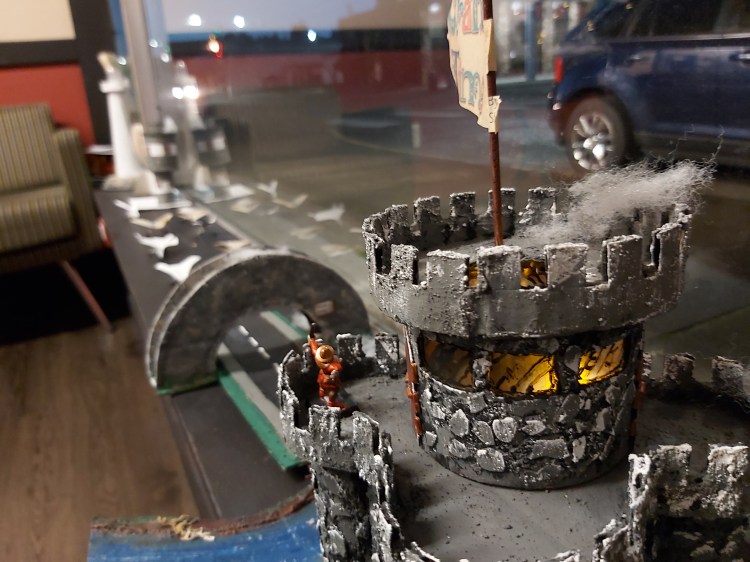
Mark the places you want openings, then cut them out. Paint the interior grey, now that you have access. While it’s drying you can make a pennant and flagpole using the tealight as the base, the bamboo skewer as the flag and your favorite Shelton-Mason County Journal image as the flag art.

9. Details- bars

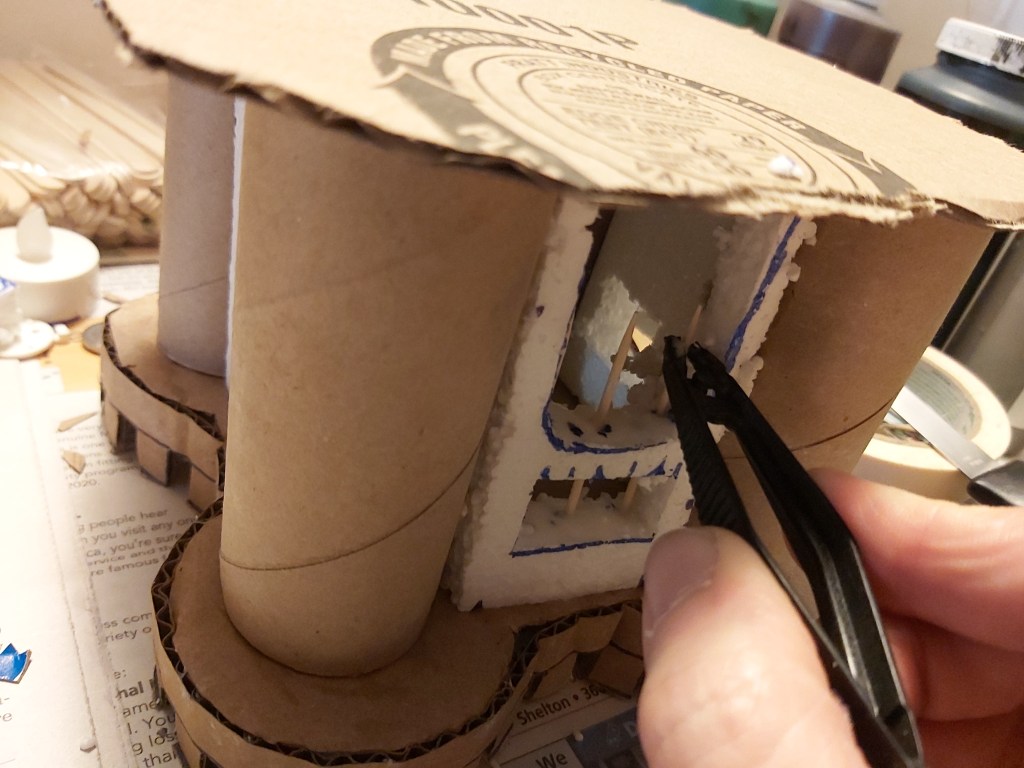
For portcullis verticals, use five full-length round toothpicks. Flip the building over, carefully (you might need tweezers) poke them through both parts of the Styrofoam and glue in place. Cut shorter lengths for the portcullis horizontals and the windows, poke them into both sides of the Styrofoam and glue in.

10. Rock the house

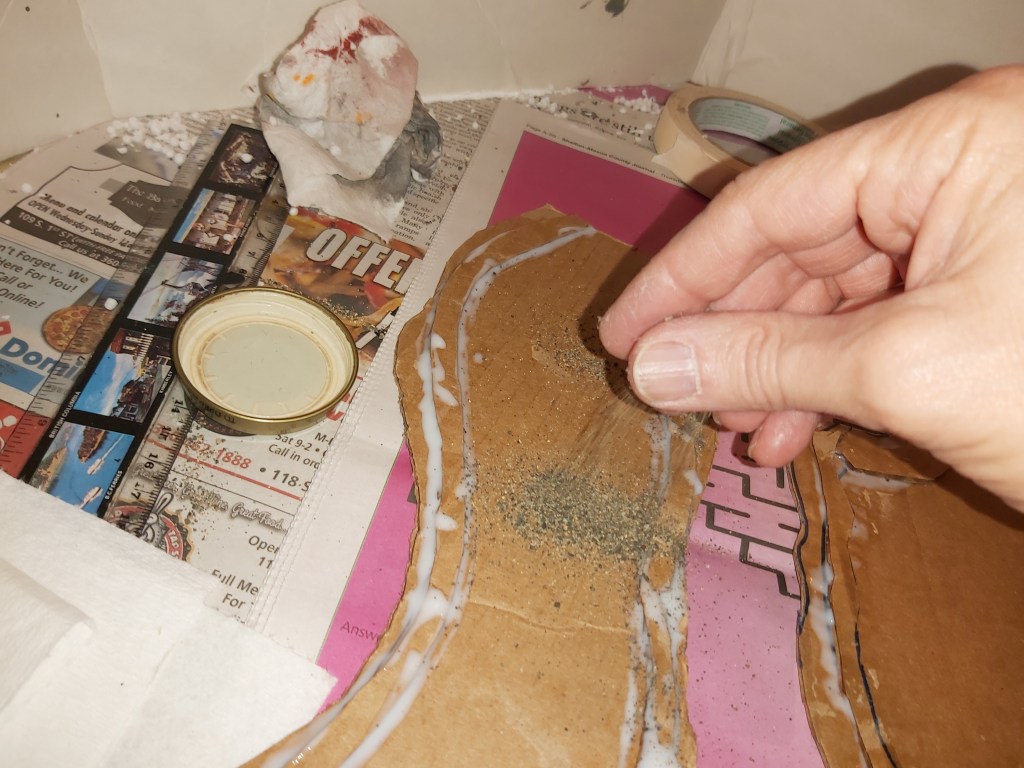
Use an old brush to spread a liberal amount of glue, one side of the structure at a time, then place the rock details on randomly. Follow up by flocking with sand, shaking off the excess. Repeat for the other sides, and for the top tower. Let dry. While it’s drying you can make a quick drawbridge out of five cut down craft sticks and a couple of flat toothpicks.

11. Basecoats

Mix some glue, water and sand into your black paint. Coat the entire exterior in black. Let dry. Next, paint the raised surfaces in grey using the same method. Let dry. Pick out the high spots and paint white. Let dry. Paint the exterior doors brown. Mix brown and green to paint the base around the bottom of the castle – it’s okay to be sloppy and get a bit on the lower rocks for realism. Add details as you see fit.

12. Stained glass pre leading-glazing

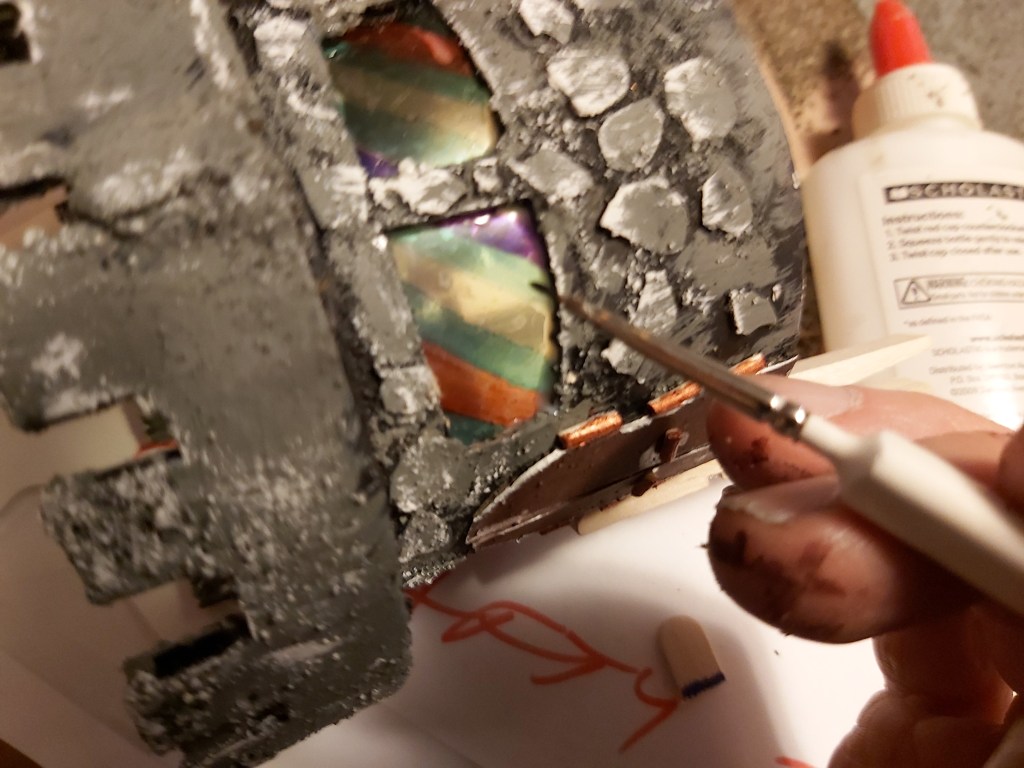
With an old brush, paint the inner frames of the window cut outs of the top tower with glue. Carefully place the stained glass windows you made. Hold in place with your fingers, masking tape, or clothespins until dry. Paint glue around the edge of the other side of the window and let dry. Use a detail brush to paint black leading/glazing along the outside edge, and along each color change in the art. Let dry. Turn the tealight on and put it inside.

13. Happy Tree Castle

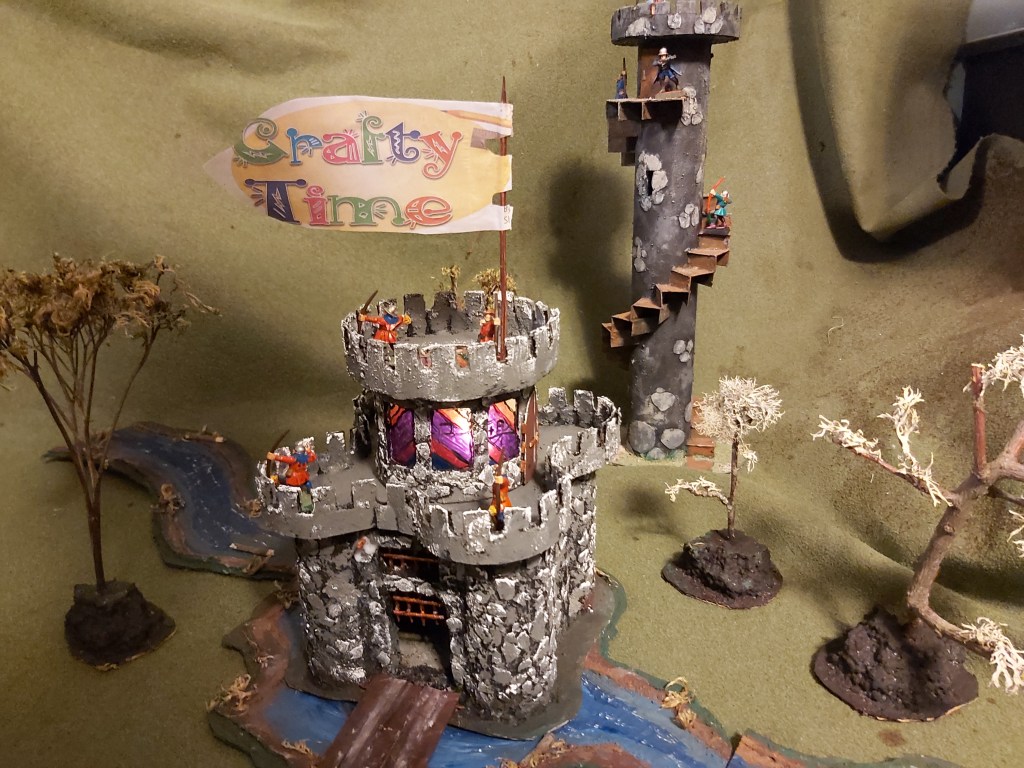
They say a man’s (or woman’s) home is his (or her) castle. Personalize yours as you see fit. Shown here is the castle along with water and trees from earlier Crafty Time features. In the background is a tower I made previously, along with the archer figures (1/35th scale).

What would you like to see next on Crafty Time? I’m drawing a blank at the moment and I would love to hear from you. Please email your thoughts, ideas and photos to dave@masoncounty.com or call the Shelton-Mason County Journal office, 360-426-4412.

Career Fair offered at Castle Amusements
Visitors to Happy Tree often come to enjoy Castle Amusements Park, home of yearlong medieval fair, rides, dining and live theatre. Local workers enjoy several perks, including one free family pass per summer.
Happy Tree Castle Amusements Park, celebrating Crafty Time Day last Friday.
A career fair will be held at the Happy Tree Castle all day Thursday, starting at 8am. Lunch will be provided at noon, with orientation and costume fitting to follow for those hired. Positions include period actors, vendors, cooks and more. –Happy Tree Times

Idea 5: Ponds and Streams

Crafty Time by Dave Pierik, Shelton-Mason County Journal

Fun with Ponds and Streams!

Water features are fun and easy to create. You don’t even need to use a ruler.

You will need:

Tools: scissors, paintbrushes

Materials: cardboard, masking tape, sand, school glue, ­­acrylic paints, little twigs, dried moss

1. Mark & cut

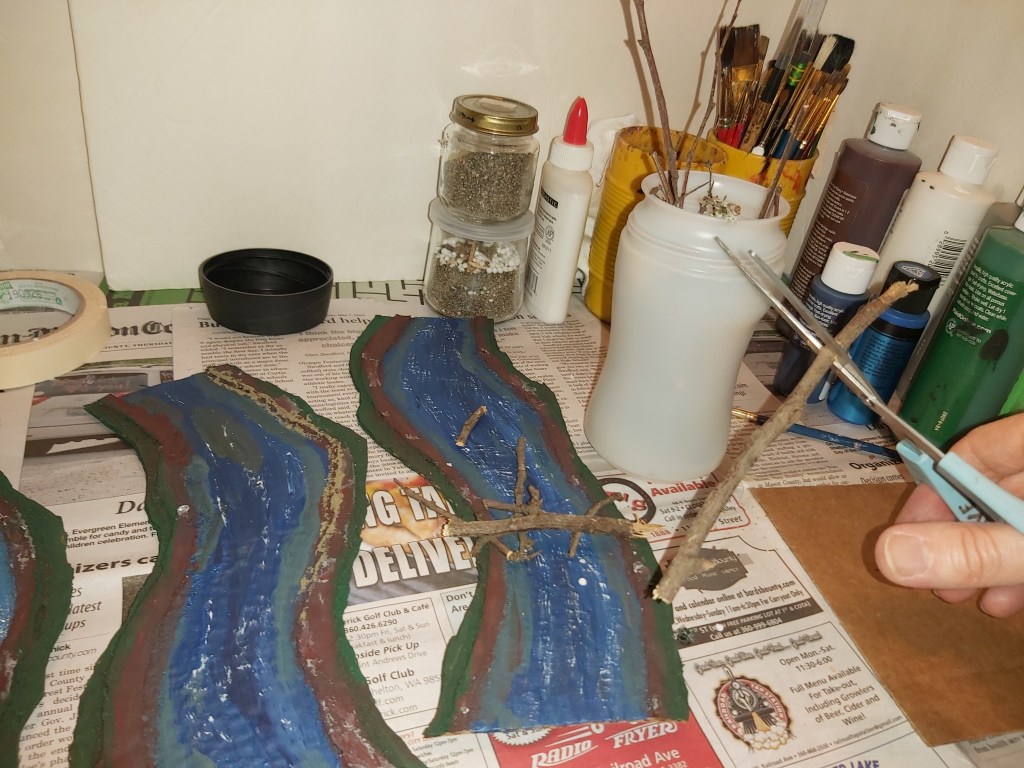
Think about what you want. For this example I decided I wanted one fairly large pond and two curvy stream sections similar in size to the roads we made previously, to go under the bridge we made. Streams and ponds are natural, so mark the bases freehand. Cut with scissors.

2.  Edges

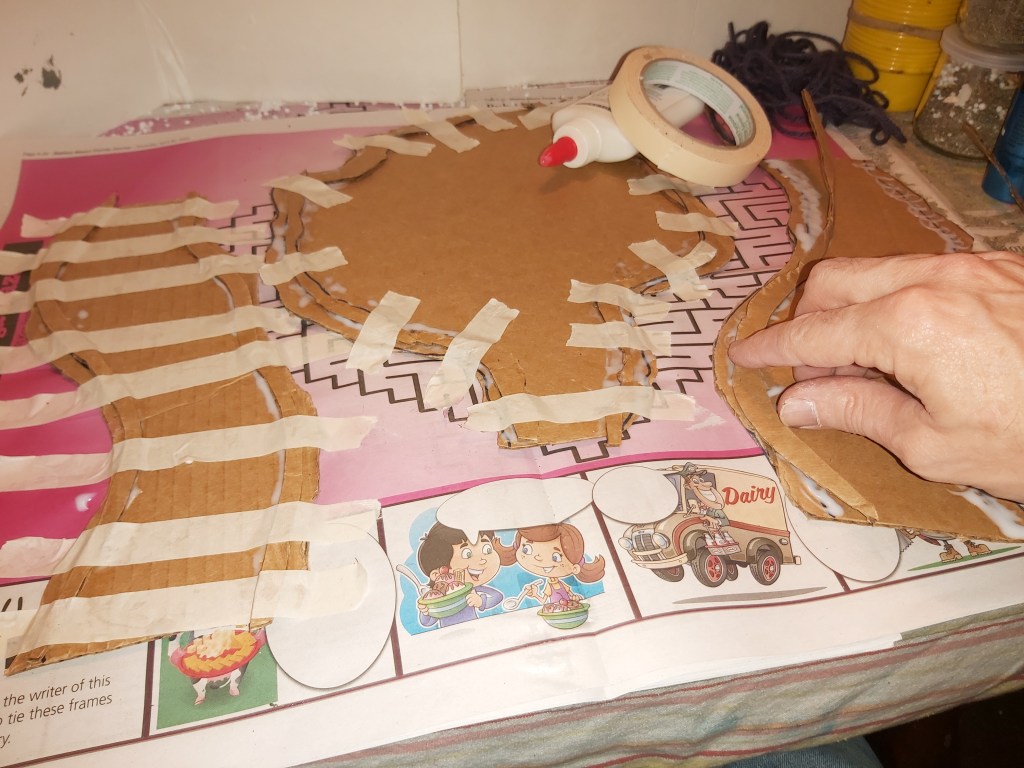
Along the edges you cut earlier, cut extra curvy strips, about a quarter to a half-inch wide. These will be your stream banks and the edge of the pond. They can be in multiple pieces if needed, following along the margin of where the water will be, but leaving an outside edge of about a quarter inch. Glue them down.

3. Tape to clamp

Strips of corrugated cardboard are super bendy, especially with curves like these. Clamp them down with making tape until the glue dries.

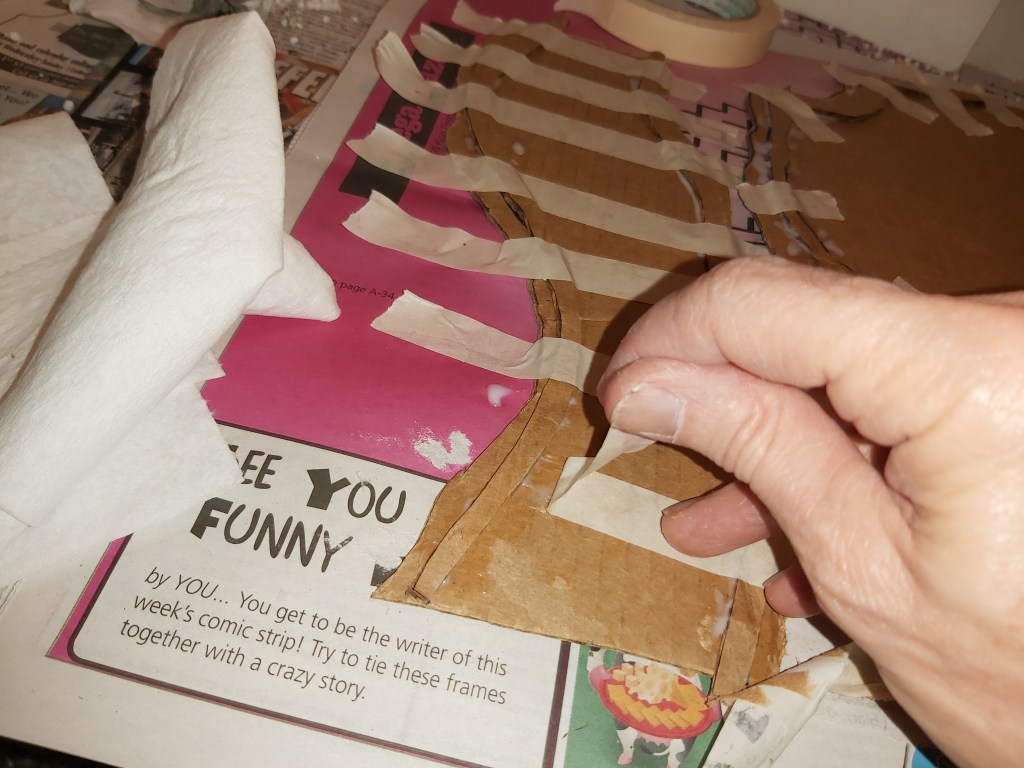
4. Remove tape

Now that the glue is dry, carefully peel the masking tape off. Be careful not to take too much extra material off with it. Pull it sideways, not too fast.

5. Sand flocking

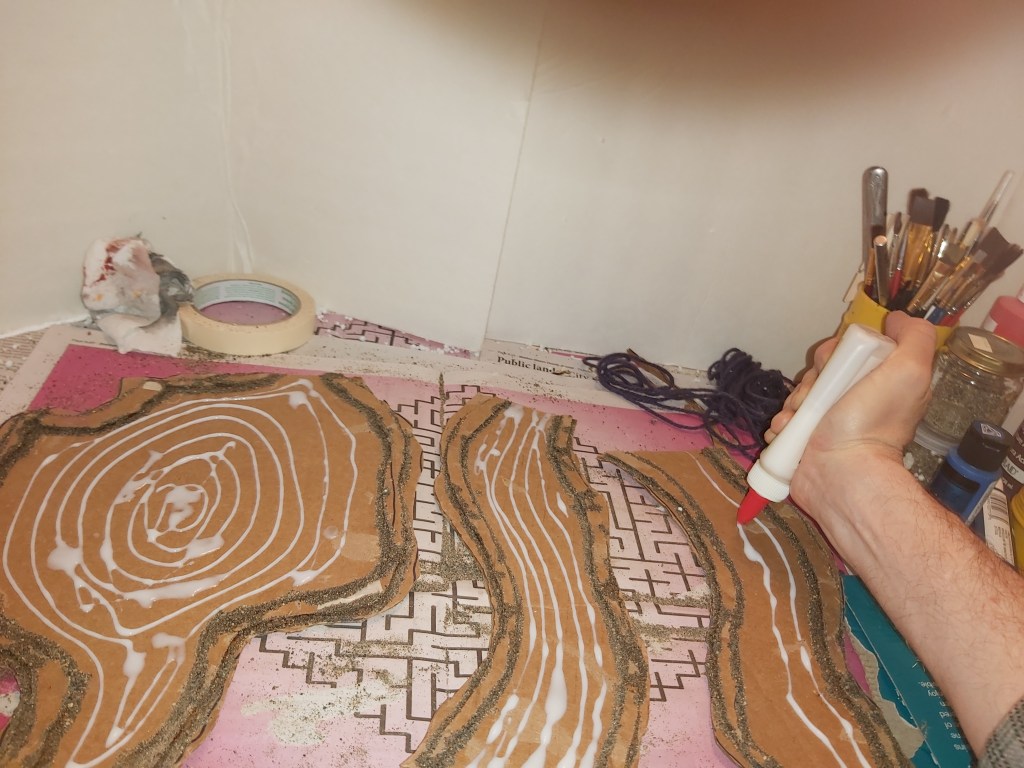
Run a fairly heavy bead of glue along both sides of the strips, enough to cover most of the corrugated sides of the cardboard. Now sprinkle plenty of sand on the wet glue. Shake off the excess and you’ve completed the flocking step. Let dry.

6. Raised features

Brush and blow any extra sand or grit from where your water will be. On the clean cardboard, squeeze lines of glue in the directions the water will look like it is going.  Let dry.

7. Basecoats – blues

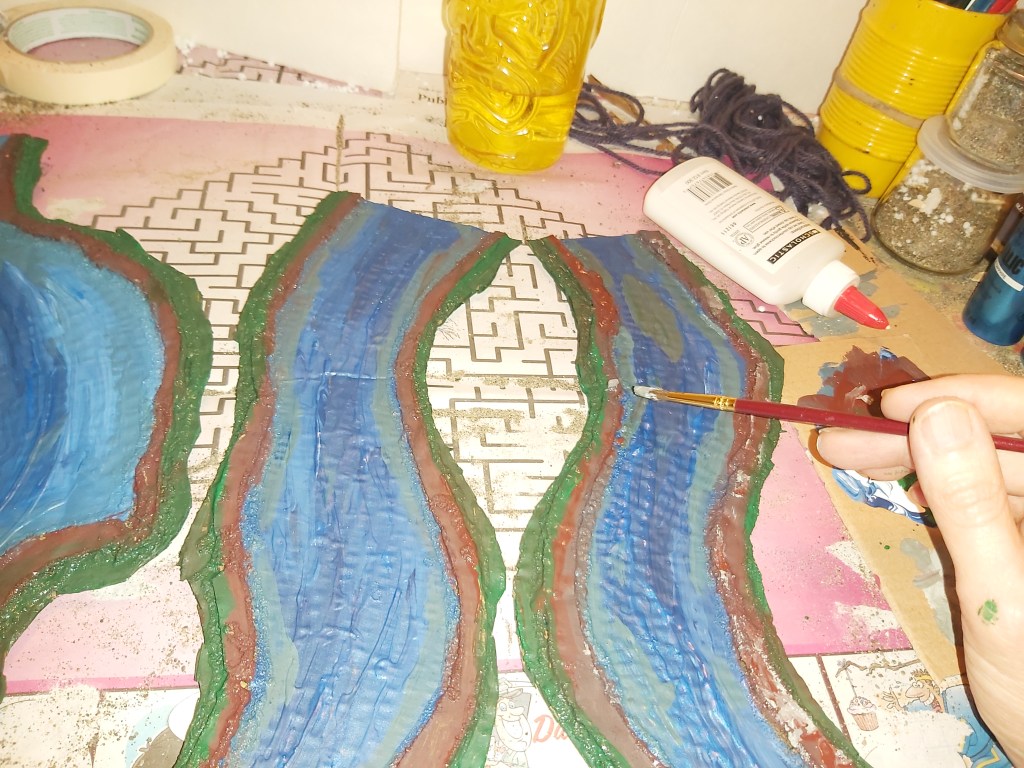
In nature, water includes blue but includes lots of colors and reflections. For this example, I glopped two blues and a white onto my cardboard palette and spun them around a little with a big brush. Paint the darker areas toward the middle.

8. Mixed basecoats

The water’s edges should be browns, tans and grays for the silt and sand look. The outside edges should be greens. While you have all of these nice wet paints going, carefully mix just a little of this color back into the water near the banks.

9. Pick out detail

With a smaller brush and white paint, highlight the tops of the waves you made earlier. Don’t overdo it.

10. Trim little sticks

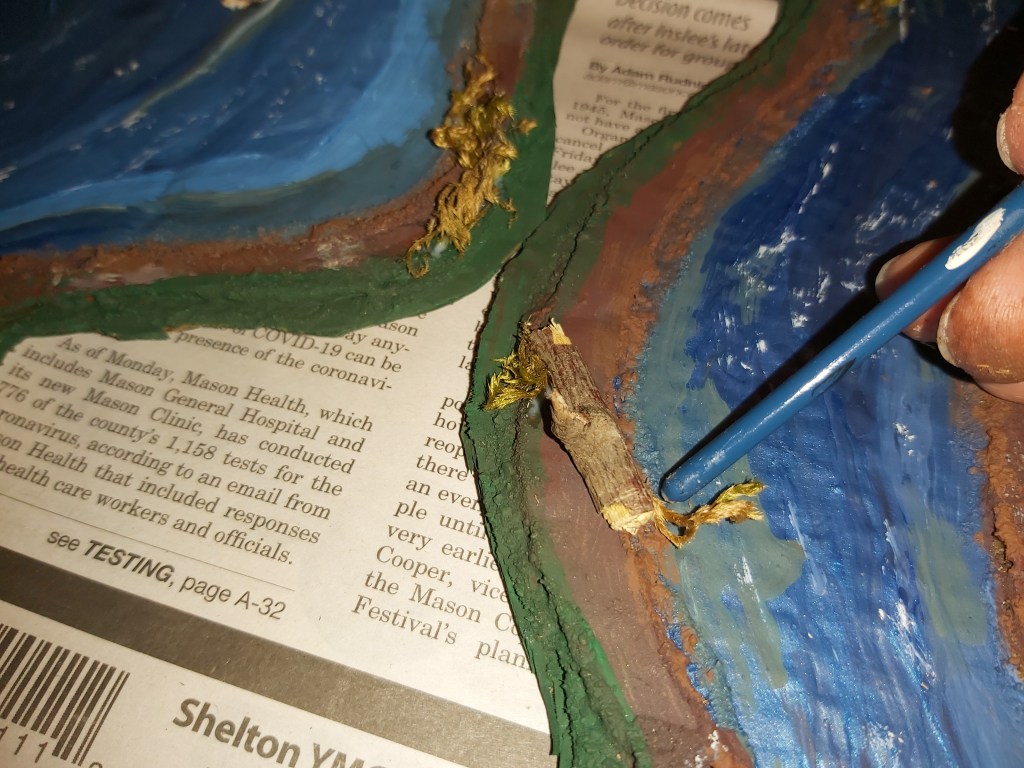
If you had fun making trees last time, you still have some dead little twigs and dried moss and lichen in your bits box. Cut several of them down to even smaller sizes. Also, carefully split a few of them down the middle so they will appear sunken in the water.

11. Glue and place details

Put glue down first, and then carefully push your sticks and foliage into it. You can use the back end of a paintbrush for better control. With a small brush, paint any other color details as you see fit. Let dry.

12. Happy Tree Creek

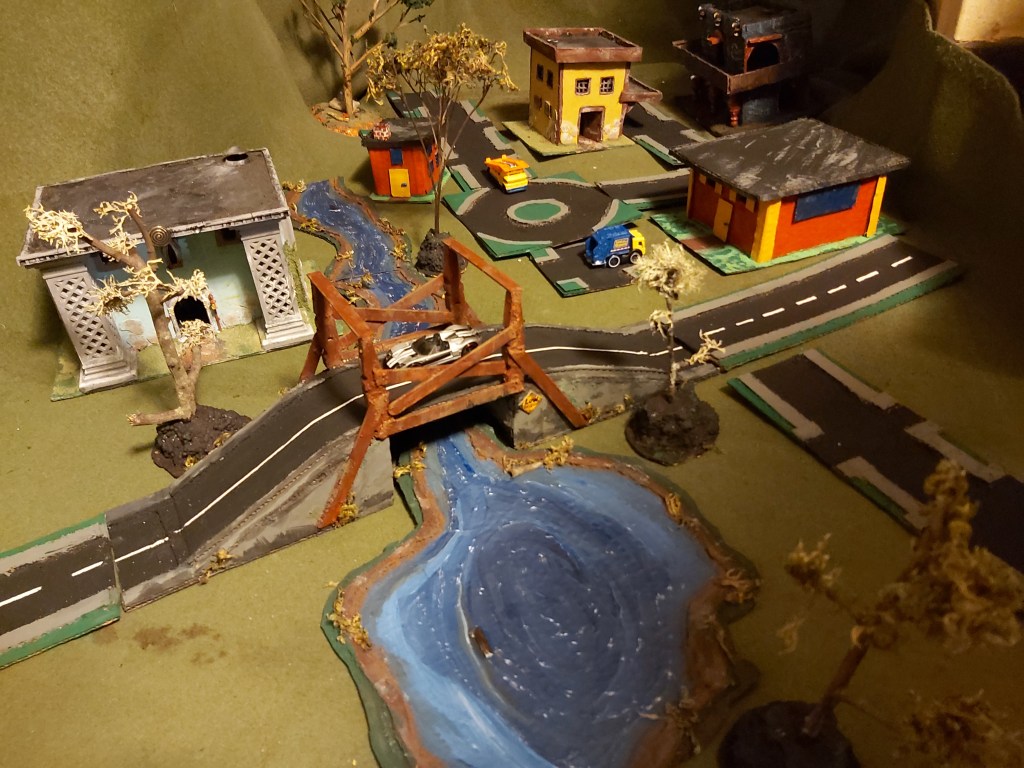
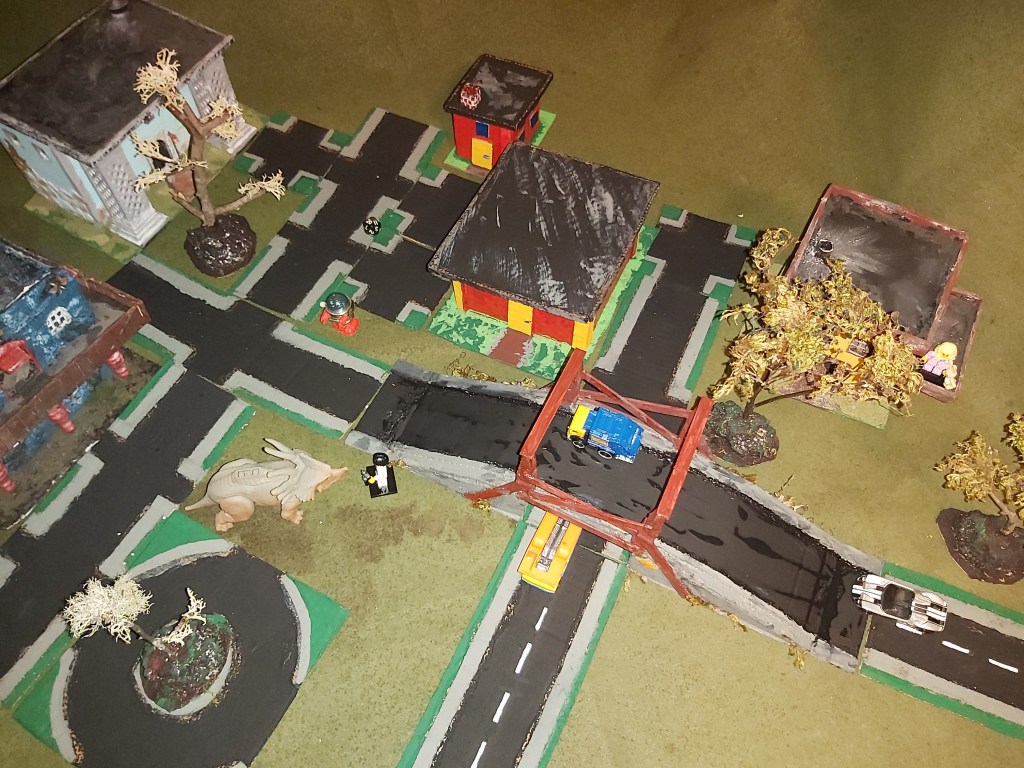
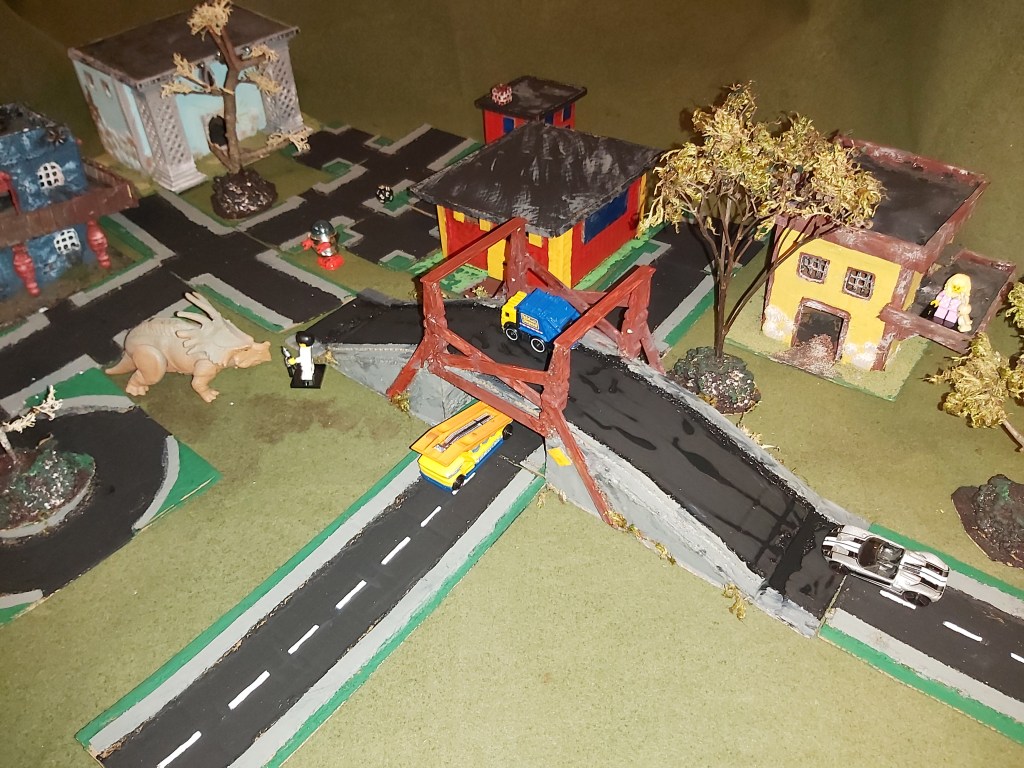
Our growing village feels much more complete now. So far we’ve crafted buildings, roads, trees, a bridge, a pond and a stream using mostly cardboard.  What imaginative adventures we could have in our diorama town!

What would you like to see next in Crafty Time? Our village is mostly houses, so it could use a wider variety of buildings.  Reader requests keep coming in so please email your feedback to dave@masoncounty.com or call 360-426-4412.

Idea 4: A Bridge. May 7, 2020 Shelton-Mason County Journal (WA), Week 19.20

Crafty Time

By Dave Pierik, Shelton-Mason County Journal

Fun With Bridges!

A bridge will go nicely with the trees, roads and buildings of our Happy Tree Village diorama.

0. Setup

You will need:

Tools: Ruler & Marker, Scissors, paintbrush, and a Knife (an old kitchen knife will work)

Materials: Styrofoam, Cardboard, Craft Sticks, 4 Wooden Clothespins, Paint, Glue, Masking Tape, and a bit of dried moss.

A Plan: Here’s what we want: something solid (We’d rather not build it twice!) that can go over either roads or water. Our roads are about 4” wide and most vehicles, etc. at this scale range are around 2” tall or less.

  1. Measure

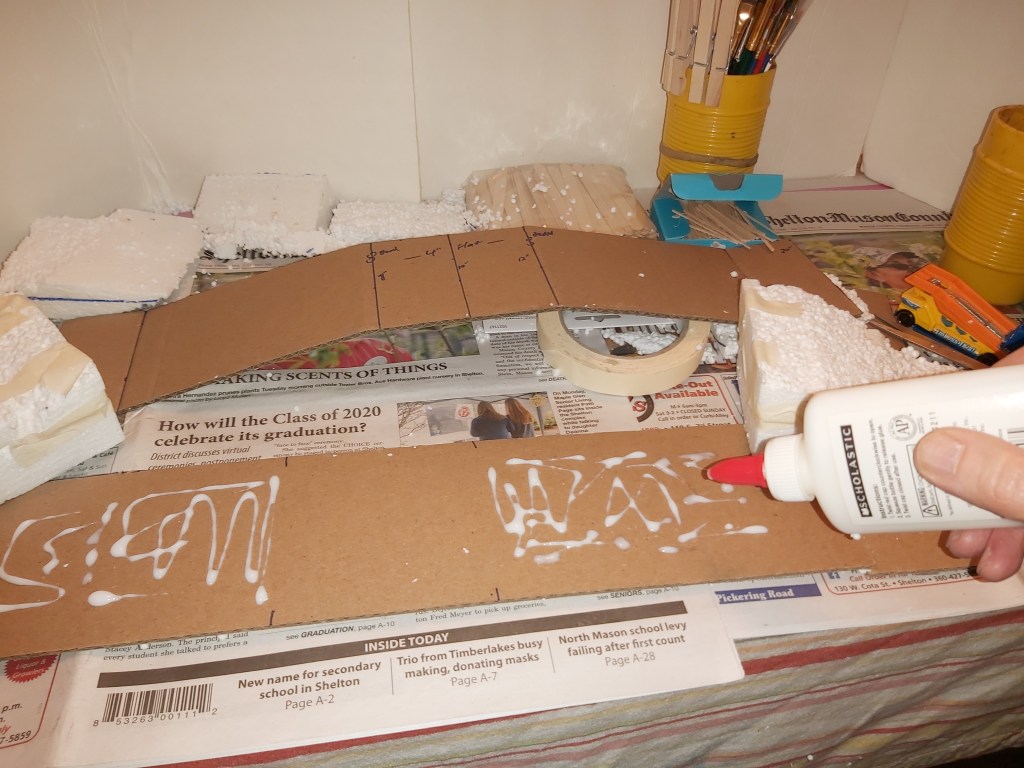
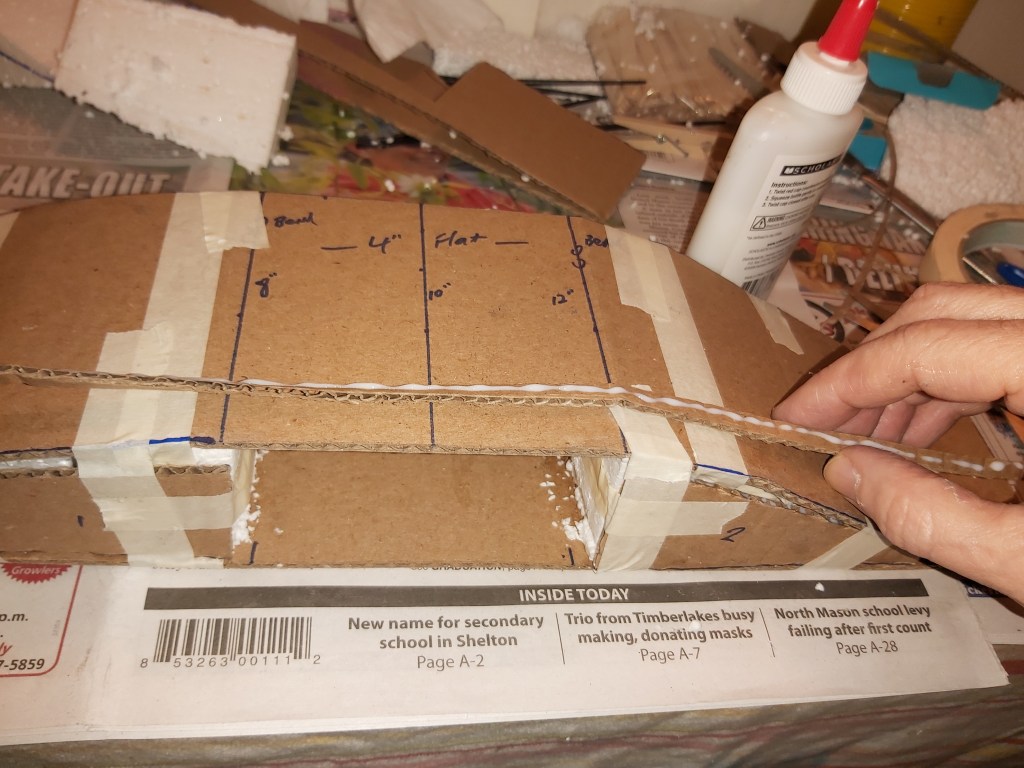
Styrofoam: 2 triangles, 4” wide x 2.75” tall, tapering 5.5” This does not have to be pretty, it’s for support. Cardboard:  4” wide x 22” long (road, to bend over the Styrofoam), over the top of a base piece, 4” wide x 20” long. 2 lengths (curbs) .25” wide x 22” long. This example also uses 4 side covers, triangles 2.5” tall tapering 5.5”

2. Cut & Assemble

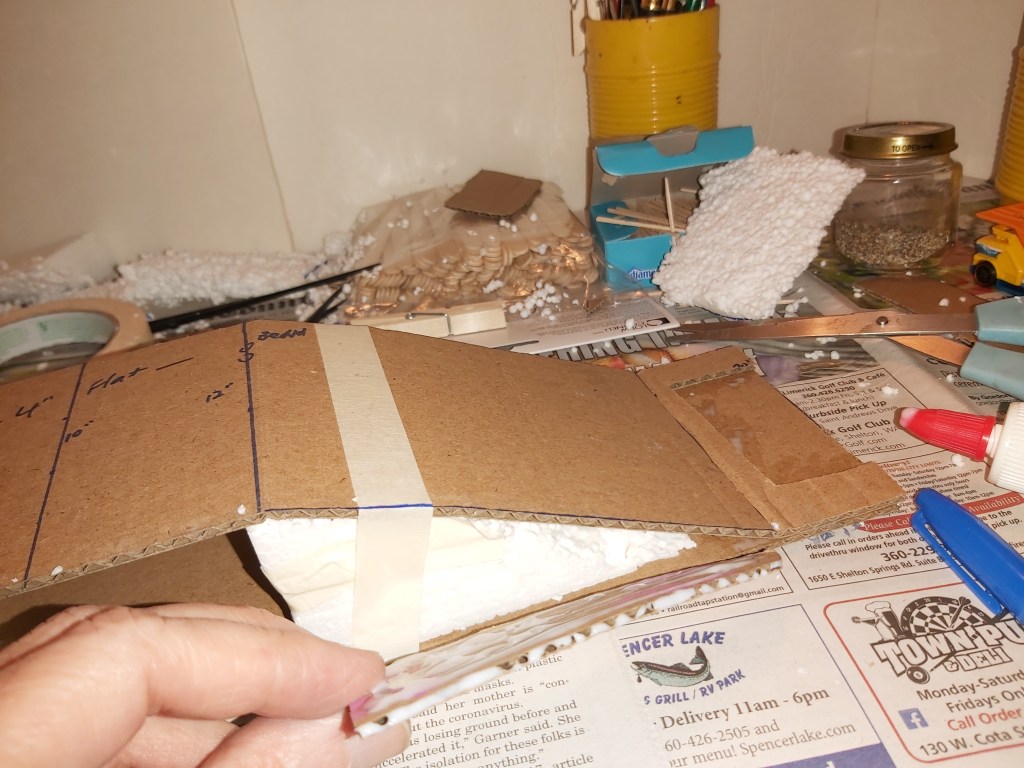
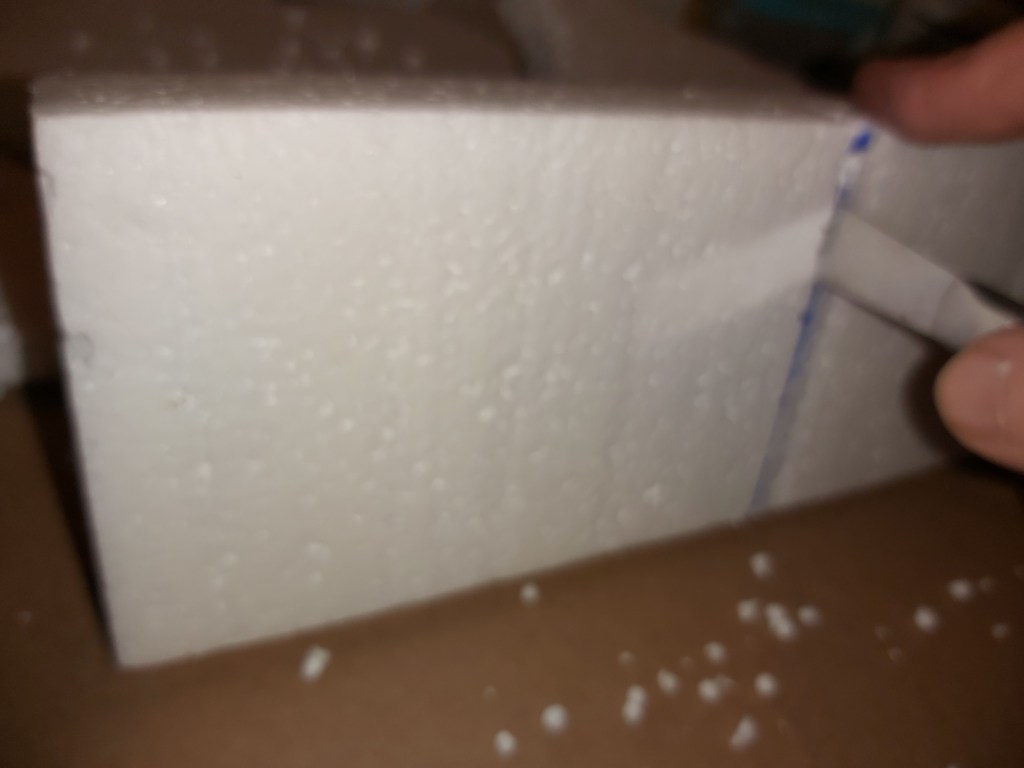
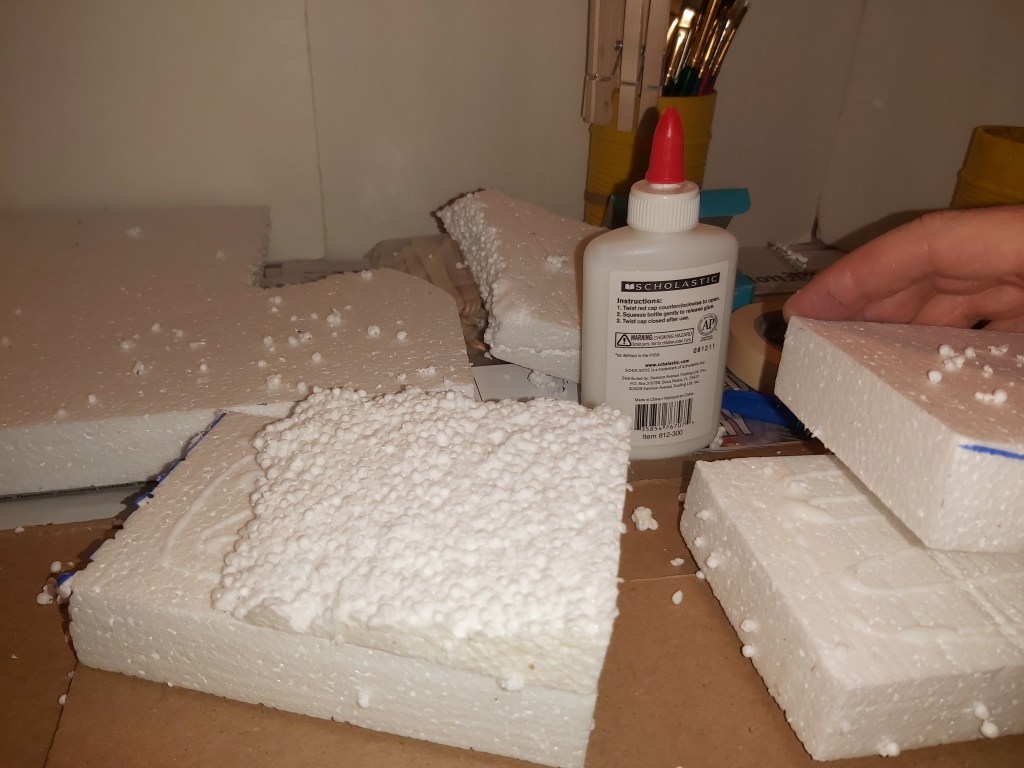
Note that you might need to glue Styrofoam together and let dry, then cut it to size/shape with your old table knife. Place the Styrofoam triangles on the base and test-fit and mark the road over the top, then bend (don’t cut) the road along your marked lines. Glue it all together.

3. Clamp

Use your masking tape to keep it all together until the glue can dry, but before it completely dries, go to step 4.

4. Test fit

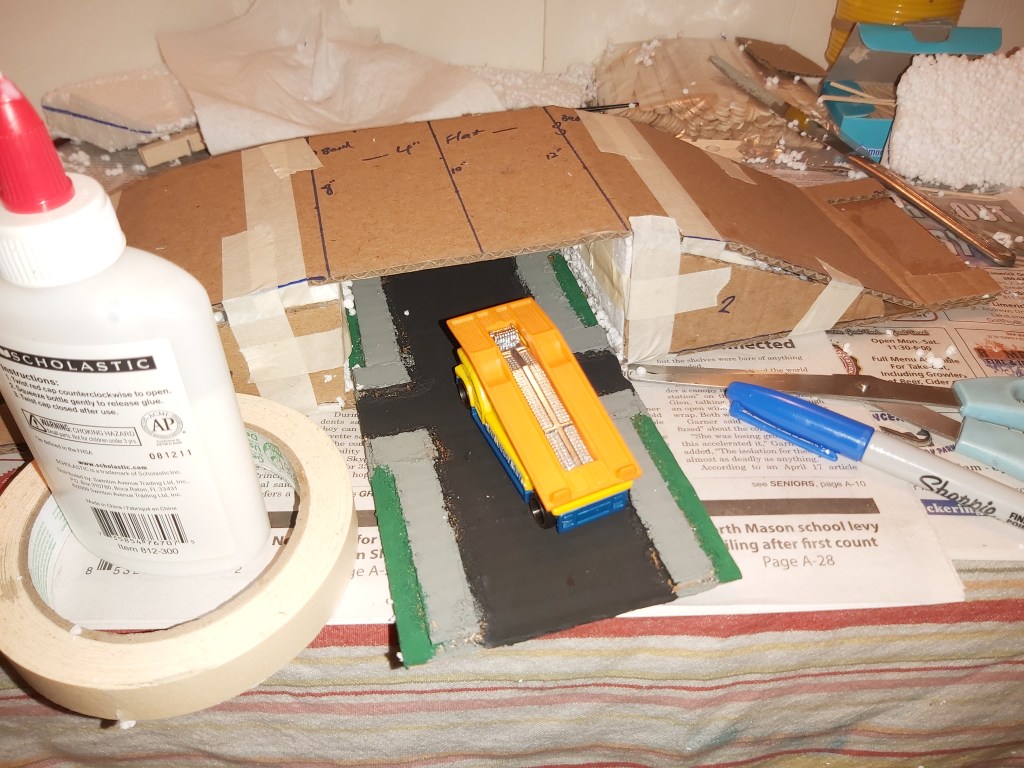
Make sure your bridge will be wide and tall enough for what you want to do, and adjust as needed. Now is the time to make sure it’s coming together according to your plan. Tick-tock, the glue is drying!

5. Curbs

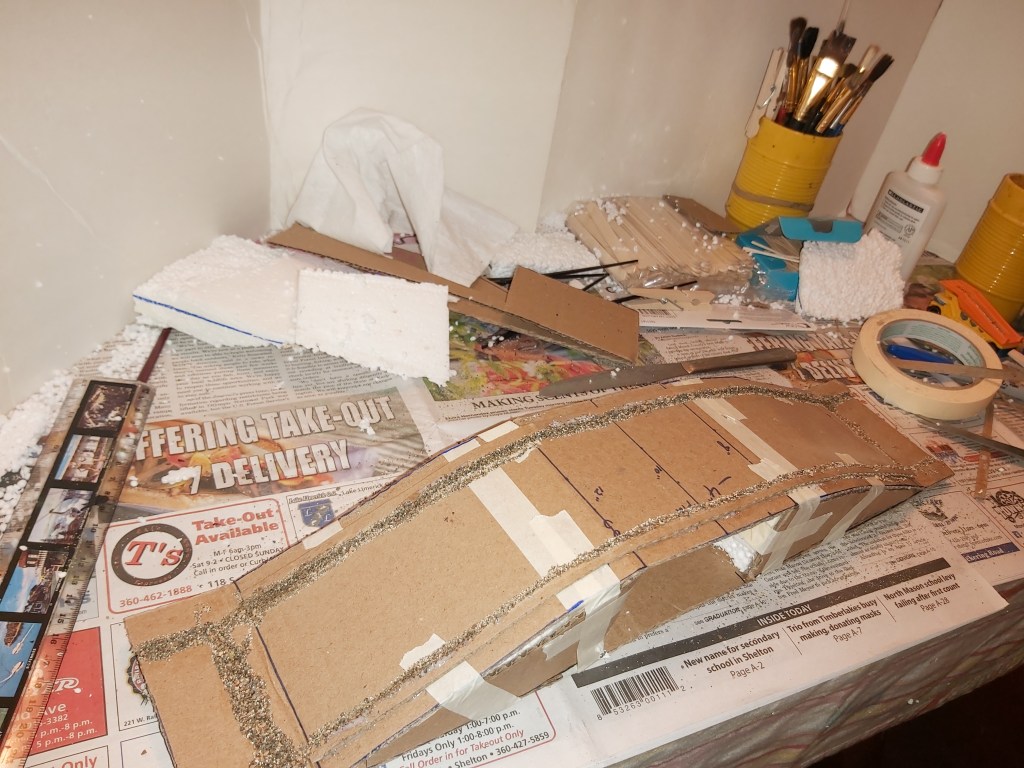
Glue down the strips, leaving some room on the outside (the width of a clothespin). Then put more glue along the inside of the strips and flock with sand, the same as we did with roads in a previous Crafty Time.  Let dry.

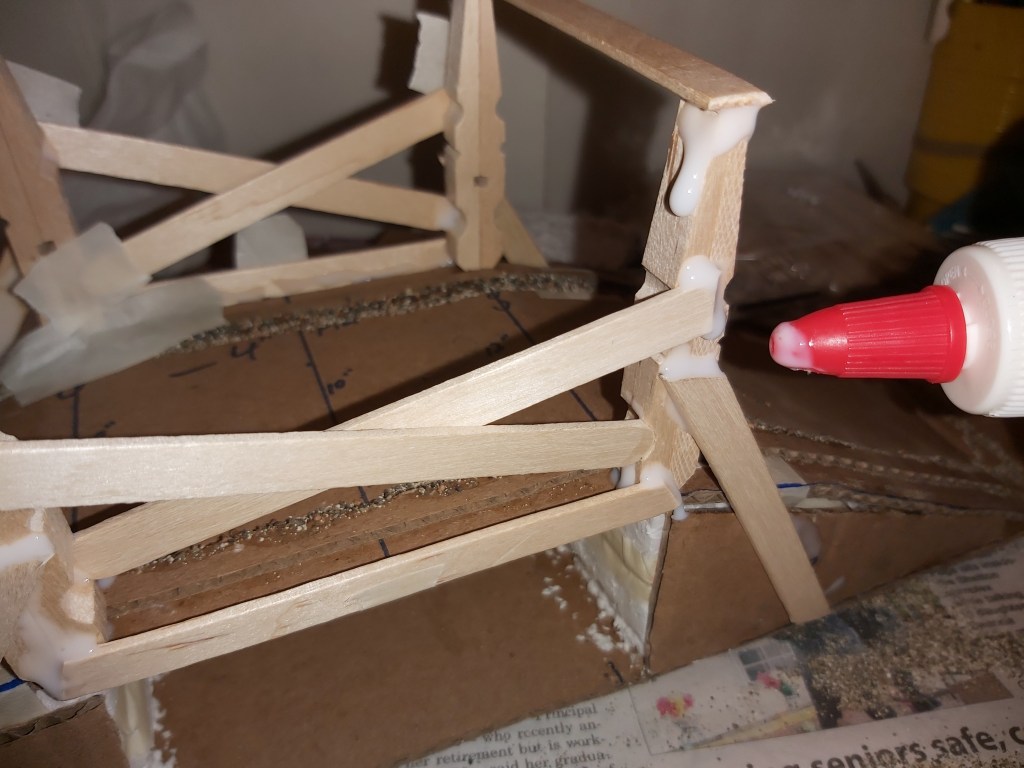
6. Pillars

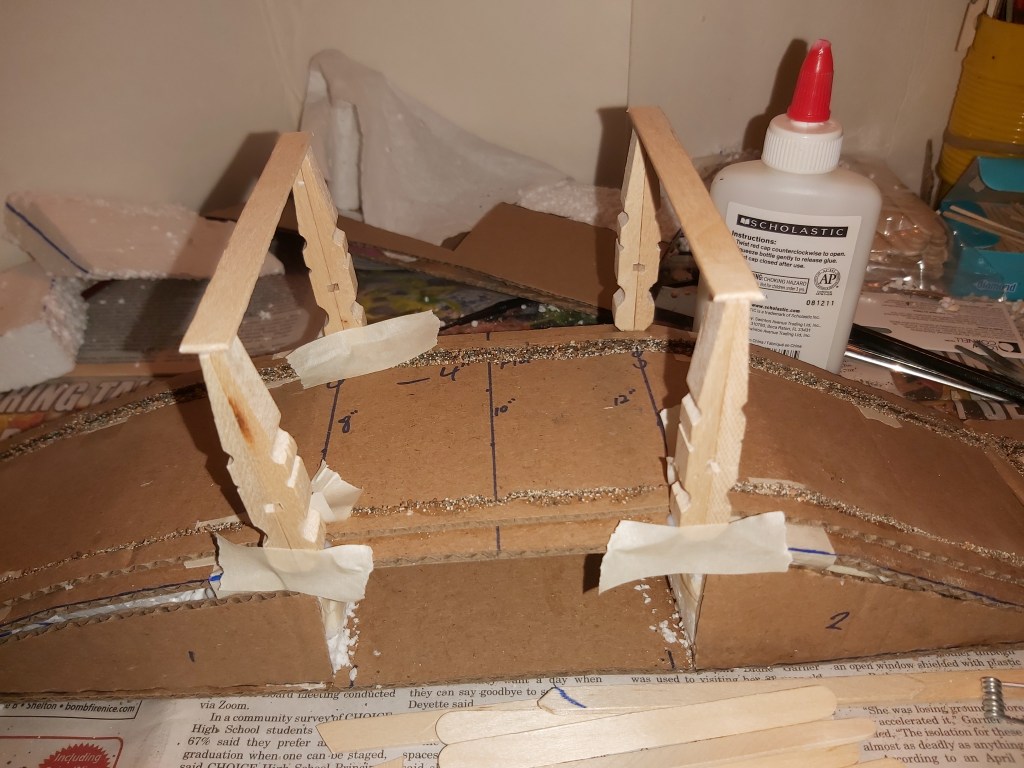
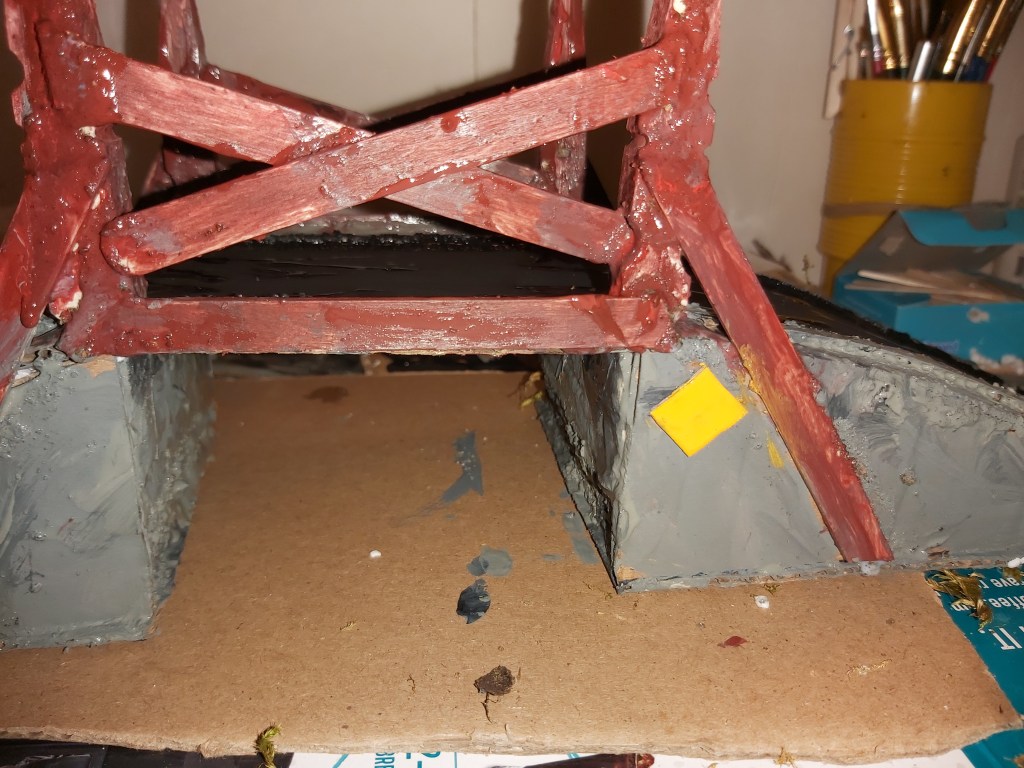
Take the metal spring out of a clothes pin. Now, flip around and glue the flat parts together. Make 4 of these interesting-shaped pillars, and line them up on the outside top corners. Glue them down, clamp with masking tape and let dry.

7. Crossbeams

Carefully test-fit two craft sticks across the pillars. With scissors, cut them to size. Glue them down.

8. Diagonal Bracing

Use the details on the pillars to line up craft sticks. Test-fit, mark, cut and glue in place. Let dry. Add more glue on all the joints, flock with sand, and let dry again.

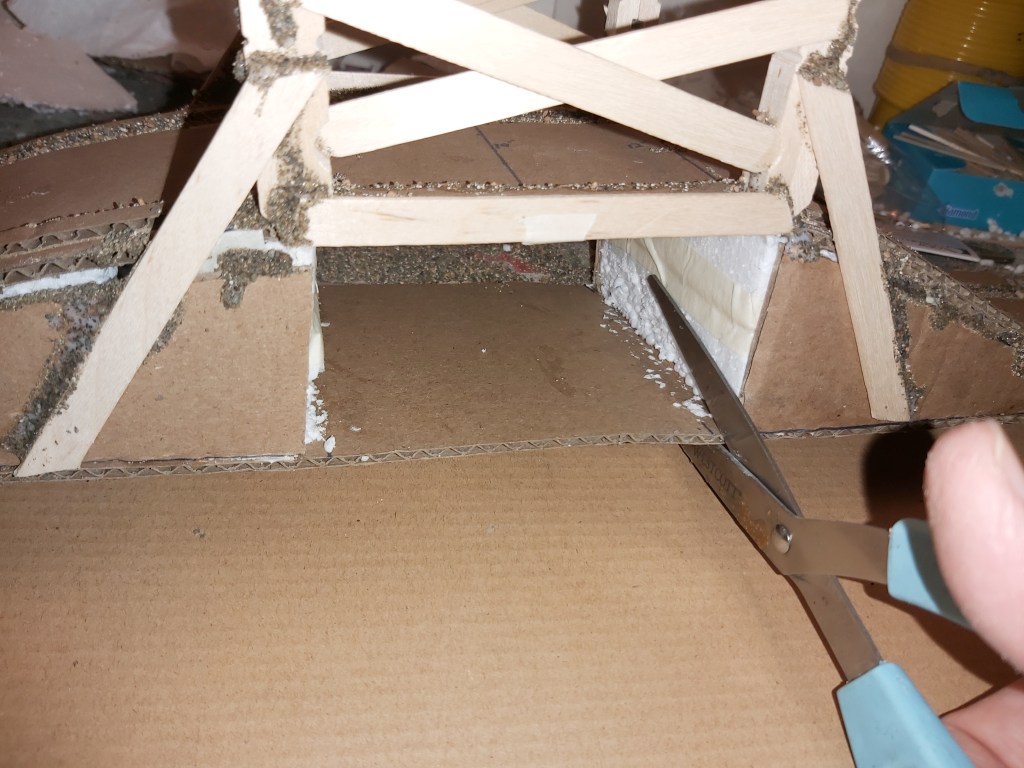
9. Cut opening

Now that everything is solid, you can cut the middle part of the base out. It should be just over 4” wide.

10. Check

Pick the bridge up and turn it around at different angles. Fix anything you don’t like, prior to painting.

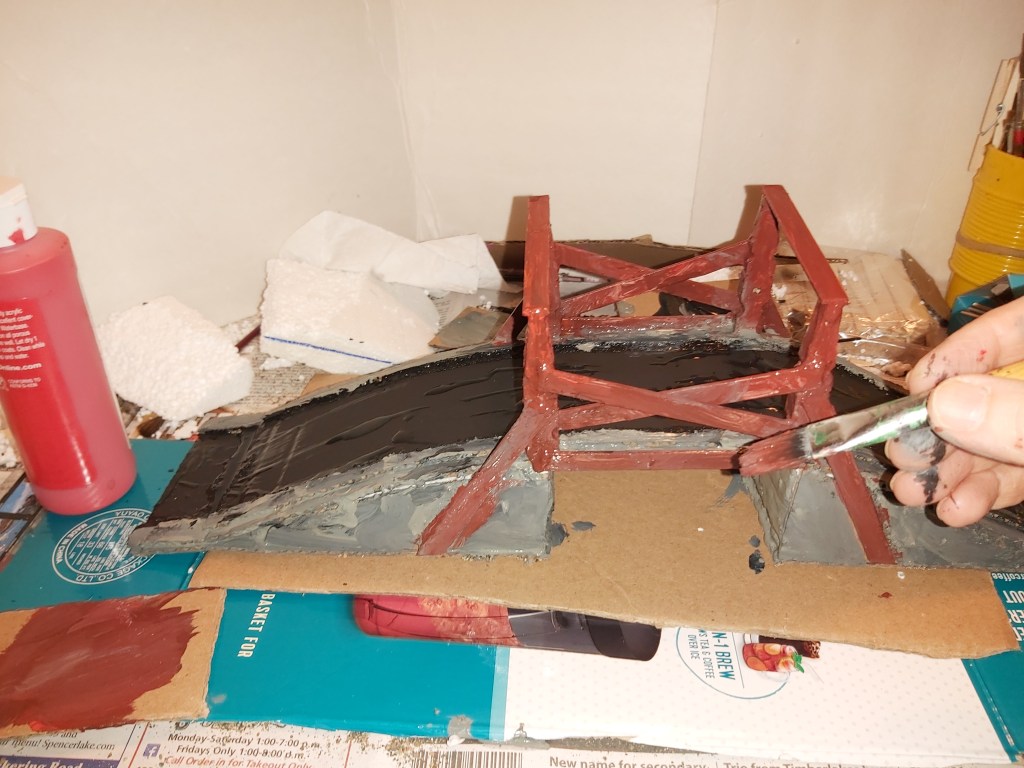
11. Base Coats

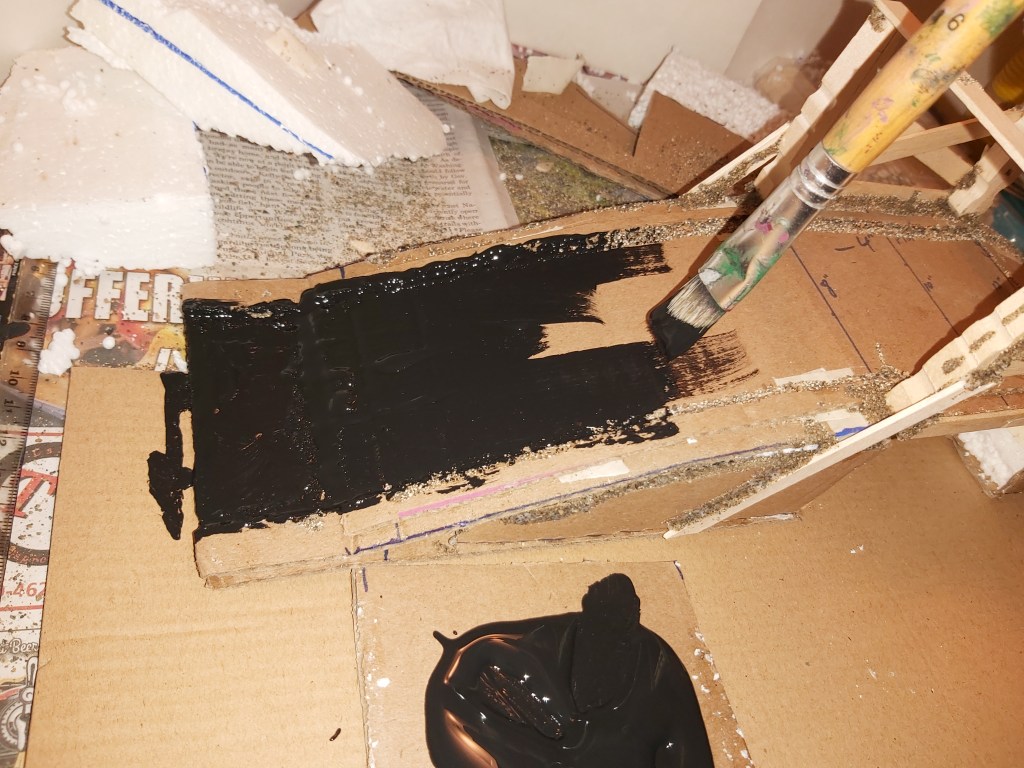
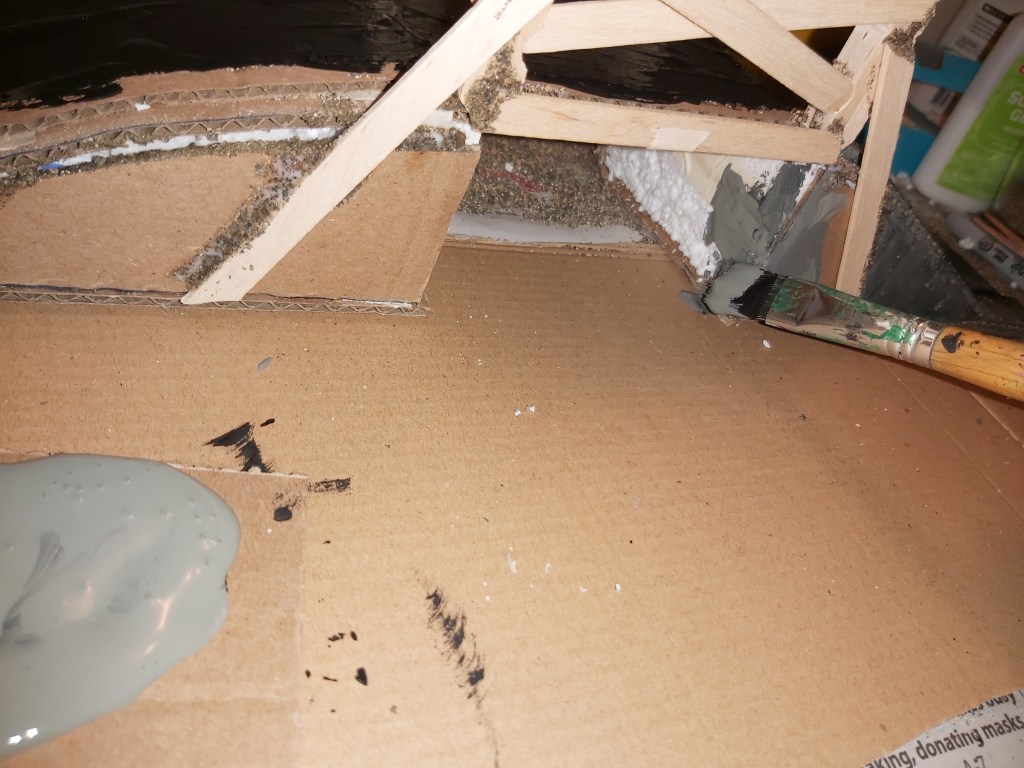
Black for the road, grey for the concrete, and a mix of red and brown for the bridge. You can mix things into your paint such as glue for extra strength, a bit of sand for extra texture detail, and/or water if you prefer thinner coats.

12. Foliage

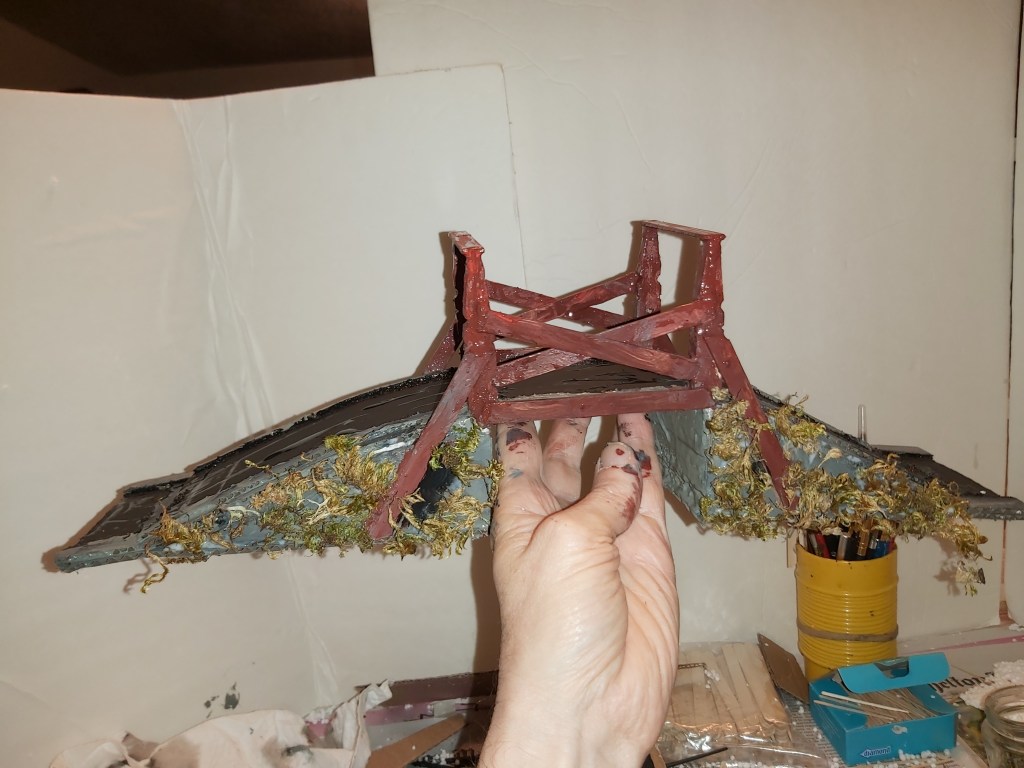
Put the glue on first, then carefully place the bits of dried moss where you want them, pushing them into the glue. Check and adjust until you like it. Let dry.

13. Details

A caution sign for a low bridge makes sense. Cut a square of cardboard, glue it on there and paint it orange. Add all the other details you like.

14. Overview – Bridge

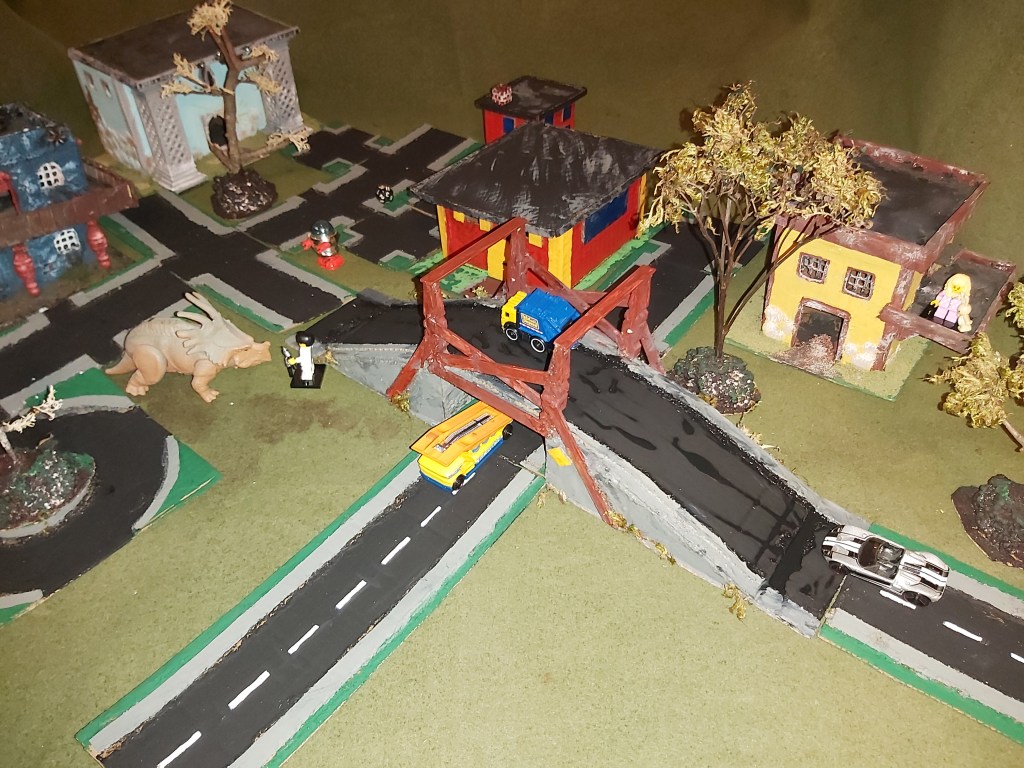
Happy Tree Village now has a bridge you can put over the top of road sections. It would also work over the top of water, which is conspicuous by its absence – until another time!

Have you created anything lately? What would you like to see in an upcoming Crafty Time? Email dave@masoncounty.com with your photos and feedback!

Idea 3: Trees

crafty time trees.pierik.18.20

Crafty Time

By Dave Pierik

Shelton-Mason County Journal

Fun with trees

Previously, we made buildings and roads out of cardboard. Now our village needs trees!

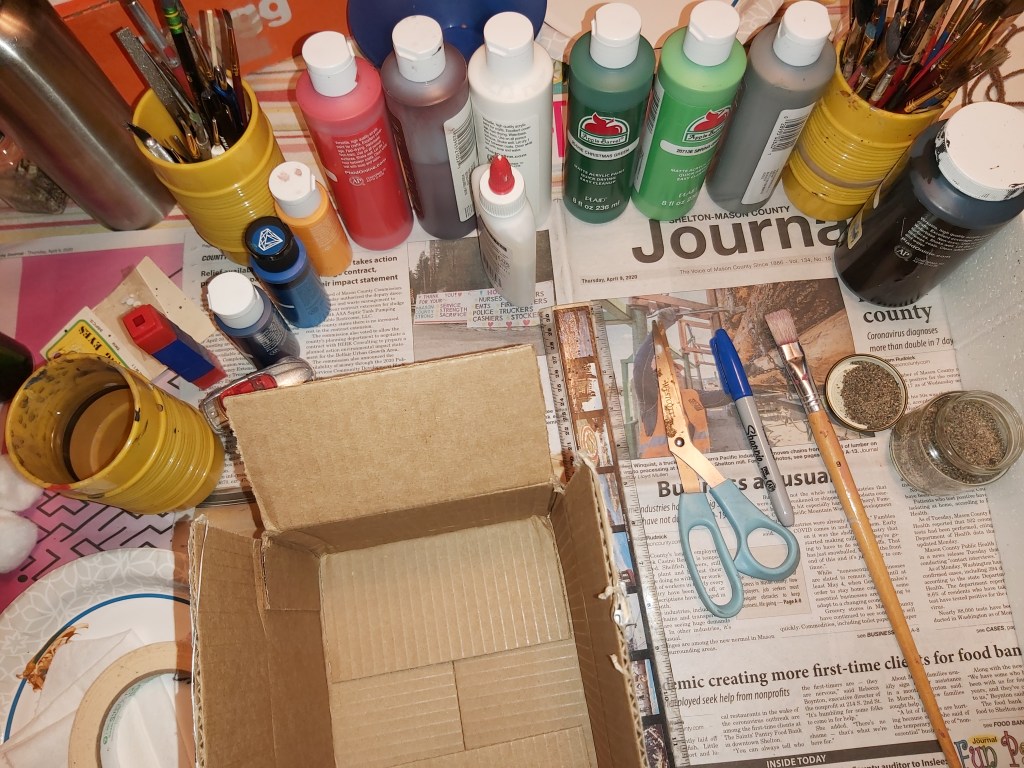
You will need:

Glue

Scissors

Paint and brushes

Cardboard

Styrofoam

Sand

Moss &/or lichen and Sticks (see below)

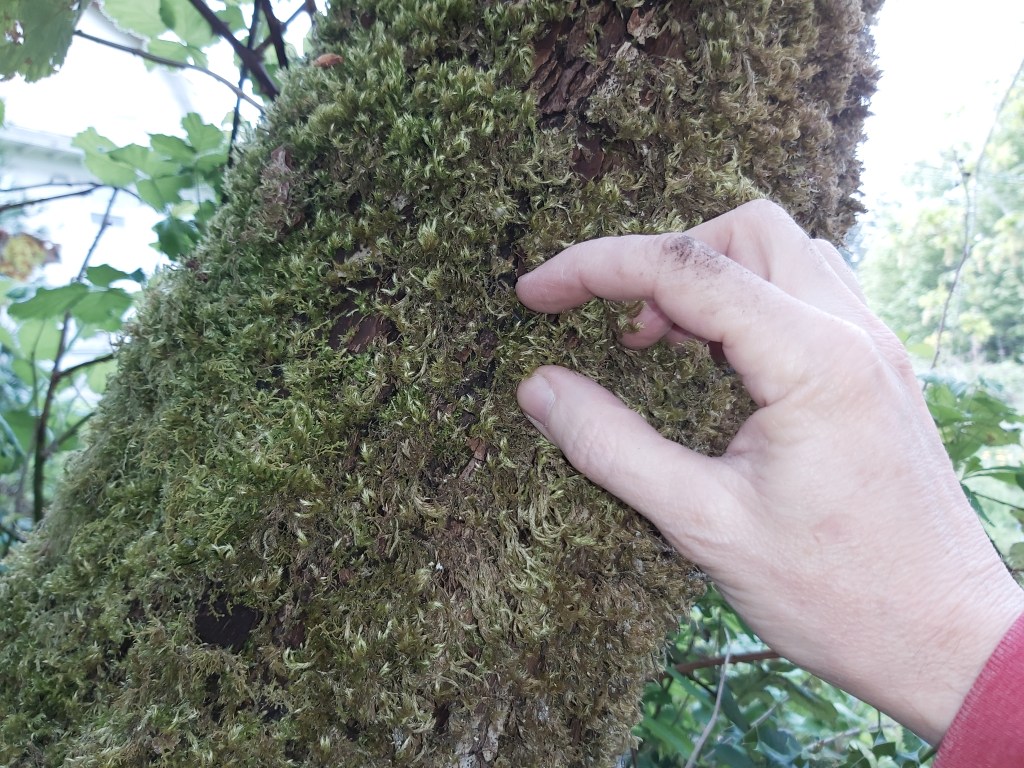
1. Gather moss

They say a rolling stone gathers no moss. But you do! Go outside, where from just about anywhere in Mason County I’m guessing you should be 100’ away or so from some moss and lichen if you look around. In this example, it was right in my backyard. Moss is more abundant but both moss and lichen work great for tree foliage.

2. Pick up sticks

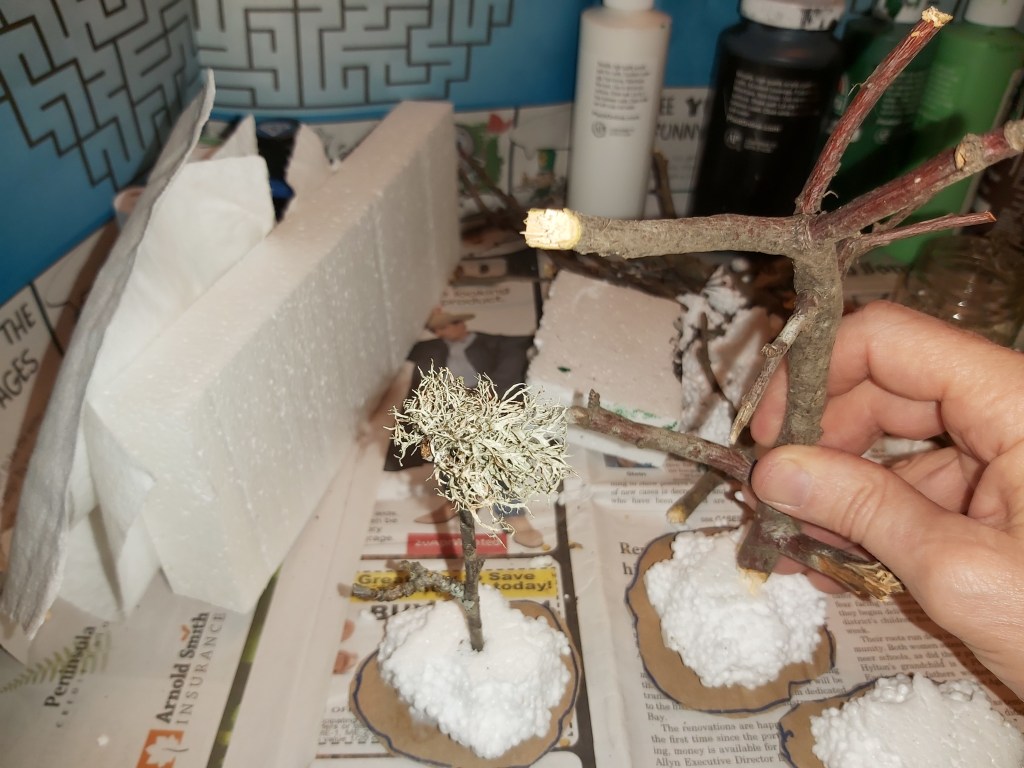
While you’re getting the moss, look down for a few dead branches that look interesting. It’s easier than you think. Break them down a bit, to a foot long or so each.  I found four different sticks with branches for this example. You don’t need a lot and you don’t need to be too picky at this stage.

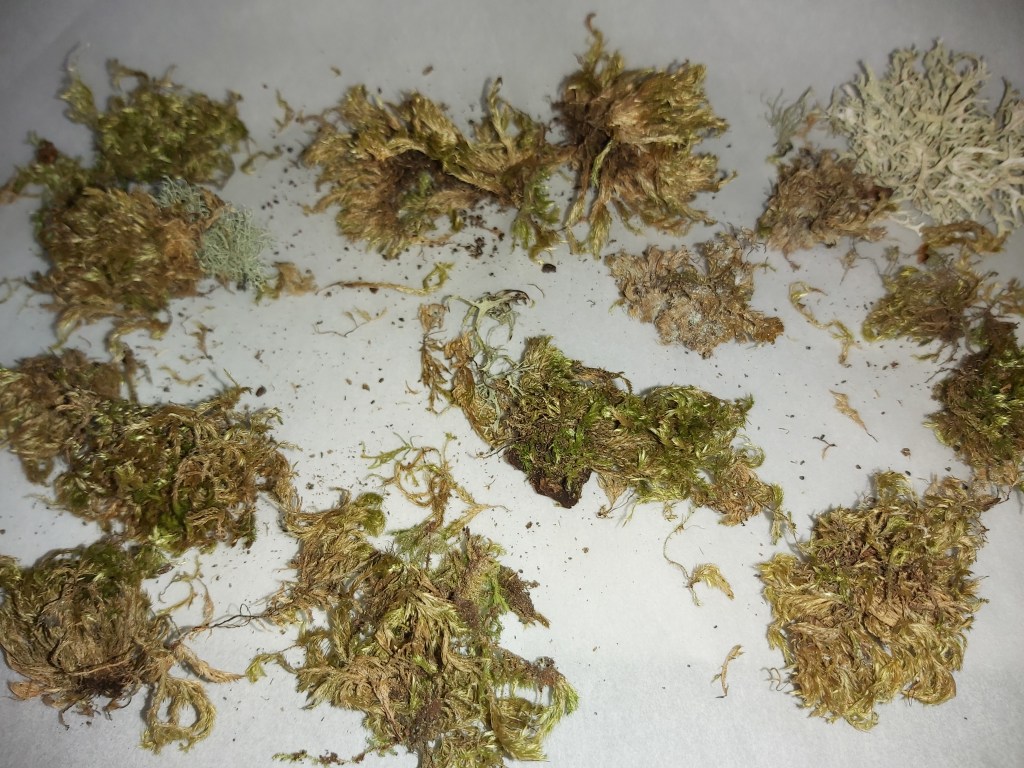
3. Dehydrate foliage

Before you begin, start dehydrating the moss and/or lichen now. I used parchment paper and the oven just above the “Warm” setting. Not too hot! At about 150 degrees, you can dehydrate your moss and lichen in about six hours in the oven. You will want it nice and dry for the steps at the end.

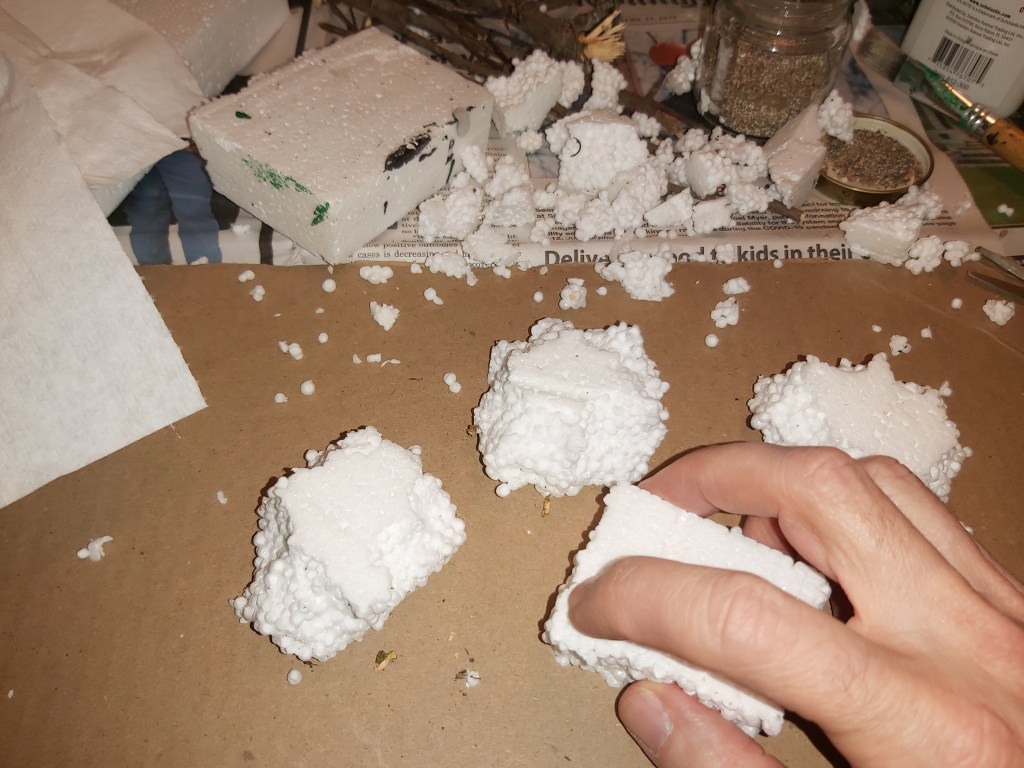
4. Shape Styrofoam

With your hands, break the flat sides of some regular packing Styrofoam into rounded, natural shapes, leaving the bottoms flat. A bit of the middle part of each top should also be flat.  Each mound can be any size or shape you like. In this example, they are about 3” across, but there’s no need to measure this time.

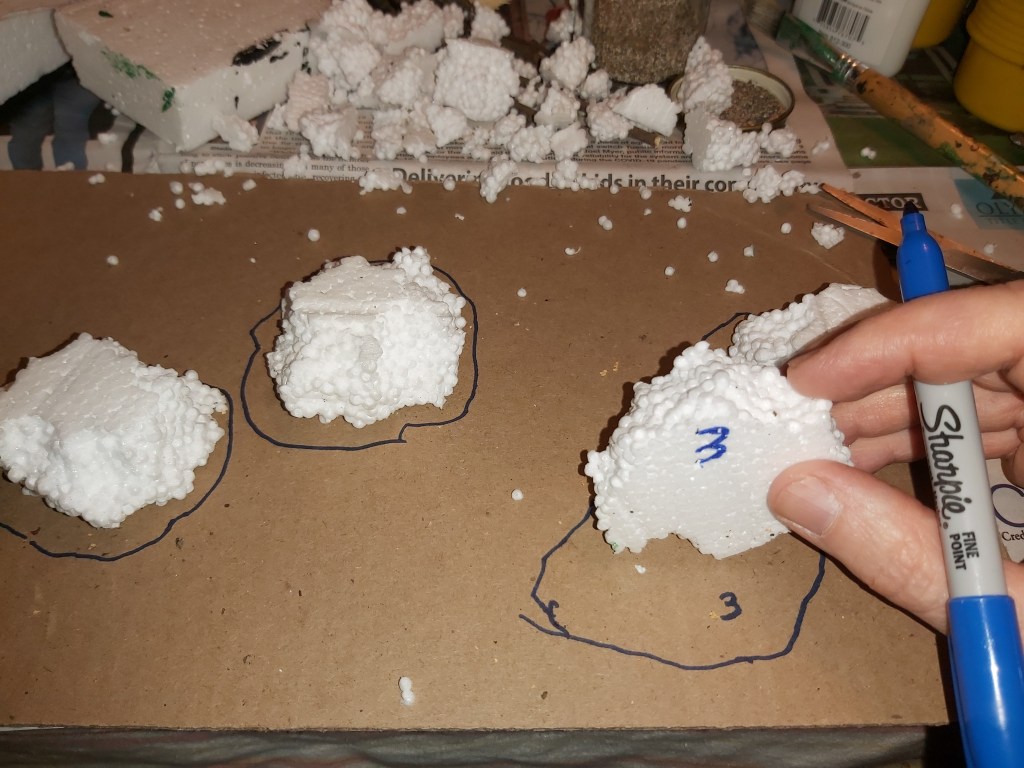
5. Mark, cut and glue bases

It’s all about that base. No trouble. On corrugated cardboard, outline each of the Styrofoam shapes, leaving about a half an inch extra room in every direction. Lift the Styrofoam and mark your place before you cut along the lines you made. Then, line up your marks and glue the Styrofoam to the cardboard so there’s room to spare in every direction. Let dry.

6. Trim branches

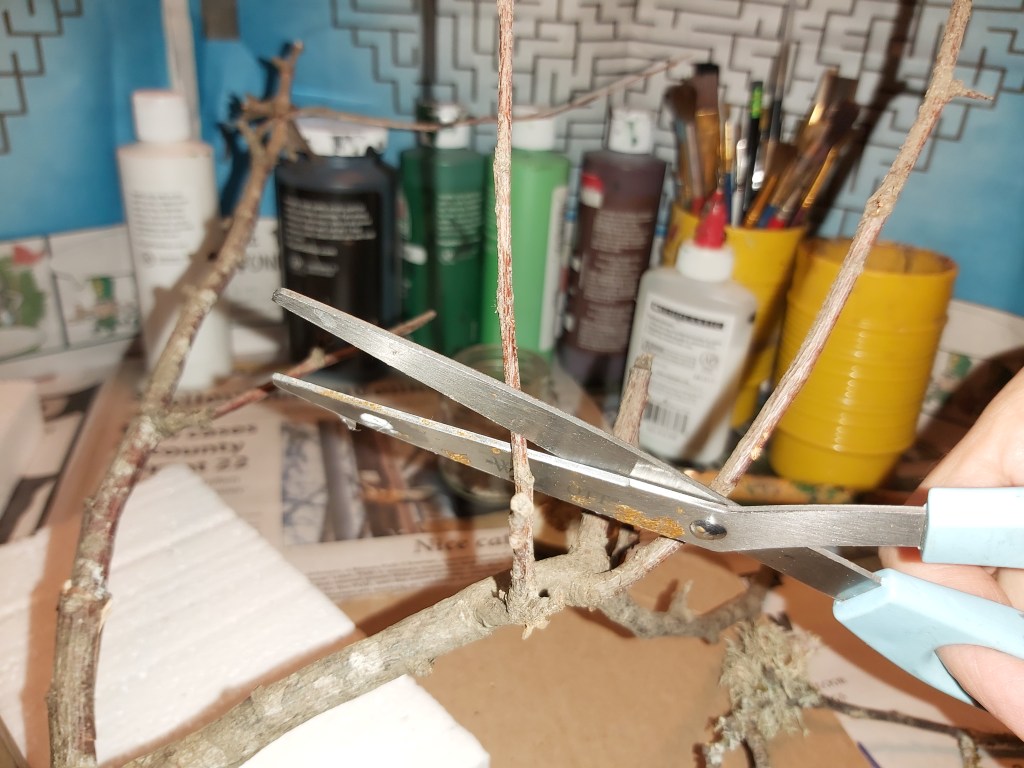
Cut any of the longer, thinner or broken branches off. I prefer my trees to balance well and to be somewhat sturdy. After this step, I have a nice group of little wooden stick bits, great for future fine scale modeling details like wood piles outside of buildings, logs by river banks, etc. If you have a bits box, throw them in along with your leftover Styrofoam if you like.

7. Plant, glue and sand

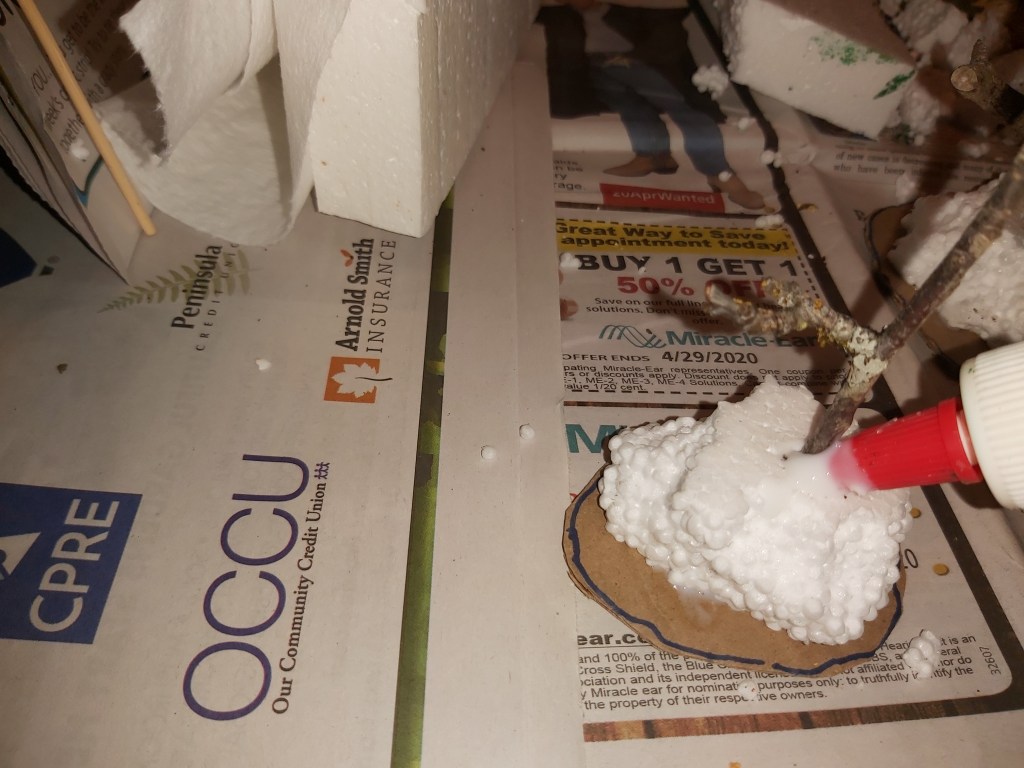
“Plant” your trees, pushing the trunks deep into the Styrofoam, but not the cardboard. Then, remove each tree and fill the gap with glue. Put the trees back in there. Now, paint the sides and tops of each base with glue. While the glue is still wet, flock by sprinkling the base with sand and shaking the excess sand off. Use extra sand and glue around the trunk for support. Let dry.

8. Paint bases

Using your brush, lightly stir black and brown paint with a bit more glue and some water. Paint the bases. Some areas will be black and others more brown on this basecoat. Let dry.

9. Glue foliage

Put glue on the top of the branches, where your foliage will be. Then, break apart and place the moss or lichen, putting it into the wet glue. You will get better at this with a bit of practice, be patient. Wait for the glue to dry.

10. Touch up bases

Mix some dark green with a bit of black and brown paint, and highlight the taller areas of grass on each base, especially on the top. You can also use a bit of brown and grey to drybrush the tops of some of the rocks on the sides of the base, going for a natural look. Let dry. When everything is done, you can topcoat it all with two coats of matt-finish clear spray paint.

11. Happy trees village

Along with the cardboard buildings and roads featured earlier, trees really add a natural touch. This setup is great for the imagination! Your kids or grandkids can spend hours playing with cars, small dolls, dinosaurs, robots and who knows what else. You could make a YouTube movie or music video featuring your diorama. Customize your village however you like!

What would you like to see next on Crafty Time? I’m thinking our village could really use a water feature, maybe a creek and a bridge. Please email your thoughts, ideas and photos to dave@masoncounty.com.

Idea 2: Roads

Crafty Time

By Dave Pierik, Shelton-Mason County Journal

In last week’s Crafty Time, we had fun creating cardboard buildings.

Some readers asked about roads, so they could play with their cars among the buildings (the brand rhymes with Wot Heels). So, here we go, let’s make some roads!

1 You will need:

Cardboard (a fairly big box)

Ruler and marker

Scissors

Masking tape

White glue

Sand

Paint and brush

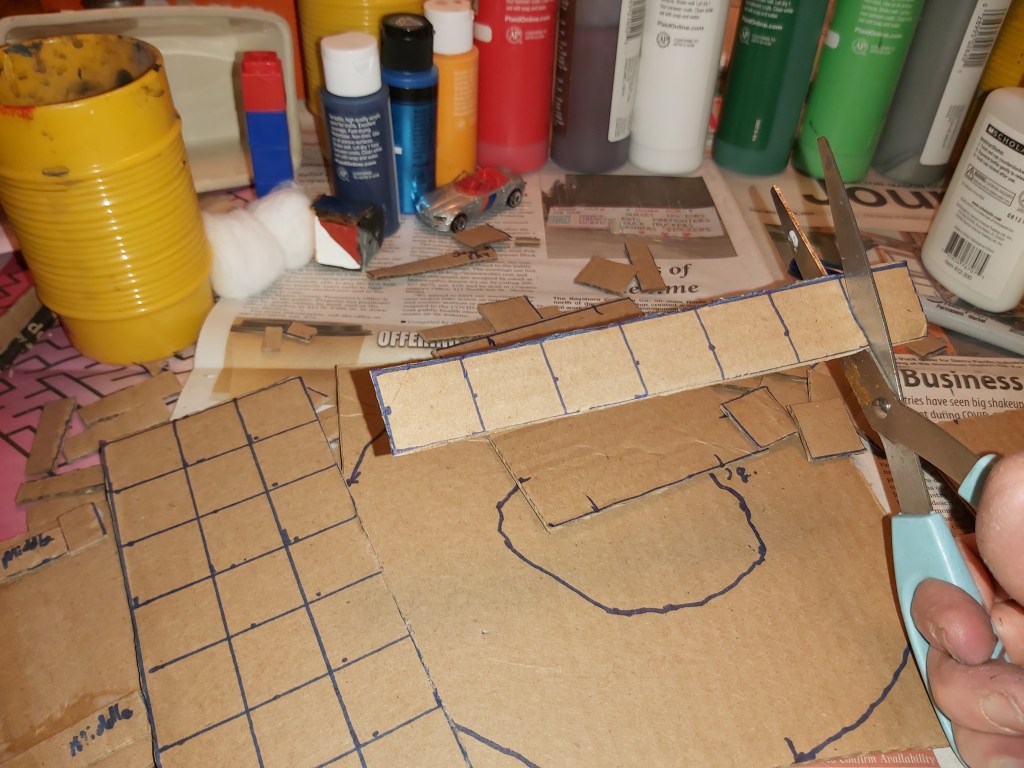
2. Cut a fairly big corrugated cardboard box to flat pieces. It’s up to you how much to use. Round up – cut extra!

3. Measure!

Grab your marker and ruler.

For this example, you will need the following measurements:

6 of: 12″ x 4″ (for 2 Highway, 2 Main Street, and 2 Residential roads)

12 of: One-half inch (1/2″) wide x 11.5″ strips (for the curbs and curb cuts. Make extra to allow for errors)

4 of: 4″ x 4″ squares (for intersections)

1 of: 8″ x 8″ square (for roundabout)

16 of: 1″ x 1″ squares (for the corners of the intersection pieces)

1 of: 3″ circle (for the middle of the roundabout)

2 of: 3″ squares (the cut into triangles with curved middles to shape for the roundabout corners – will make 4)

4. Measure, mark and cut

(shared caption with 3.)

5. Measure, mark and cut – Template tip to save time

Mark right on there, how you want it to be. They say measure twice, cut once. There’s a way to measure once and cut twice – or more! Make one template, and then use it to cut more pieces to that same size!

6. Cut along the lines you made. Don’t lose track of your pieces, and what goes where, or you’ll have to cut more pieces.

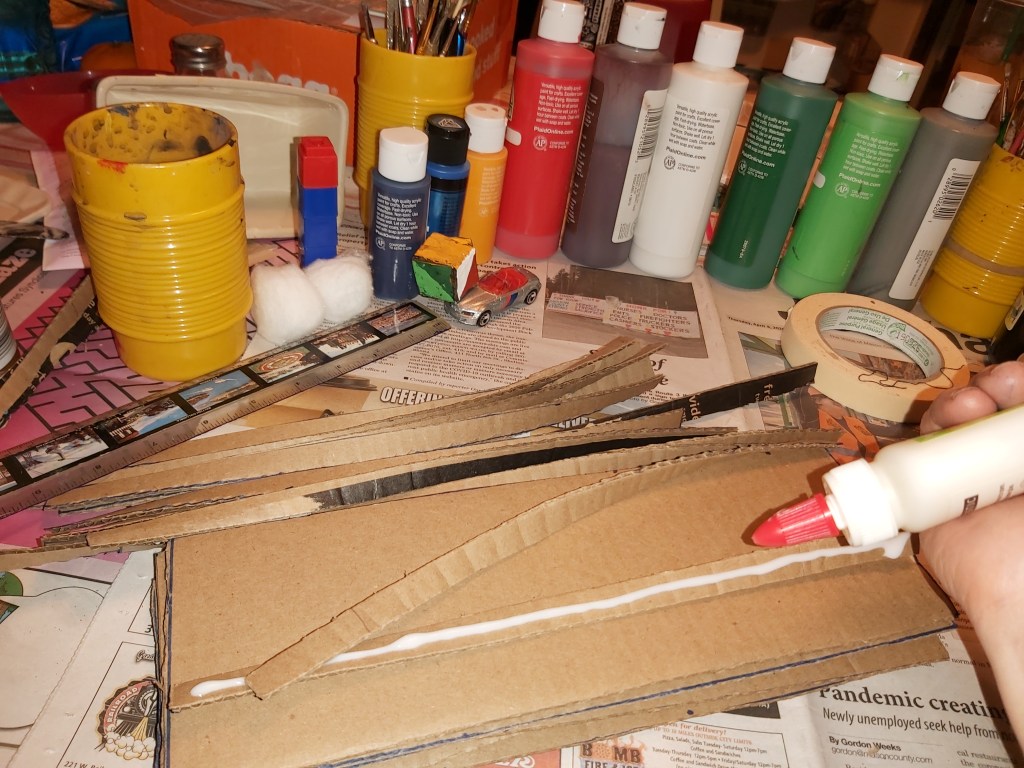
7. Gluing. For roads, the main things going on are the curbs. It’s tempting to put the curbs right up to the outside edge, but don’t. It will look better and be more durable if you leave a quarter-inch to half-inch margin on the outside, to show some green on the outside of each of the 12″ x 4″ roads.

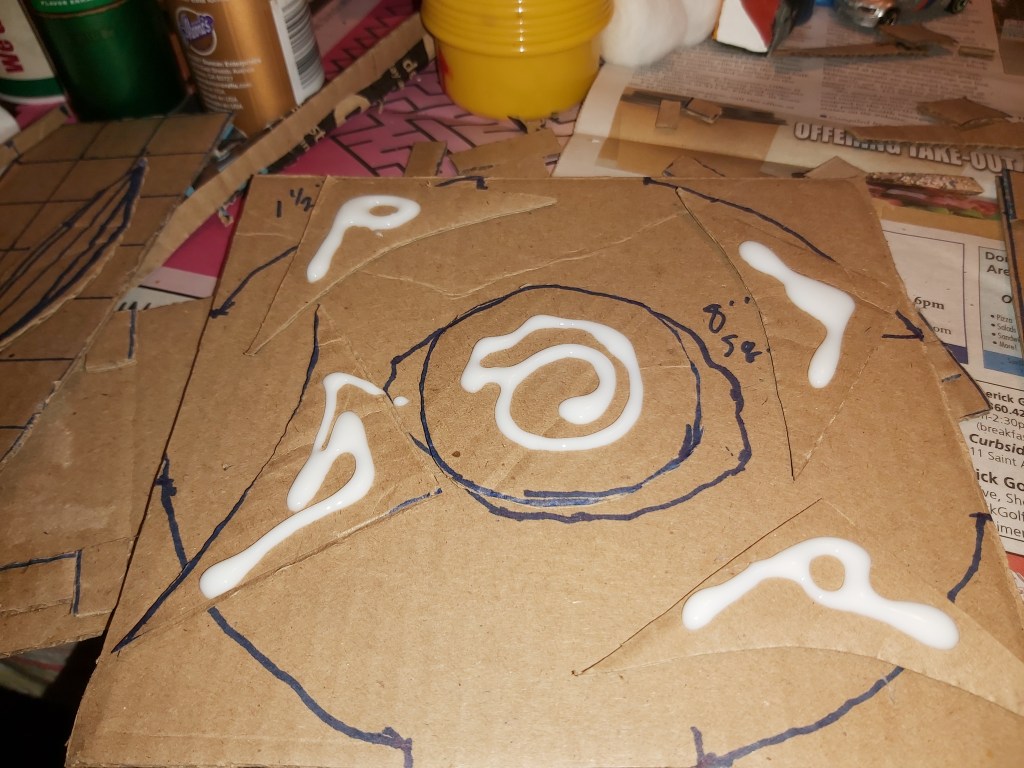
8 Gluing the Roundabout

You will need the 8″ square, the 3″ round in the middle, and the four 1 and a half inch curved-middle triangles for the corners. Glue it all up, flip it over and clamp it with masking tape.

9. Clamping the curbs

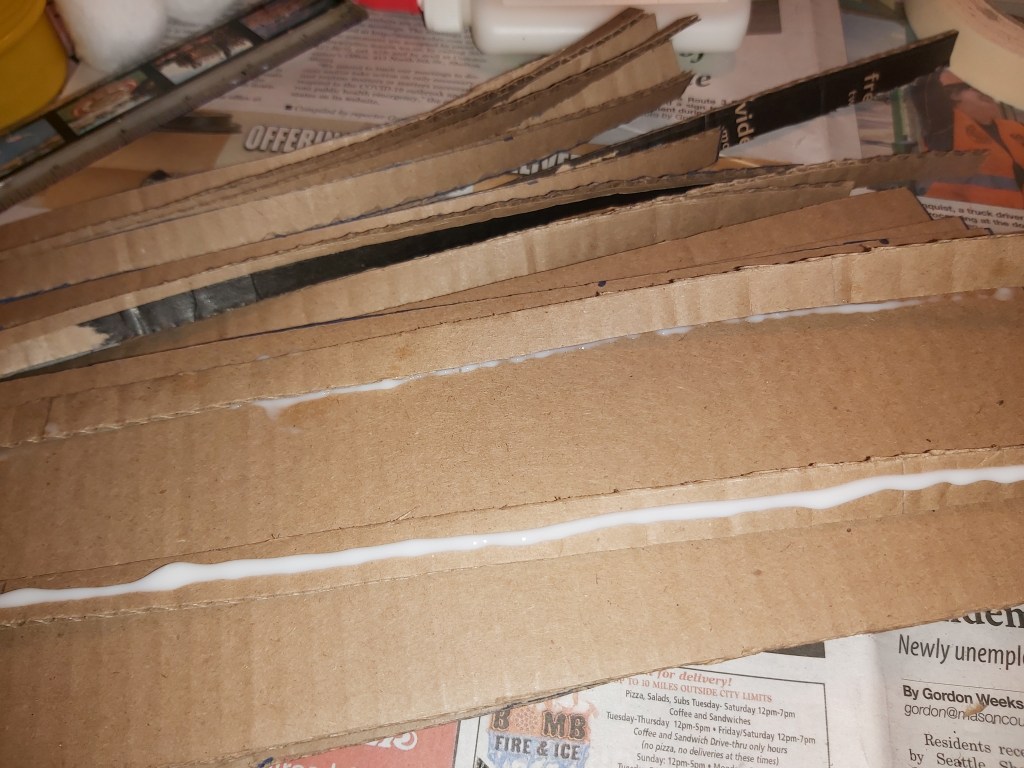
You will find that the 1 half inch wide strips like to bend around, especially when you put wet glue on them. Not to worry! Masking tape will hold it down until the glue dries.

10. Removing the tape.

The masking tape worked great. Once the glue is dry, carefully pull it off. It’s only cardboard underneath, so don’t worry too much about ripping some of the top layer off, because you will be painting it later anyway.

11. Sand.

Why Sand? It fills the gaps on the edges of the curbs, looks great, and strengthens the road. Run glue along both sides of all of your curbs, then add sprinkle or dump sand onto the wet glue. Tip the rest back into your work area and keep going. This technique is called flocking.

12. Sand – flock style

Here, the sand is sprinkled along the glue line, with the road piece tipped. Sand that does not stick will fall right back to the work area.

13. Sand – Highway curbs

This is a great photo of how sand and glue will finish the sides of the curb lines. The tough part is waiting for the glue to dry!

14 I want to PAINT IT BLACK!!

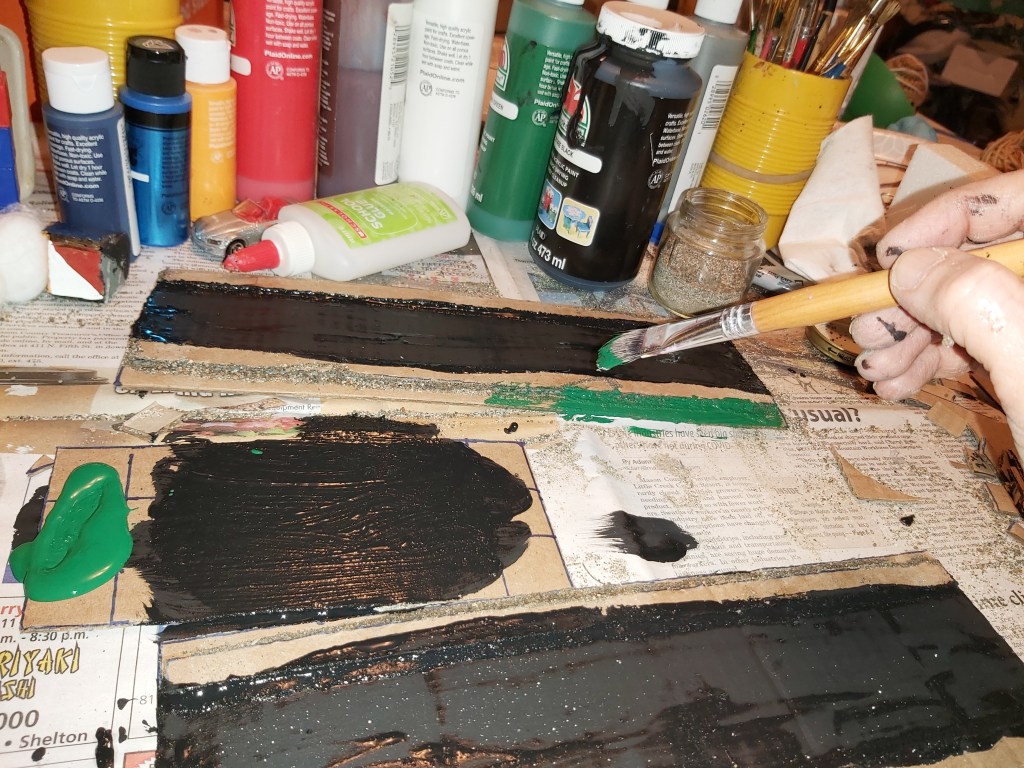
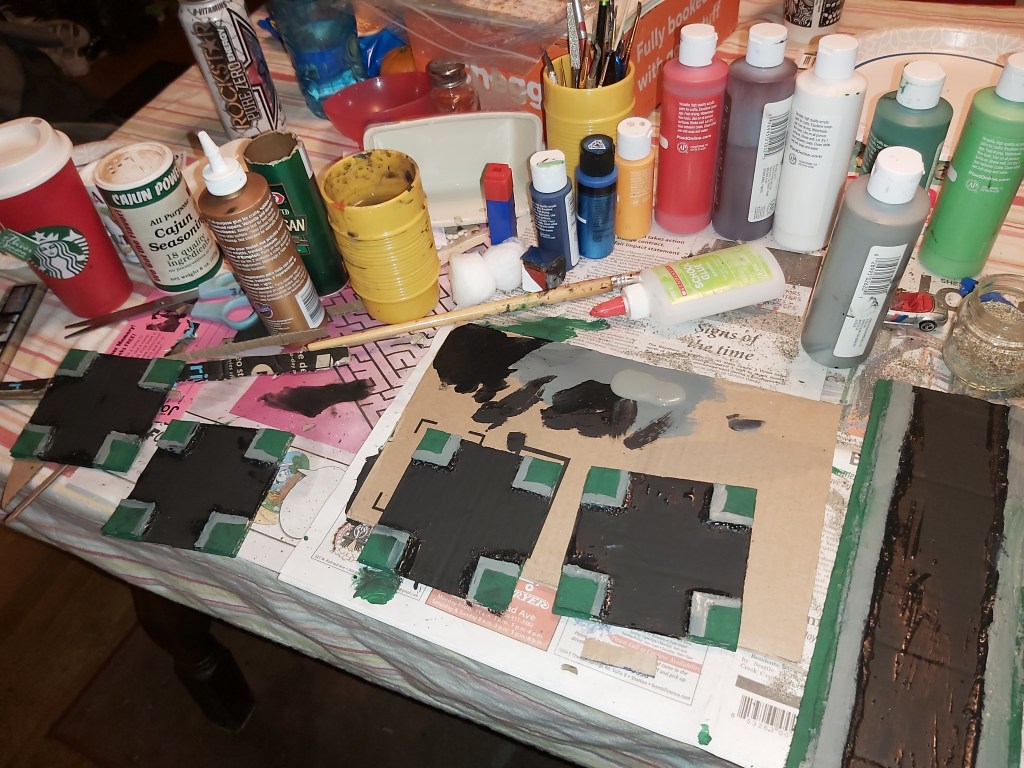
Here, we are getting the basecoats of paint underway. Use acrylic paint, a nice big brush. Have water and a paper towel handy. Black is only needed for the road itself, and you’ve got ready-made borders on the sides with those wonderful curbs. I like to have everything ready at this point so I can just go and go with the paint.

15 – Green basecoat

Now you can see why we left that gap on the outside of the curbs. A nice dark green base coat really pops. You can always add more detail and touch things up later.

16 Paint – grey curbs basecoat

Concrete is grey (or you can spell it gray) so that’s what I did here. You could add yellow or red areas, especially on the main street curbs. Do that later. This is a base coat, so if the yellow or red does not cover well or chips – it will look like concrete underneath!

17 – Touch Up paint

It’s fine if basecoat is a bit sloppy. This second coat is your chance to go back and fix all of those spots. You know where they are. It is worth the time.

18. Highway stripes – prep

After the black paint is dry, with 2 pieces of masking tape, leave an even, narrow strip down the middle of the highway pieces. Press the tape down a bit to keep the paint from getting underneath it.

19. White paint – highway stripes

The stripes are that one bit of white. Try to paint evenly and not too heavy. Use a couple of thinner coats rather than one heavy one, before you pull the masking tape off.

20. White paint touchup. Use black paint to touch up any areas where the masking tape did not cover, or you did not want white paint. A flat brush works great for this, and the black can even add a touch of realistic road wear and tear if some of it goes over the stripes.

21 Overview of road pieces with buildings

So altogether we now have:

2 Highway pieces

2 Main street pieces

2 Residential road pieces

4 Intersection pieces

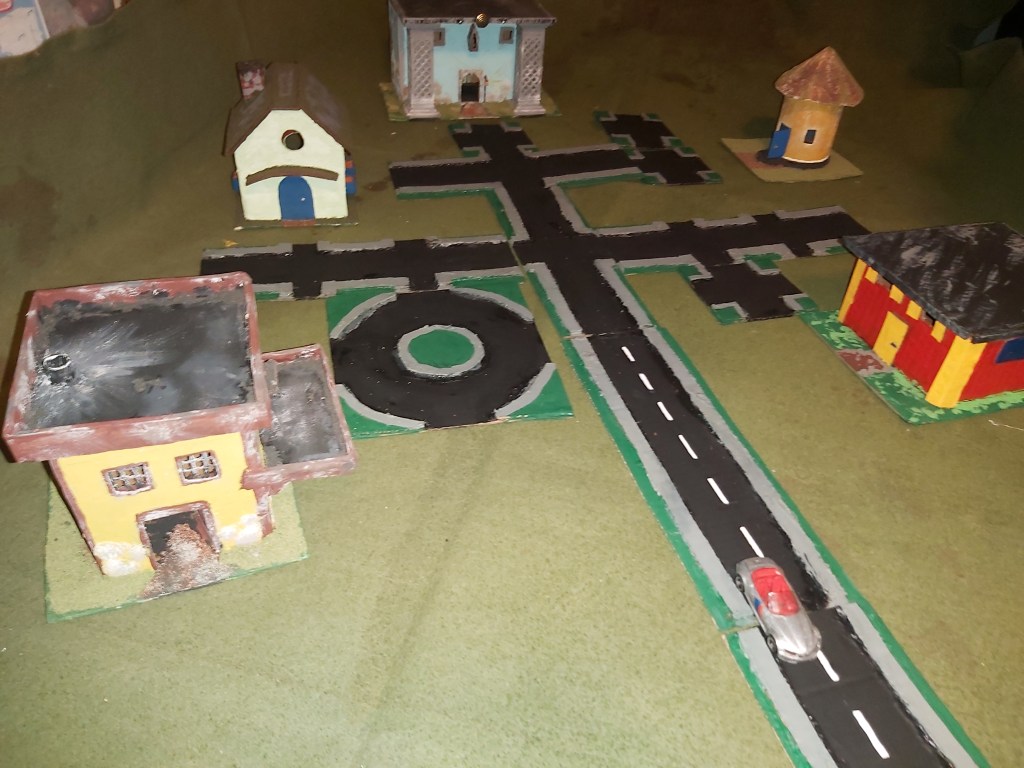
1 Roundabout

It looks nice, and you know how to touch up, replace, or add as many pieces as you want! You can also protect it from wear and tear with 2 coats of a clear matt finish spray paint on both sides.

Along with the cardboard buildings we created last week, this is a great start for a “Whot Heels” or other scale-model figures.

What would you like to see in the next Crafty Time? I’m thinking trees would be a good addition. Email me at dave@masoncounty.com with your comments, project photos and suggestions. Until then, have fun!

Idea 1: 15.20 Buildings – Crafty Time with Dave

This information first appeared as the first Crafty Time, as two activity pages in the April 9, 2020 Shelton-Mason County (WA) Journal.

Crafting.pierik. 15.20

Crafty Time
By Dave Pierik
Shelton-Mason County Journal

Cardboard buildings – fun to make, fun to have!
Or – a beautiful day in the neighborhood

  1. The building above was made with leftover cardboard and paint from the example below –
  2. You will need:
  • A corrugated cardboard box
    *Ruler & pencil, pen or marker
  • Scissors
  • Glue
  • Masking tape
  • Acrylic paints and Paintbrush
    Optional: * Toothpick
  1. Open the box, pull it apart, cut off all the flaps, and …
  2. Cut it into pieces along all of the folds.
  3. Measure and mark the walls. For this example, each of them is 5.5” wide x 3” tall. You can also cut out any windows or doors at this stage.
  4. Cut along the lines.
    Lay out the walls on a larger floor piece and hold in place with masking tape.
  5. Use more tape to hold the walls to the floor.
  6. Run a bead of glue along all of the seams. Leave the tape right where it is for now. Let it dry.
  7. Flip everything over.
  8. Tape and glue the roof, as you did the walls and floor.
  9. Measure and mark doors, windows and other details as you see fit.
  10. Here, six 1” x 3” strips are marked out. Four of them will add details to the corners of the building, and two will make long windows.
  11. Cut them out.
  12. Fold four of them for the corners.
  13. Put glue on the corners, and then clamp them on with masking tape.
  14. While you wait for the glue to dry, move on to the next step.
  15. The front and back doors should be about 1” wide x 1 ½” tall. For small windows, about 1” square works.

Side Note: Think about what other details you would like for your building. This building is approx. 1/35 scale, so 1” = 5’. Experiment and play with your favorite details!

  1. Cut Nice & Straight
  2. Time to start putting the details together. Shown above are the big side windows.
  3. If you saved the cutouts from the windows, you can cut them in half to make storm shutters.
  4. Storm shutters and a door coming together. It’s okay to leave the tape and work over the top.

Note the lone piece of masking tape that was not removed – don’t worry about this kind of thing, you can remove it later or leave it and paint over it after you’re sure the glue is all the way dry. In this example, the glue was still drying as other parts came together, so rather than risk pulling the building apart, it worked better to leave it there.

  1. It’s coming together at this point. For a more finished look, some gutters would be nice. You can measure directly along the roofline and cut them very carefully, ¼” width works pretty well.
  2. Take your time when measuring, marking with dots and then connecting them with lines for cutting.
  3. Cut, glue, and place the gutters, then use the masking tape to keep them in place until the glue dries.
  4. For the door handle in this example, a bit of a wooden toothpick was used. Acrylic paints work great, start with a base coat and build up from there.
  5. Pick out the detail using different colors.
  6. Change up the sizes, colors, shapes and details, and over time you can create a little town, great for staging model cars, superhero or fantasy figures, or for decoration.

Giant Speculation: hand sighted moving buildings
Happy Tree locals continue to report occasional sightings of giants so big they can move city buildings with one hand and rearrange them. This of course is utter nonsense.